OpenRouter cuts three providers after researchers catch months of prompt theft
Dragos planted two million booby-trapped prompts across AI services and watched them leak. OpenRouter has now cut three providers and stripped 125 endpoints of zero-data-retention status — and the providers caught still haven't all been named.
- The research: Dragos, led by HD Moore, sent nearly two million prompts carrying unique canary links and credentials to AI services between July and November 2026, then watched where the secrets surfaced. The findings were published November 19.
- The action: OpenRouter announced November 22 that it off-boarded three providers, removed 125 endpoints from zero-data-retention eligibility (flagged routes plus precautionary cuts), and notified all potentially affected customers. No breach of OpenRouter itself was found.
- Together AI: An AI coding agent committed a Hugging Face credential to the public xorl repository; an unauthorized party downloaded stored prompt samples from June–July 2026 requests (MiniMax M3, GLM-5.2, Kimi K2.6) and tested credentials found in them — five were Dragos canaries. Disclosed November 21.
- Phala: An attacker took control of an inference server and could view request data in processing; contained November 8. DeepSeek V4 Flash 0731 requests routed via OpenRouter from October 21 to November 8 should be treated as exposed — rotate any secrets in them.
- Novita: A routing configuration issue sent some MiniMax requests to MiniMax's official API between May 28 and November 11, 2026, instead of Novita-hosted infrastructure.
- What's unknown: Neither OpenRouter nor Dragos has named the three removed or breached providers, and neither has confirmed whether the three providers with public notices are the same three OpenRouter removed. OpenRouter has not said how many users or conversations were exposed.

Your prompts were supposed to disappear. For months, at some of the companies that actually run the models behind AI routers, they did not.
OpenRouter, the gateway that routes customer requests to dozens of third-party model providers, announced on Sunday that it has off-boarded three inference providers and removed 125 endpoints from zero-data-retention eligibility, after security researchers caught providers copying, storing, and reading customer prompts — including prompts explicitly marked for zero retention. The company stressed that the findings showed no breach of OpenRouter itself. The problem was downstream, at the providers who run the models.
Two million planted secrets#
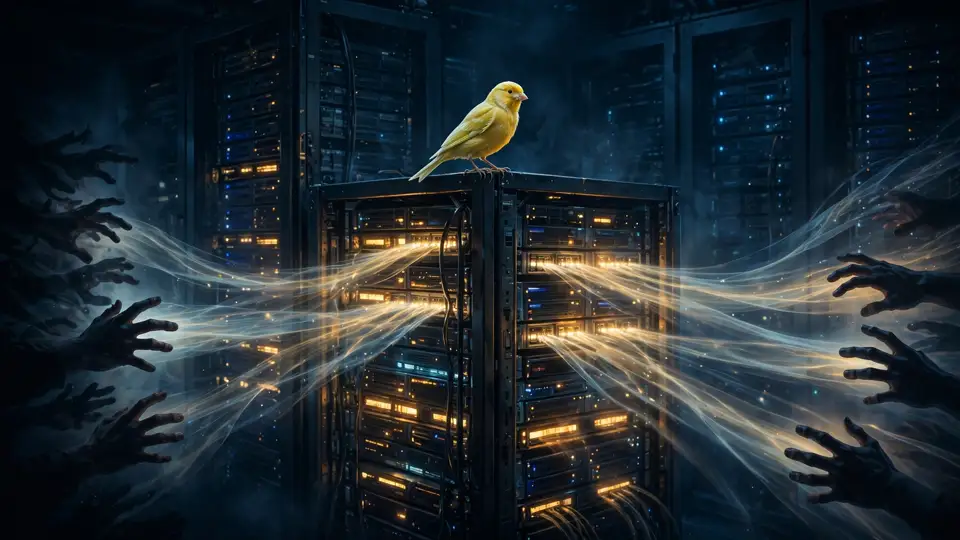
The findings come from Dragos, an industrial cybersecurity firm, whose researchers — led by HD Moore — published their work on November 19. Between July and November 2026, they sent nearly two million test prompts to widely used AI services, each carrying a unique canary: a web link or credential designed to reveal itself if anyone copied, stored, or used it.
At least three hosting providers showed evidence of compromise or of failing to honour their own data policies, Dragos said — and none of them knew until the researchers told them. In one case, stolen AWS keys were used for tens of thousands of API calls. In another, an unnamed Chinese AI lab fetched the secret links from more than half of the seeded prompts sent to its models between July and October, including about two-thirds of those marked for no data collection or zero data retention.
The planted prompts were bait. But they ran alongside real customer requests, which were almost certainly copied too.
What OpenRouter did#
OpenRouter's notice, titled "Data Processing Incidents on Inference Providers" and published November 22, lists three actions: it off-boarded three providers based on the results of its investigations, removed 125 endpoints from zero-data-retention eligibility, and notified all potentially affected customers.
The 125 removals covered flagged providers plus additional endpoints cut as a precaution — removal does not mean all 125 were confirmed breached. OpenRouter also said it is adopting canary testing for ongoing checks, verifying network paths to find where requests get forwarded, and requiring assurances and validation before any removed endpoint regains its status.
It has not said how many users or conversations may have been exposed.
The three providers that spoke up#
OpenRouter's notice links public write-ups from three providers — Novita, Phala, and Together AI. Each tells a different failure story:
| Provider | What happened | Window |
|---|---|---|
| Together AI | An AI coding agent committed a credential for a private Hugging Face repository to the public xorl repo on GitHub. An unauthorized party used it to download stored prompt samples, then searched them for credentials and tested them. Five were Dragos canaries. | Prompt samples from June 24, July 4, 8 and 14, 2026 |
| Phala | An attacker took control of an inference server and could view request data while it was being processed. The incident was contained on November 8. | DeepSeek V4 Flash 0731 requests routed via OpenRouter, Oct 21 – Nov 8, 2026 |
| Novita | A routing configuration issue sent some MiniMax requests to MiniMax's official API instead of Novita-hosted infrastructure, where a third party could access or retain the content. | May 28 – Nov 11, 2026 |
Together AI disclosed the incident on November 21, in a notice signed by CEO Vipul Ved Prakash. The samples came from requests to MiniMax M3, GLM-5.2 and Kimi K2.6, collected for routine testing and stored in a private Hugging Face repository. The company says it has found no evidence of further leakage, is working with an external forensic firm and law enforcement, and has made zero data retention the default for new accounts.

The crucial caveat: nobody has named the three#
What OpenRouter did not say: it did not name the three providers it removed, Dragos has not named the providers its researchers found breached, and neither has said whether the three providers with public notices — Phala, Together AI and Novita — are the same three OpenRouter removed. OpenRouter notes that not all affected providers have posted publicly.
That gap is the story's centre of gravity. A router's zero-retention badge is a promise about someone else's servers, and until the removed providers are named, customers cannot check whether their own requests went to a compromised host.
What to do if you used OpenRouter#
If OpenRouter notified you, treat it as an exposure, not a precaution. Rotate any API keys, tokens, passwords or other secrets included in requests that may have been routed to affected providers — most urgently anything sent to Phala's DeepSeek V4 Flash deployment in the October 21 to November 8 window — and review those accounts for unauthorized activity. And remember that "zero data retention" is a setting on a listing, not a property of the network your prompt travels through: check which provider actually served each request, and treat anything you would not want read by a stranger as something that can be read — because, for months, it was.
What to watch#
First, whether OpenRouter names the removed providers or restores any of the 125 endpoints — and what assurances it demands first. Second, whether more providers publish their own write-ups. Third, whether canary-style testing becomes standard practice at the routers: OpenRouter is adopting it, and the technique is cheap enough that every gateway could run it.
The deeper question is structural. Routers exist to hide this complexity — one API key, dozens of providers, no need to vet each host. This week showed the cost: when a provider quietly keeps your prompts, you find out from a researcher's trap, months later. The fix is not a better badge. It is verification that never stops.
Sources: OpenRouter, “Data Processing Incidents on Inference Providers”; Together AI, “Security event: Prompt leakage for requests in June and July of 2026”; Unite.AI, “OpenRouter Cuts Three Providers After AI Prompt Exposure Findings”; explainx.ai, “AI Prompt Canaries: 3 Provider Breaches, ZDR Ignored”