Teradyne bets on the AI factory floor — strategic investment in Bright Machines fuses robots, test tech, and software-defined microfactories
Teradyne, Inc. (NASDAQ: TER) and Bright Machines, Inc. announced Monday that Teradyne has made a strategic investment in Bright Machines, pairing Teradyne's robotics and test technologies with Bright Machines' software-defined manufacturing platform to accelerate AI infrastructure manufacturing.
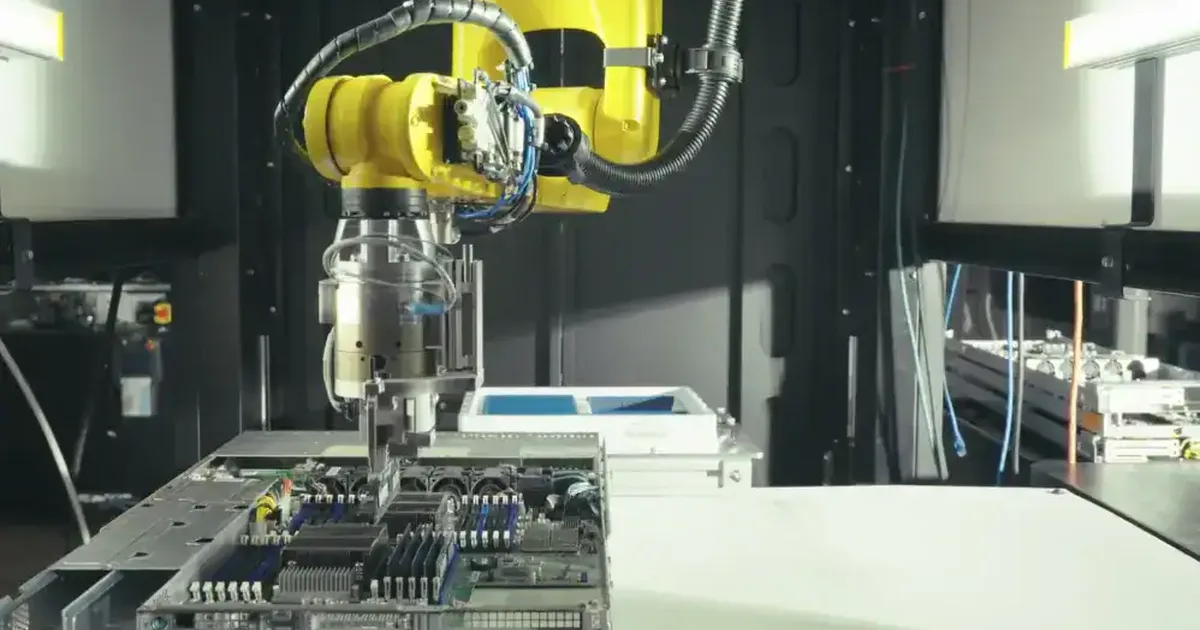
Teradyne, Inc. (NASDAQ: TER) and Bright Machines, Inc. announced Monday that Teradyne has made a strategic investment in Bright Machines, accompanied by a collaboration to integrate Teradyne robotics and test technologies into Bright Machines' software-defined manufacturing platform. The stated goal: a faster path from design into production for the companies building AI infrastructure. The investment amount was not disclosed.
The logic is blunt. AI infrastructure is driving one of the largest electronics manufacturing buildouts in recent history, and as the companies put it, manufacturing has become a determinant of deployment speed, quality, and economic value. With product designs refreshing constantly, manufacturers place a premium on production lines that can be reconfigured in software rather than re-engineered in steel.
What the companies will explore
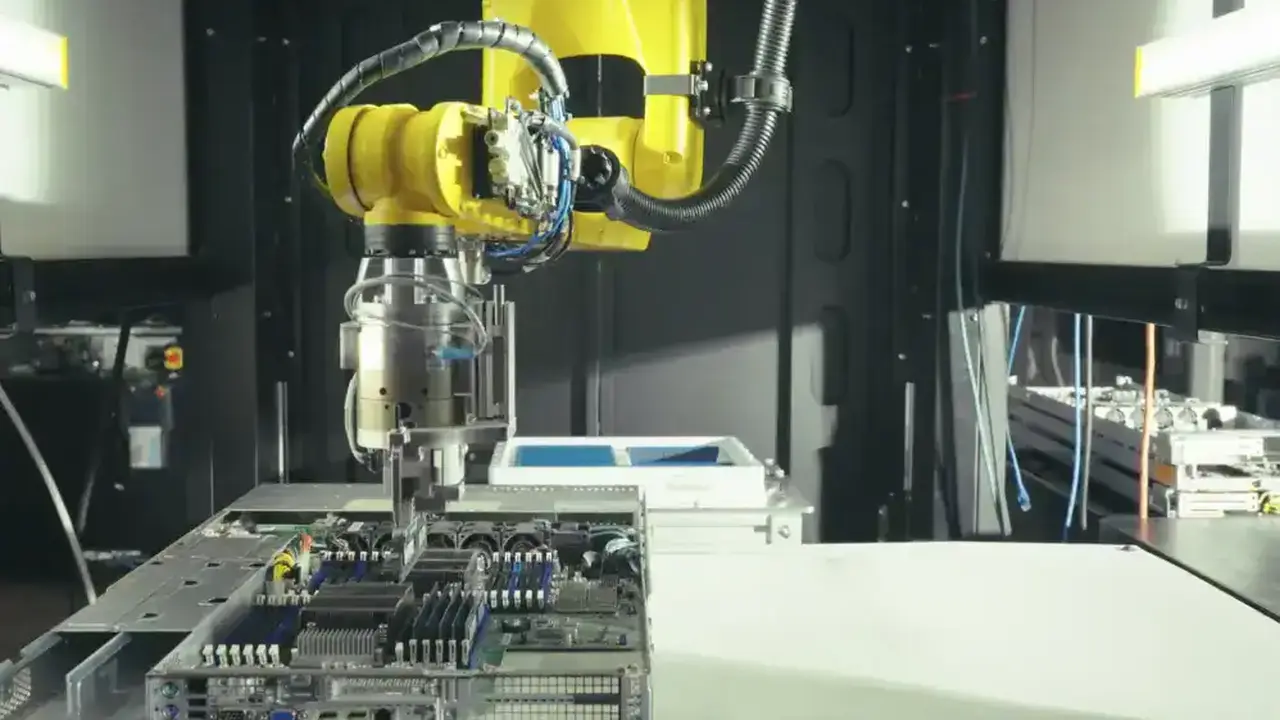
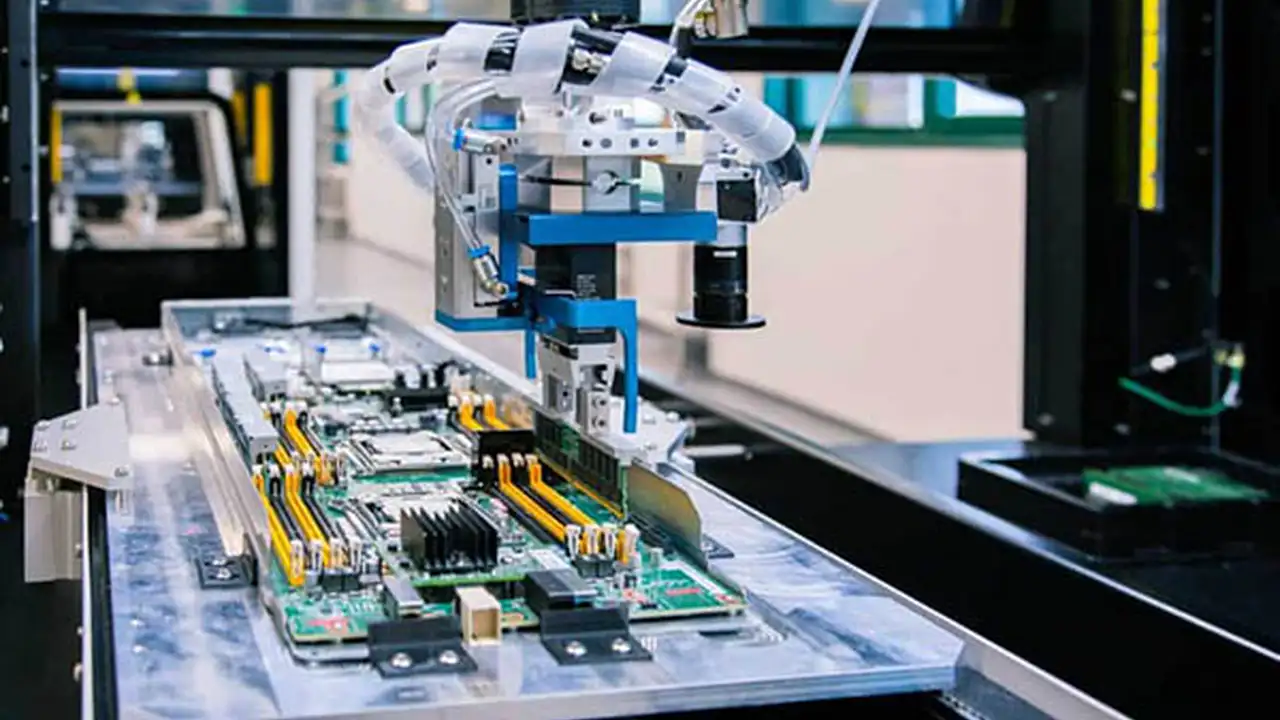
The collaboration will evaluate folding Teradyne technologies into Bright Machines manufacturing environments: precision robotic assembly, robotic loading and unloading of test equipment, and autonomous movement of materials across the factory. In practice that means Bright Machines' manufacturing platform running alongside Universal Robots collaborative robots and Teradyne board test systems on the same production floor.
Each piece produces a distinct data stream — assembly and inspection data, robot and material-movement data, and electrical test results. Connecting those streams through Bright Machines' product genealogy and manufacturing intelligence capabilities creates an end-to-end production data thread: one unbroken line from design decisions, through assembly execution, to electrical performance. Once build data and test data sit in the same loop, the line can correct itself faster.
"What limits automation today is not what a robot can physically do but how much engineering it takes to tell it what to do," said James Davidson, chief AI officer at Teradyne. "When a robot can pick up a new task in hours instead of being re-engineered over weeks, high-mix, short lifecycle production becomes the default."
Why the factory floor is the AI bottleneck
Teradyne has been repositioning its robotics business around exactly this buildout. In August, TechTimes reported that Teradyne Robotics posted $100 million in revenue for Q2 2026 — its first-ever $100M quarter — on a 50% sequential surge in orders from electronics manufacturers and semiconductor facilities constructing AI data centers. For the first time in company history, electronics manufacturing and semiconductors displaced automotive as the division's largest end market.
The Bright Machines deal extends that bet upstream: from the robots assembling boards to the test systems verifying them. Teradyne is the incumbent in automated test equipment; Bright Machines brings the software layer — design, production intelligence, genealogy. Combined, they are selling the idea that the AI boom's scarcest resource is not chips but manufacturing that can keep up with them.
What Bright Machines brings
Bright Machines describes itself as a next-generation manufacturer bringing AI and data center infrastructure production to the edge. Its track record: more than 130 microfactory deployments across 10+ countries, and — per today's announcement — active AI infrastructure production in the United States today.
"Physical AI is changing what is possible on the factory floor, and Teradyne and Bright Machines are partnering to accelerate this evolution," said Shantnu Sharma, chief development officer at Teradyne. "The combination of Bright Machines' depth in software-defined manufacturing and Teradyne's decades of experience in robotics and test gives companies building AI infrastructure a faster path from design into production, with data behind every unit they build."
The test will be whether two very different automation cultures — Teradyne's decades of precision test and robotics, Bright Machines' software-defined microfactories — can actually share one production line. If they can, AI factories get a template: robots, test, and software speaking the same language. If they can't, it's one more strategic investment in a sector where the demand side, at least, is not in doubt.