Trump plans to name Nvidia, OpenAI, Anthropic and 20+ others as America’s AI ‘national champions’
The Wall Street Journal reports the Trump administration is preparing to designate more than two dozen US AI companies as ‘national champions’ — a label that could bring faster export licences, government backing abroad and federal financing. Nothing is confirmed yet.
- Reported plan: more than two dozen US AI companies designated ‘national champions’; named so far: Nvidia, Amazon, Microsoft, OpenAI, Anthropic.
- Reported benefits: expedited export-licence reviews, government help pursuing contracts overseas, and access to federal financing.
- Vehicle: the American AI Exports Program, created by Executive Order 14320 in July 2025; 78 consortium applications received.
- Nuance: formally, the program designates full-stack export packages, not individual companies — and designation guarantees no licence or contract.
- Status: unconfirmed report; Reuters could not independently verify it. Announcement expected as early as this week from Commerce Secretary Howard Lutnick; timing could change.
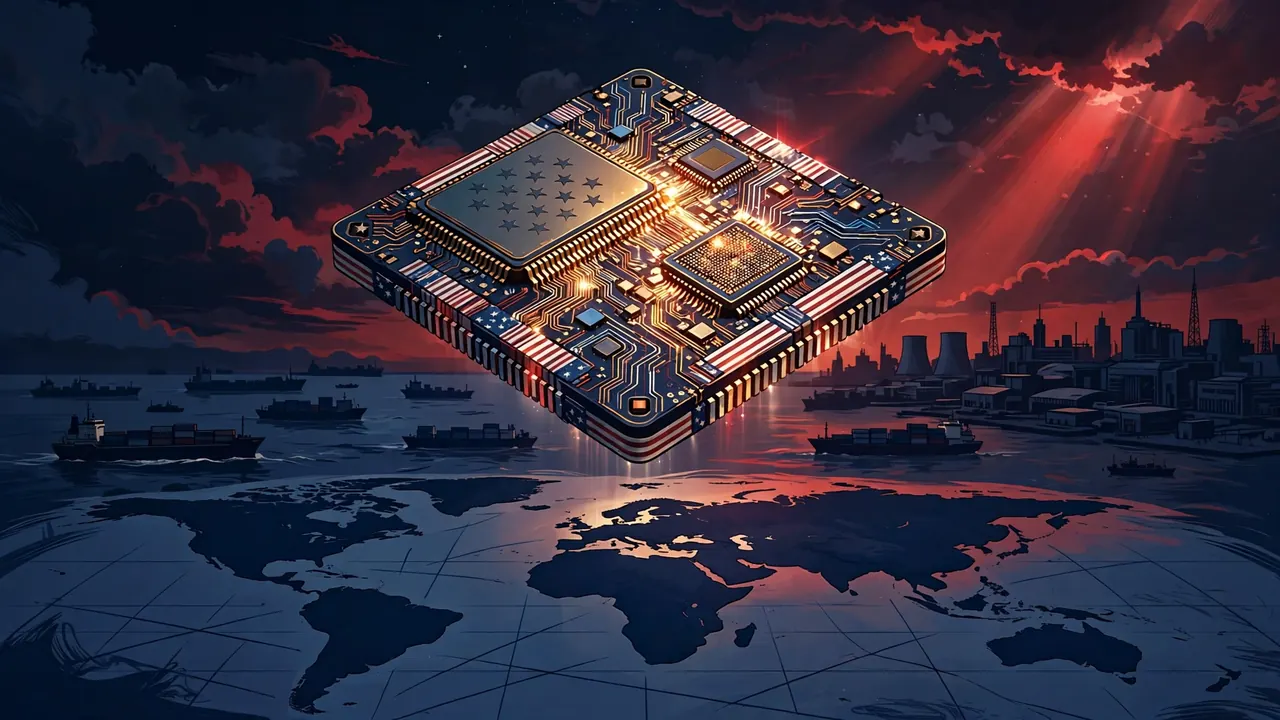
Washington is preparing to put the full weight of the US government behind its biggest AI companies. The Wall Street Journal reported on Sunday that the Trump administration plans to designate more than two dozen American AI firms as “national champions” — a label meant to help them win business abroad and hold off Chinese rivals. Nvidia, Amazon, Microsoft, OpenAI and Anthropic are the names reported to be on the list.
Nothing is final. The report rests on people familiar with the plans, Reuters said it could not independently verify it, and the administration has made no formal announcement. But if the plan lands as described, it would be the clearest sign yet that Washington now treats AI exports as a matter of national industrial policy — and it would arrive in the same week Nvidia reports earnings under an interim chief executive.
What the designation would reportedly do#
The reported perks are practical, not ceremonial. Companies on the list could receive expedited reviews of export licences, government help pursuing contracts overseas, and access to federal financing channels, according to the Journal’s reporting. The announcement could come as early as this week, with Commerce Secretary Howard Lutnick expected to unveil the initiative — though the timing could still shift.
The aim is straightforward: make it easier for foreign governments and buyers to pick American chips, cloud services and models instead of Chinese alternatives. Huawei is the rival most often named in the reporting, and the contest is as much about which country’s technology stack a buyer standardises on as it is about any single sale.
The export program behind the label#
The champions list is not a new idea bolted on overnight. It grows out of the American AI Exports Program, created under Executive Order 14320 — “Promoting the Export of the American AI Technology Stack” — signed in July 2025. The program, run by the Commerce Department’s International Trade Administration, invites industry-led consortia to propose full-stack export packages: chips and infrastructure, data pipelines, AI models, cybersecurity and sector-specific applications, bundled into single offerings a foreign buyer can purchase.
One nuance matters. Formally, the program designates export packages, not individual companies — and designation guarantees no licence, financing, advocacy outcome or contract. The “national champion” label, as reported, would be the public face of that machinery: Washington presenting American packages to foreign buyers, with the biggest names attached.
The pipeline is already moving. Commerce invited proposals in April 2026, the application window ran from April 1 to June 30, and the department said in July it had received 78 applications. Proposals go through interagency review, with the commerce secretary making the final call; the department has said it aims to issue a designation decision within 60 days of deeming a proposal complete.
The same weekend brought a parallel move. The US and nine partners, including Japan, India and the UK, signed the San Francisco Declaration under the Pax Silica banner on Sunday, setting up five working groups on AI supply chains. Taken together, the weekend’s news points in one direction: the export push is becoming the organising principle of US AI policy abroad.
Why the timing is awkward#
The label would land at a delicate moment for its most prominent name. Nvidia, the bellwether of the AI trade, closed Friday at $162.85 — about 33% below its October 6 intraday peak of $243.37. The iShares AI Innovation and Tech Active ETF ended the week down 33% from its June record, and the VanEck Semiconductor ETF sits about 28% below its 52-week high.
Nvidia is also in the middle of a leadership crisis. Co-founder Jensen Huang resigned as president, chief executive and board member last week, effective immediately, and chief financial officer Colette Kress has taken over on an interim basis. The board has opened an investigation into Huang’s relationship with a woman alleged to be a Chinese spy, according to media reports, and has retained former acting US attorney Joon H. Kim and the law firm Wachtell, Lipton, Rosen & Katz to conduct it. Former Synopsys chief executive Harvey C. Jones is now the board’s first chair. Treasury Secretary Scott Bessent has separately asked Nvidia’s board and outside counsel to explain the company’s chip export compliance within 10 days.
The Financial Times reported on Sunday that Huang has discussed a return with confidants; Bessent said the same day that Nvidia should look outside the company for a permanent chief executive. Nvidia has confirmed neither account. The company reports fiscal 2027 third-quarter results after the market closes on Tuesday, November 17, with revenue guided to $108.0 billion, plus or minus 2%.
Anthropic’s place on the reported list carries its own tension. In February, the Pentagon labelled the company a supply-chain risk after it refused to drop its limits on autonomous weapons and mass surveillance. A government endorsement and a government warning, in the same year, for the same company — the contradiction captures how unsettled Washington’s relationship with the labs still is.
What we still don’t know#
Almost everything that would determine whether the label matters. The reporting does not establish the legal basis for the designation, the full list of companies, or the exact benefits. Expedited licence review is still licence review: individual shipments would still need approval, and the program’s own notice says designation guarantees nothing.
The Journal also reported that the administration is preparing separate measures to stop advanced chips being diverted to China, and that Lutnick is expected to accompany Trump on his upcoming China visit. How the champion label and the tightening of controls fit together — one hand opening doors, the other closing loopholes — is the question that will decide whether foreign buyers read the designation as a privilege or a leash.
What to watch#
First, whether Lutnick unveils the list this week, and which names appear beyond the five already reported. Second, the fine print: what the designation actually confers, and whether it amounts to faster licences in practice or mostly a diplomatic signal. Third, Nvidia’s earnings on Tuesday — the first numbers since the resignation — and whether the market treats the champion label as a tailwind or a distraction. And fourth, the congressional calendar: House committee chairs have asked Huang to appear for a closed-door interview on December 1, and the Senate Banking Committee has asked Huang and Lutnick to testify on December 3 and 10 respectively. The champion list will not be debated in a vacuum.
Sources: Seeking Alpha, “Trump eyes ‘national champion’ status for Nvidia, Amazon, Microsoft and other AI firms – report”; CoinDesk, “Trump to name Nvidia (NVDA) and others as AI national champions”; BigGo Finance, “White House Taps Nvidia, OpenAI, Microsoft for AI ‘National Champions’ Export Bloc”.