Verda raises $189M at a $1B+ valuation to build Europe's own AI cloud
Helsinki has a new unicorn — and it rents out the AI era's most contested asset. Verda, the full-stack AI cloud company that began life as DataCrunch, announced on Tuesday that it has raised $189 million in fresh funding, an oversubscribed Series B led by Emergence Capital.

Helsinki has a new unicorn — and it rents out the AI era's most contested asset. Verda, the full-stack AI cloud company that began life as DataCrunch, announced on Tuesday that it has raised $189 million in fresh funding, pushing its total capital raised past $450 million.
The round is an oversubscribed Series B led by Emergence Capital, with MUFG Innovation Partners, Supermicro, Varma, Lifeline Ventures, 6 Degrees Capital, byFounders, Tesi, and angels including Ola Tørudbakken and Mark Saroufim joining in. The company says the round values it above $1 billion — Europe's newest AI unicorn, and one more sign that the neocloud land rush has gone global.
What the money buys#
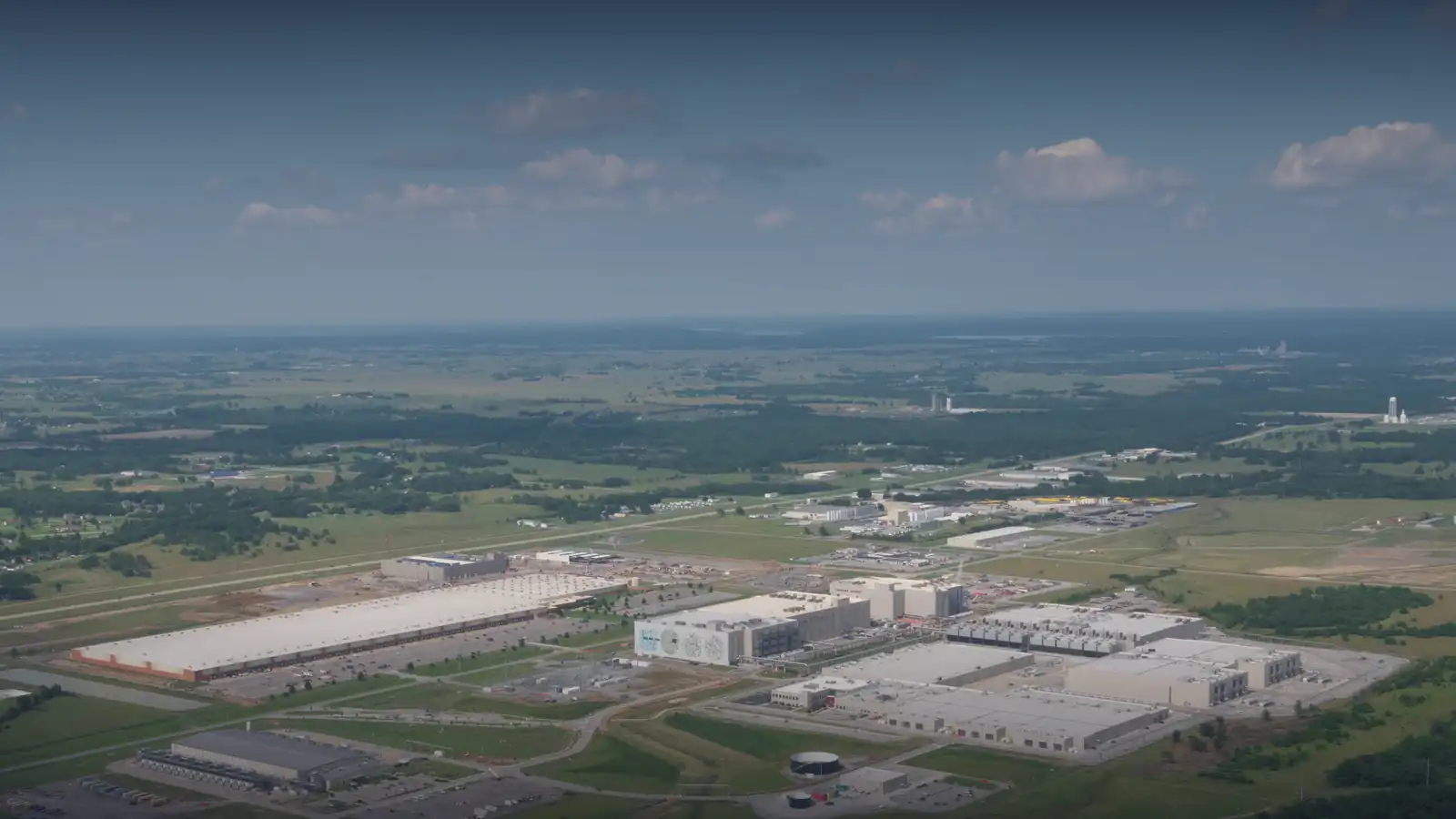
Verda's pitch is the whole stack. Where most cloud providers resell somebody else's hardware, Verda says it runs everything from physical data centers and server hardware up through its cloud platform and AI research — bare-metal GPU clusters, its own compilers, and serving software tuned for both training and inference.
Capital in this business goes almost entirely to capacity. The company says it will use the raise to expand compute capacity, build out inference services, and accelerate platform development, with plans for more than 250 megawatts of operations in 2027 and further expansion across Europe, the UK, the US, and Asia. It opened offices in London and San Francisco earlier this year, and channel reports point to NVIDIA rack-scale systems being part of the buildout. Having Supermicro — one of the world's biggest AI-server builders — on the cap table as a strategic investor is no accident: in a market where accelerator supply is the bottleneck, preferred access to hardware is the real moat.
Why Europe, why now#
The geography is the story. Verda's facilities in Finland run on 100% renewable energy, and the Nordics' cheap, clean power and natural cooling have always been a cost advantage. Now that advantage is a sovereignty pitch: founder and CEO Ruben Bryon describes the moment as a pivotal window for Europe and says the company's north star is to build "the first true tech company in Europe," starting with AI infrastructure while cutting compute's carbon footprint worldwide.
He is reading the political weather correctly. European governments and enterprises are spending heavily to keep AI workloads on European soil, and a provider that can offer frontier-grade compute without routing data through American hyperscalers has a natural audience. The company reached a $165 million annualized revenue run rate in July, with customers in 50 countries — including Aleph Alpha, Magnific, and Epsilon Health — which suggests this is more than patriotic rhetoric: there is paying demand.

The neocloud fight#
Verda is walking into a crowded arena. CoreWeave proved the neocloud model can mint tens of billions in value; NScale filed for a US listing this week; Nebius, Lambda, and Crusoe are all racing to turn contracted megawatts into revenue. Emergence general partner Joe Floyd, who led the round, argued the bet is safe because demand for AI compute keeps outpacing supply — and the gap is widening.
The skeptic's version is simpler: most of Verda's promised capacity is a future buildout, not operating hardware, and a self-reported $165 million run rate is a thin cushion under a $1 billion-plus valuation. The valuation only holds if that run rate converts into durable, high-utilization contracts rather than one-off training bursts. It is the same bet every neocloud is making — but Verda's green-energy cost base and European home turf give it two differentiators the American giants can't easily copy.
What to watch#
Watch delivery, not announcements. The 2027 targets — 250 megawatts of operations and a multi-region footprint — are the test of whether this round becomes real capacity. Watch whether European sovereignty deals translate into signed contracts with governments and regulated industries, not just enthusiasm. And watch the pricing war: frontier-model efficiency keeps making each unit of compute cheaper, which could shrink neocloud margins — or multiply total demand. Verda is betting, like every neocloud, on the second outcome. Europe's newest unicorn now has $189 million to prove it right.