Volantis raises $88M to break AI's memory wall with lasers: 220 memory chips per GPU
San Francisco chip startup Volantis said Thursday it has raised $88 million in venture capital to attack AI's most stubborn hardware bottleneck — moving data from memory into the compute chip — with laser light. Its pitch: optical links could pack 220 memory chips around a single GPU, versus eight for Nvidia's best today.
The announcement, reported by Reuters from an interview with co-founder and CEO Tapa Ghosh, goes after what chip designers call the memory wall. AI accelerators keep getting faster at arithmetic, but the models they run live in memory — and the link between the two is the bottleneck. Nvidia and AMD solve it today by surrounding their compute chips with expensive high-bandwidth memory, but the tiny electrical wires connecting them can only reach so far. Even Nvidia's best current offerings can hold only eight of those memory chips per GPU, Reuters reports.
Volantis says it can fix that with light. The startup is developing interconnects that move data between computing chips and memory chips on laser beams instead of copper wires, which would eliminate the reach problem entirely. If it works, one GPU could sit inside a pool of 220 memory chips — nearly 28 times the count of current top-end designs.
The same lasers that unlock your iPhone#
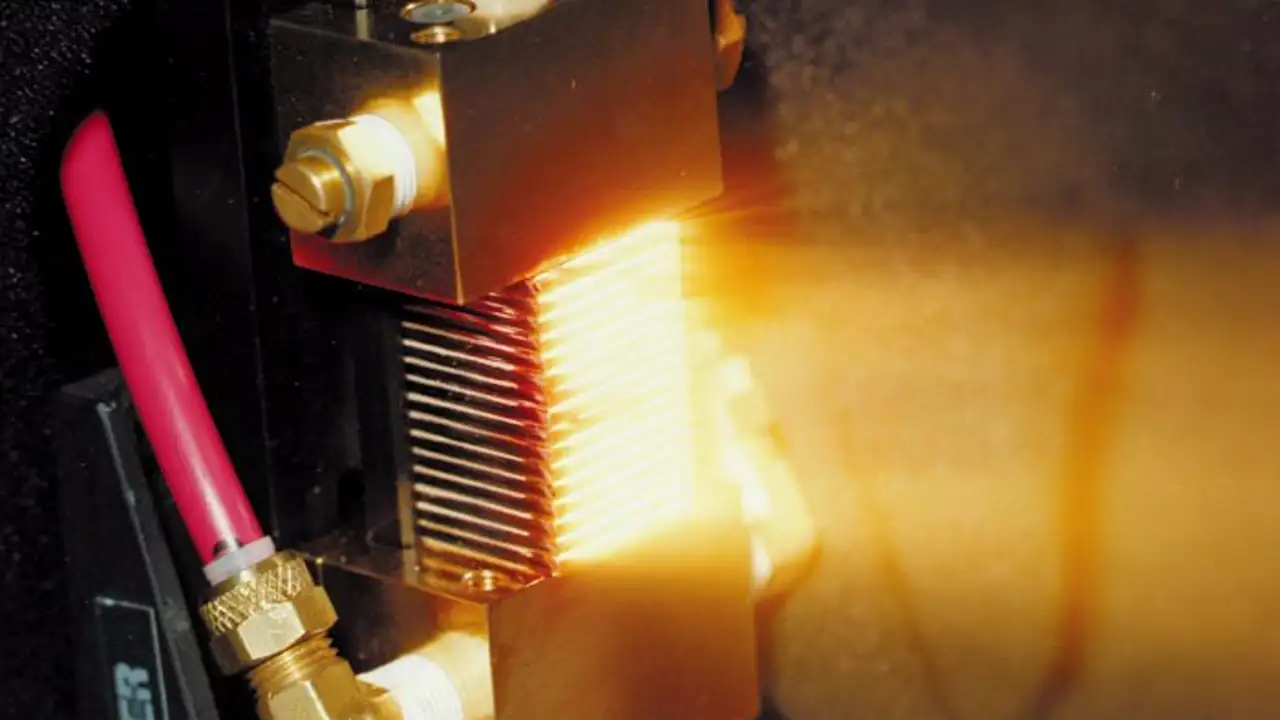
The technology in question is the vertical-cavity surface-emitting laser, or VCSEL. The name sounds exotic, but VCSELs are mass-market components: they power the facial-recognition hardware in hundreds of millions of iPhones, and Apple spent a decade building up the VCSEL supply chain.

That ordinariness is the whole strategy. Ghosh told Reuters the company is deliberately combining relatively well-known components rather than betting on an unproven breakthrough, hoping to sidestep the supply-chain bottlenecks that slow down novel chip designs. "Advanced packaging is always to be respected — it's never trivial — but it's not necessarily a new thing to do," he said. "No one is going to win a Nobel Prize if our project works, but the good news is, they won't need to."
Volantis says it aims to deliver a chip next year that would speed up tasks like AI coding. Investors in the $88 million round include Lachy Groom, Abstract Ventures, John Doerr, VXI Capital, Triatomic, and Susa Ventures, plus angel backers, per Traders Union.
What to watch#
- The "next year" chip. Photonics startups have a long graveyard; the proof is a shipping device, not an $88 million term sheet. The test Volantis must pass is manufacturing, not physics.
- Memory capacity as the new battlefield. As models grow, the fight in AI hardware is shifting from raw FLOPS to how much memory sits next to the compute — and how fast it gets there. Optical interconnects are the most aggressive bet in that fight.
- The supply-chain play. If VCSELs really are commoditized enough to build a chip company on, expect the giants — Nvidia, Broadcom, Marvell — to price the same trick into their own roadmaps.
Sources: the Reuters report by Stephen Nellis ("Volantis raises $88 million for tech to connect AI, memory chips," October 1, 2026) and the funding summary at Traders Union. All technical claims — the 220-chip count, the eight-chip comparison, and investor names — are attributed to Volantis and the reporting above.