Apple's leaked Harbor app would turn your Mac into a private AI inference server
Apple is reportedly building Harbor, a Mac app that turns one or more Apple silicon Macs into a private AI inference server — no cloud, no command line. The catch: it leaked, it is in private preview under Apple's Claris brand, and there is no launch date yet.
What we checked: 9to5Mac's report (November 10, 2026) and MacRumors' report (November 10, 2026, 3:34 p.m. PT), both based on leaker Aaron Perris's November 10 post on X, cross-checked against AppleInsider's coverage and the r/LocalLLaMA discussion thread. Apple has not confirmed Harbor; every feature described here comes from the leaked material and is labeled as such.
- What: Harbor, a leaked Mac app that turns a Mac into a private AI inference server for open-weight models, discovered by leaker Aaron Perris and reported November 10, 2026.
- The pitch: run models locally on Apple silicon — “your data never leaves your hardware, and nothing reaches the cloud” — with setup in minutes and no command line.
- The cluster: two or more Thunderbolt 5-capable Macs pool their unified memory into a single inference resource, for larger models or more concurrent requests.
- Status: private preview under Apple's Claris brand; previously codenamed “Fabric”; an App Store listing briefly appeared and was removed.
- The unknowns: no launch date, no pricing, and no word on whether it will be a business product or available to every Mac owner.
- The context: free alternatives already exist — Exo for clustering Macs, LM Studio for single-Mac use — and Harbor looks like Apple's attempt to combine the two.
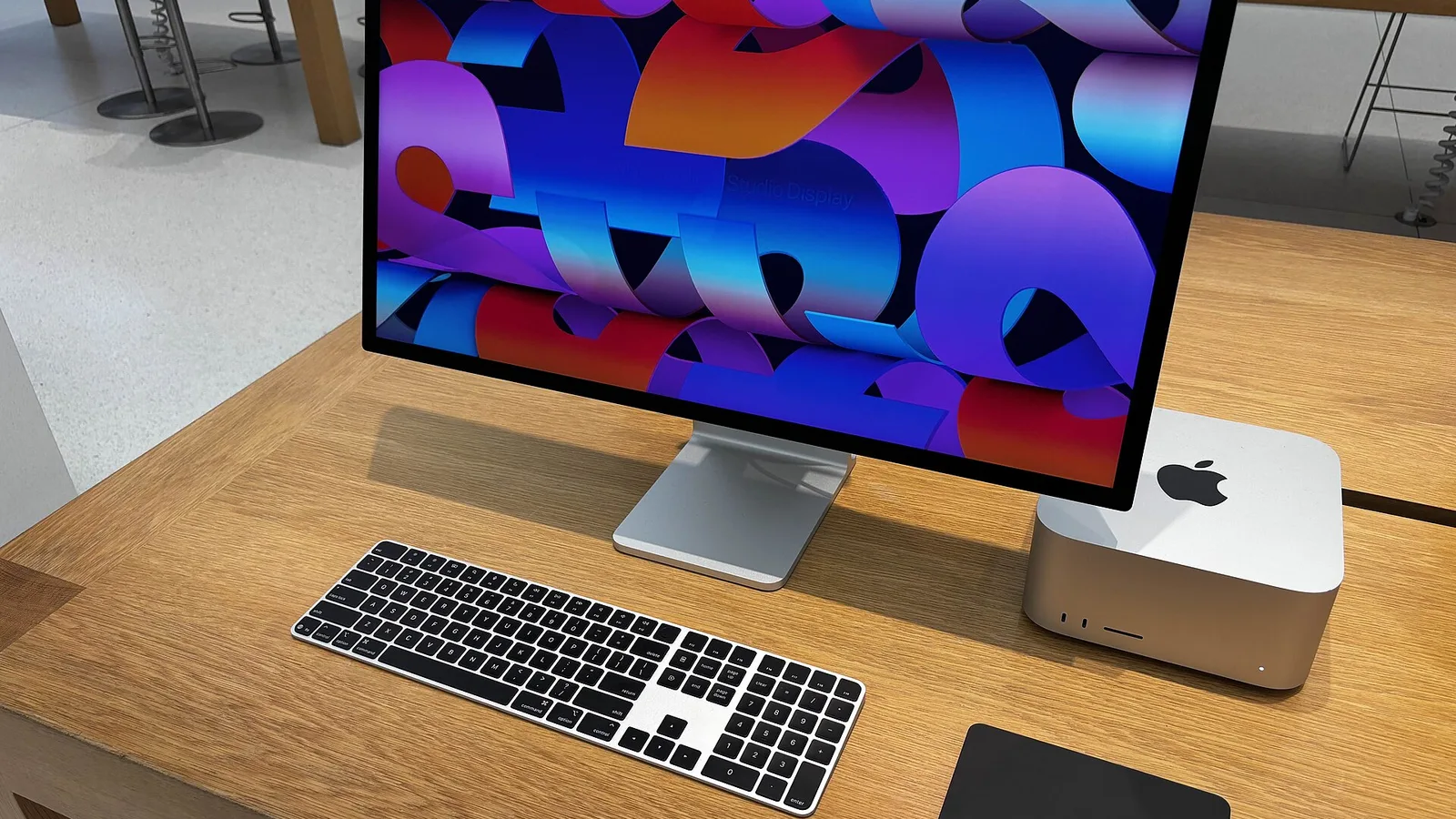
Apple may be about to make the Mac the easiest way to run AI at home — without sending anything to the cloud. A new app called Harbor, discovered in Apple's own code by leaker Aaron Perris and reported on Tuesday, is designed to turn a Mac into a private AI inference server. It is not an announcement: Apple has said nothing, and the app is in private preview under the company's Claris subsidiary. But the leak is unusually concrete, and it lands at a moment when the Mac has quietly become one of the most popular machines for running AI models locally.
The pitch, quoted from Apple's own description of the app, is simple: run open-weight models locally on Apple silicon, with your data never leaving your hardware and nothing reaching the cloud. The interesting part is what happens when you add a second Mac. Harbor connects two or more Thunderbolt 5-capable Macs and pools their unified memory into a single inference resource, so a cluster can run models that would not fit on one machine, or serve more requests at once.
What Harbor actually does#
Harbor is aimed at people who want a local model server but do not want to build one. Apple's copy promises setup “in minutes, not hours”: the app automatically detects Macs connected over Thunderbolt 5 and forms a cluster on its own — plug in, start, and you are running, with no manual configuration, no command line, and no infrastructure expertise required.
Model management happens inside the app too. Users can browse, download and load open-weight models from within Harbor, rather than juggling files and terminal commands. That is the whole product in one sentence: the ease of a consumer app wrapped around what is currently a hobbyist setup.
The clustering is the part that makes Harbor more than a prettier launcher. Apple added RDMA over Thunderbolt 5 in macOS Tahoe 26.2, which makes memory pooling between Macs faster — the plumbing Harbor is built on, according to MacRumors. One Mac is the entry point; the cluster is the ambition.

Why now: the Mac's second life as an AI box#
The timing is not an accident. As 9to5Mac notes, the Mac has been getting more popular this year as a machine for running AI models locally, on Mac Studio and Mac mini hardware in particular — machines whose large unified memory makes them unusually good at holding big models. Harbor would be the first time Apple shipped its own software for that use case.
The Claris connection is the tell about who Apple thinks the first users are. Claris, best known for the FileMaker database platform, sells to businesses — and Harbor's sign-up page asks for a company name, MacRumors reports. The app was also previously known by the codename “Fabric”, according to AppleInsider, and an App Store listing for it briefly existed before being pulled. All of which reads less like a consumer launch and more like a business tool being tested in the open.
The catch: Thunderbolt 5, business focus, no date#
Three things stand between Harbor and your desk. First, the hardware gate: clustering needs Thunderbolt 5, which only newer Macs have, so a fleet of older machines will not pool. Second, availability: Harbor is in private preview, there is no public download, and no pricing has been disclosed — it is not even clear whether Apple will charge for it or sell it as a Claris product. Third, the leak itself: everything here comes from code strings and a pulled listing, not from Apple, so features and timing can change before anything ships.
The Reddit thread that carried the news through r/LocalLLaMA — about 218 upvotes and 55 comments by Tuesday evening — took the leak at face value and argued instead about whether Harbor can beat the tools people already use. That is the right argument, and it is where Harbor will be judged.
How it stacks up against Exo and LM Studio#
Mac users who want this today already have options. Exo is an open-source tool that clusters Macs for inference, and LM Studio is the polished single-Mac app for downloading and chatting with local models. As MacRumors puts it, Harbor appears to combine LM Studio's simple interface with Exo-style clustering. That is a real gap: the clustering tools are fiddly, and the easy tools do not cluster.
Whether Harbor wins that gap depends on things the leak cannot answer — price, model support, and whether Apple keeps it a Claris business product or puts it in front of every Mac owner. The top comments on the Reddit thread did not question the leak; they questioned the price of the hardware it needs and whether a first-party app can be less cumbersome than the tools it replaces.

What to watch#
Four things will settle whether Harbor matters. Whether Apple confirms it at all — silence would suggest the preview stays quiet for a while. Whether a public launch lands in the “weeks and months” window 9to5Mac expects, and what it costs. Whether the business framing sticks, or a consumer version appears. And whether the Thunderbolt 5 requirement ever softens — if clustering worked over plain networking, the audience would jump from owners of the newest Macs to anyone with a spare machine in a drawer. Until then, Harbor is a leak with a clear idea: the Mac you already own, quietly becoming your own private AI server.
Sources#
- 9to5Mac: Apple has new Mac app coming to make running local AI models easy (November 10, 2026)
- MacRumors: Apple's Claris Testing 'Harbor' App for Local AI on Macs (November 10, 2026)
- AppleInsider: Harbor is Apple's in-development private local AI server (November 10, 2026)
- Aaron Perris on X: Apple is working on a new app called Harbor (November 10, 2026)
- r/LocalLLaMA: Apple has new Mac app coming to make running local AI models easy (November 10, 2026)