A non-coder spent two years building his brother a 100-game library he plays with two head switches — all with Claude
Ben can't hold a controller anymore. So his brother spent two years building Benny's Hub with Claude — more than 100 games playable with two switches tapped by head movements — and open-sourced the whole thing.
- The build: Benny's Hub — 100+ games (puzzles, trivia, racing, music), 12 original songs, and a creature-collection game, all playable with two buttons, per the builder's post.
- The controls: two large switches mounted by the side of Ben's head, tapped with head movements — one to move through options, one to select and act.
- The video: 1:40 of Ben playing minigolf on a monitor above him, posted to r/ClaudeAI on November 26, 2026 at 8:35 a.m. ET; about 1,000 upvotes and 50+ comments by midday.
- The give-back: the code is open source on GitHub, with an accessibility guide — and a new effort, Switched Games, invites developers to submit two-button games.
- The caveat: the game counts, user numbers and two-year timeline are the builder's own figures; the thread raised no challenge to the core claim.
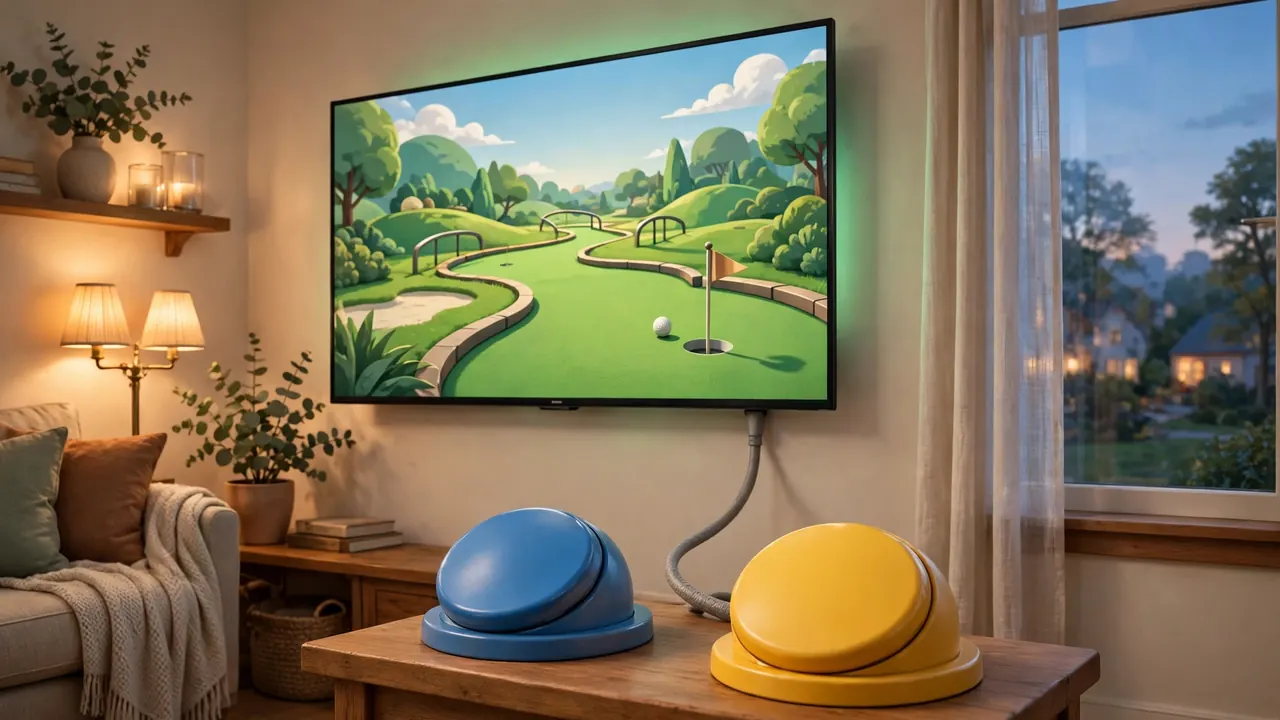
The post landed on r/ClaudeAI at 8:35 on Thursday morning, and by midday it had passed 1,000 upvotes with more than 50 comments still arriving. The title is plain — a brother, two years, no programming background — but the 100-second video underneath it is the whole story: Ben, reclined with a monitor mounted above him, playing minigolf with two switches by the side of his head, and sinking a hole-in-one while his family cheers him on.
Ben has loved video games since childhood — Wii Golf was a favorite — but as his condition progressed, the games he could play kept narrowing. He can no longer hold a controller, and most games demand fast reflexes, complex controls or quick decisions. Even turn-based Nintendo games, his brother wrote, still ask a player to work through too many buttons for a two-switch setup. So over two years, working with Claude, he built the thing that did not exist: a big game library called Benny's Hub, designed from the ground up for the two switches Ben can use.
What the video shows#
The clip is real family footage, not a screen recording. Ben lies back with a large monitor above him showing a bright green minigolf course; a family member leans in beside him, reacting as the shot goes in. A blue switch is visible mounted near the side of his head in the opening frame, and the family's dialogue runs through the clip — surprise at the hole-in-one, then a promise of a rematch. The video shows the minigolf game only, not the library's menu; the wider collection is described in the post and linked from it.
What makes the footage land is how ordinary the triumph feels. The game is built around timing and intuition rather than speed: one button sweeps the shot direction back and forth, the other locks it in, and the power bar swings on its own. Ben played his first ever game of golf in it this year, according to the post.
Two buttons, a hundred games#
The library, hosted at bennyshub.com, holds more than 100 games across genres — puzzles, trivia, racing, music — all reimagined with simplified controls, plus 12 original songs written for the project. The games share a design language built for Ben: large fonts and high-contrast colors for low vision, and timing that is either absent or very forgiving. In racing, one button steers and the other boosts — the last race he played was an F1 2024-style event. A 100-question trivia game is one of his favorites. A newer addition is Narbenomicon, a creature-collection game in the style of a Pokedex, in which he has caught 75 creatures so far, with the community still adding to it.
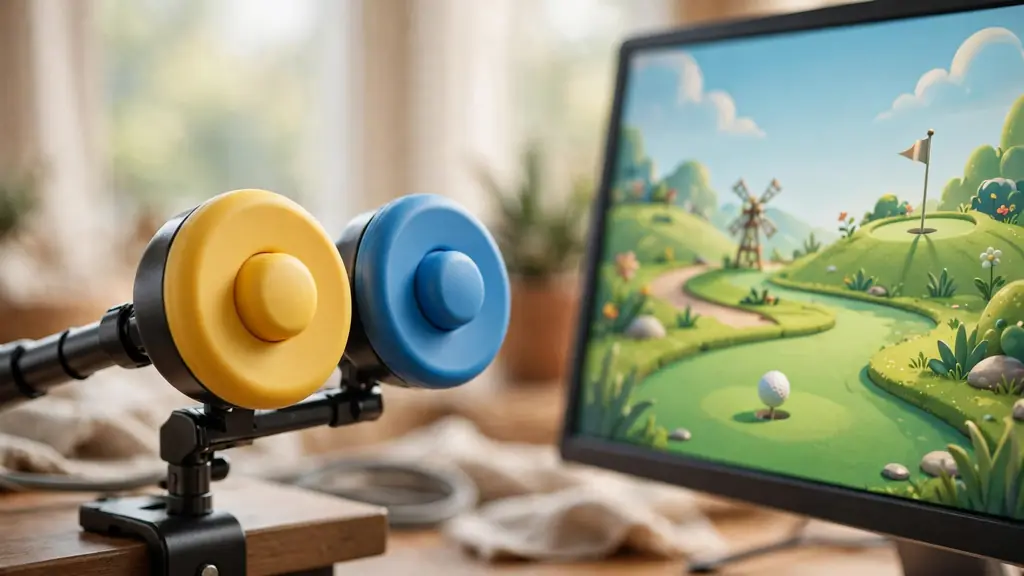
The control scheme is scan-and-select: one button moves through menus and options, the other selects and acts. The builder says he has used every Claude model along the way but has stuck with Claude Code for the past year, and he is candid about the rough edges — some games are still wonky, he says, and every model struggles to build anything decent in three dimensions. The collection, he adds, keeps improving as games are added and the ones that do not work are taken out.
Open source, and an open invitation#
The part that turned a heartwarming post into a project is what happened after the build. All of the code is open source on GitHub, and the builder published an accessibility guide setting out everything the family learned — how to make games that work for people with two switches, low vision and limited mobility. He also launched Switched Games, an open-source effort with the goal of making games playable with just two buttons, and invited developers to submit their own.
The numbers he gives are his own: around 150 active returning users play the collection regularly, and he says hundreds of families in the same situation have found the project through its social media. The thread itself became part of the effort — one highly-voted commenter offered to organize a project to develop more games for Ben, and the builder replied welcoming collaborations and submissions, saying Ben would love to try new games.
One exchange in the thread is worth noting for what it corrects. When commenters suggested Neuralink, the builder replied that this is not a brain-computer interface at all — it is scan-and-select with physical buttons near his head — and that Neuralink is only approved for certain injuries and conditions, which Ben does not meet. He also told commenters that Ben's condition is a form of leukodystrophy called H-ABC, which affects myelin; the post itself does not name a diagnosis.
A follow-up, not a first act#
This is not the first time the project has reached a wide audience. In September, the same builder posted a set of head-movement-controlled games — a Mario Kart-style racer, an Angry Birds-style game and a pet simulator — and we covered it then. Today's post is the next chapter: two years of work distilled into a full library, a public site, open-source code and an invitation for others to build on it.
What to watch now is whether Switched Games becomes more than a single family's library. The builder says he is also working on a turn-based, linear RPG for Ben, whose vision has worsened — a harder design problem than minigolf, and one the community has already volunteered to help with. If even a few developers take up the template, the two-button library could grow past one household. For now, the video says most of it: a brother who could not wait for someone else to build the accessible games his brother needed, so he built them himself — with an AI coding partner, no programming background, and two buttons.
Sources: r/ClaudeAI, “Over two years and with no programming background, I used Claude to build my brother a game library he plays with two buttons near his head” (u/acrolicious, November 26, 2026); Benny's Hub (bennyshub.com); Benny's Hub source code on GitHub; Switched Games (switchedgames.org); H-ABC Foundation (h-abc.org); AI Frontier Post, “AI gave my brother independence: head-movement games built with Google Astra and Claude Opus 5.5” (September 30, 2026)