NHS begins the world's largest AI breast-screening trial, with nearly 700,000 women taking part
The NHS has begun the largest trial of AI-assisted breast screening ever run. The first women joined on Monday in Cambridgeshire, and over the next three years nearly 700,000 women across 30 screening sites in England are expected to take part. The question at the heart of it is straightforward: can AI help doctors find breast cancer earlier — and can it do so without creating new problems of its own?
- Started November 23, 2026: the first participants joined in Cambridgeshire; the trial will run for three years across 30 screening sites. The trial registry lists 660,000 planned participants.
- Two ways AI helps: as a second reader that checks a specialist’s work for missed cancers, or as a first pass that scores the likelihood of cancer so clinicians can prioritise scans.
- The money: £10 million from the National Institute for Health and Care Research, led by the Universities of Warwick and Cambridge with NHS England.
- The precedent: Sweden’s MASAI trial of 105,000+ women found AI-assisted screening detected 80.5% of cancers versus 73.8% for conventional double reading, with equal accuracy for clearing healthy women (98.5%) and 44.2% less reading workload.
- The safeguard: every image still gets at least one human review, final decisions are made by human arbitration, women can opt out, and appointments are unchanged.
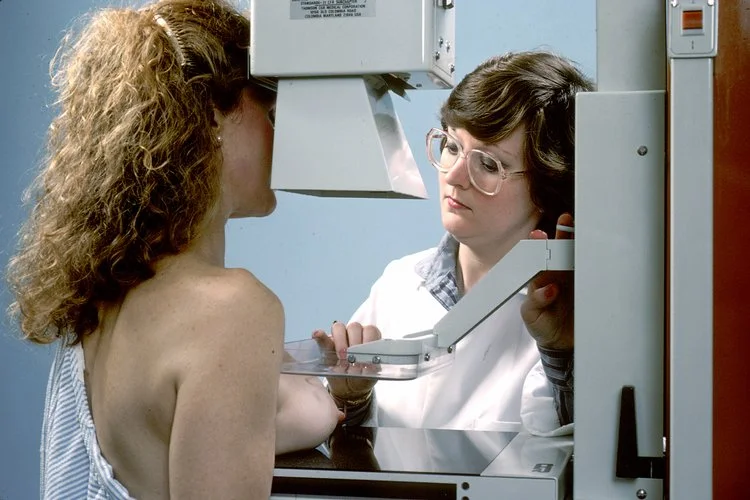
The NHS has begun the largest trial of AI-assisted breast screening ever run. The first women joined on Monday in Cambridgeshire, and over the next three years nearly 700,000 women across 30 screening sites in England are expected to take part. The question at the heart of it is straightforward: can AI help doctors find breast cancer earlier — and can it do so without creating new problems of its own?
The £10 million study is called EDITH, short for Early Detection using Information Technology in Health. It is funded by the National Institute for Health and Care Research and led by the Universities of Warwick and Cambridge together with NHS England. It lands at a moment when the screening programme is stretched: around 2.1 million women are screened in the UK each year, every mammogram is currently read by two specialists, and the radiology workforce is growing far more slowly than demand.
How the trial works#
EDITH will compare three ways of reading a mammogram. Some women will receive the current standard: two NHS experts examining each image. Others will get AI-assisted screening, in one of two forms. In the first, the AI reads the scan after a specialist and flags anything the human may have missed. In the second, the AI reads first and scores the likelihood of cancer, so clinicians can decide which scans need the closest attention.
The guardrails are explicit. Every image will still be read by at least one human expert, and final decisions about cancer detection will be made through standard human arbitration — the AI advises, it does not decide. Women are told about the study in their screening invitation letter and can opt out of having AI look at their images. Nothing about the appointment itself changes: the AI works on the images after they are taken. Participants will be followed up until their screening episode closes, and then for four more years through the screening programme and cancer registries, so the trial can catch cancers that surface between screens.
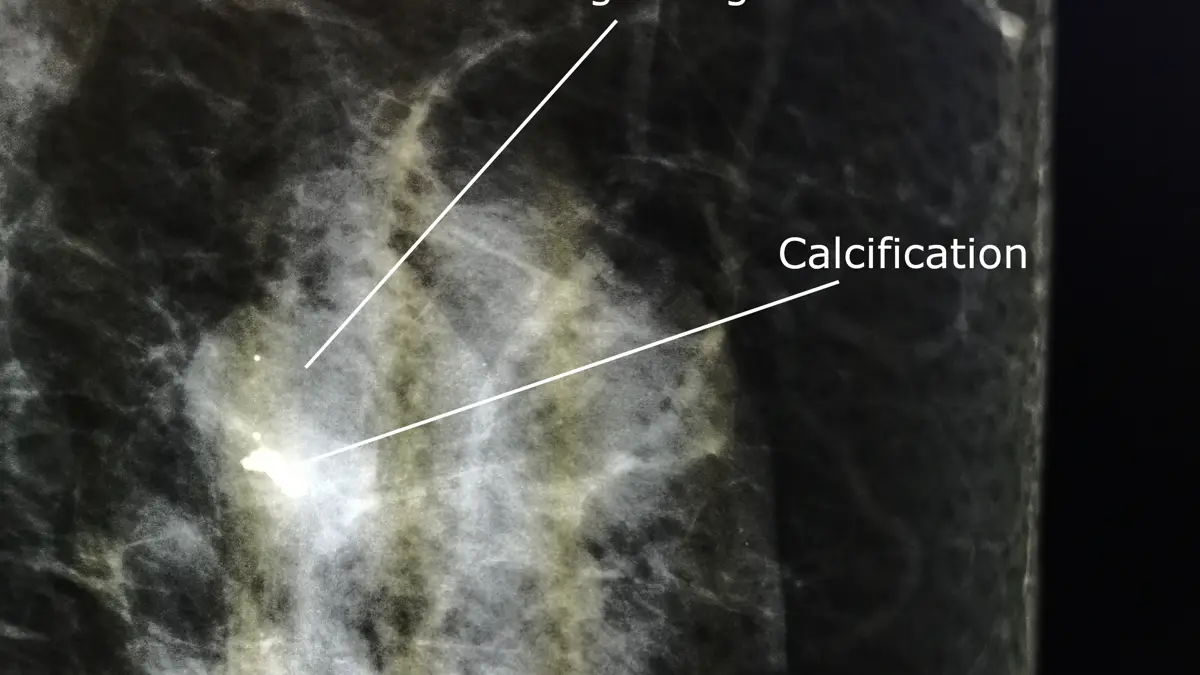
The trial registry lists 660,000 planned participants across 30 breast screening centres in England, with the feasibility of extending to Scotland, Wales and Northern Ireland still to be explored. The headline figure quoted in the launch announcement is nearly 700,000 women over three years.
Why the NHS is doing this now#
Breast screening is a numbers problem. Fewer than one in a hundred mammograms shows signs of cancer, yet each one is read twice by trained specialists — a system built for safety that consumes an enormous amount of expert time. The workforce behind it is thinning: more than a fifth of the UK’s breast radiology workforce reaches retirement age by 2030, according to the Royal College of Radiologists, while the workforce has grown by an average of just 2% a year over the past five years.
If AI can safely take on part of the reading load, radiologists could spend more of their time on complicated cases and on patients who need further tests. That is the bet — but it is a bet the NHS is insisting on testing at full scale before changing how screening works.
The Swedish evidence behind the bet#
The NHS is not starting from scratch. Sweden’s MASAI trial, one of the largest studies of AI in screening to date, enrolled more than 105,000 women, and results published in The Lancet in January 2026 found that AI-assisted screening detected 80.5% of cancers, against 73.8% for conventional double reading. Both approaches were equally good at clearing women without cancer — 98.5% of the time — and an earlier analysis found AI cut the mammogram-reading workload by 44.2%.
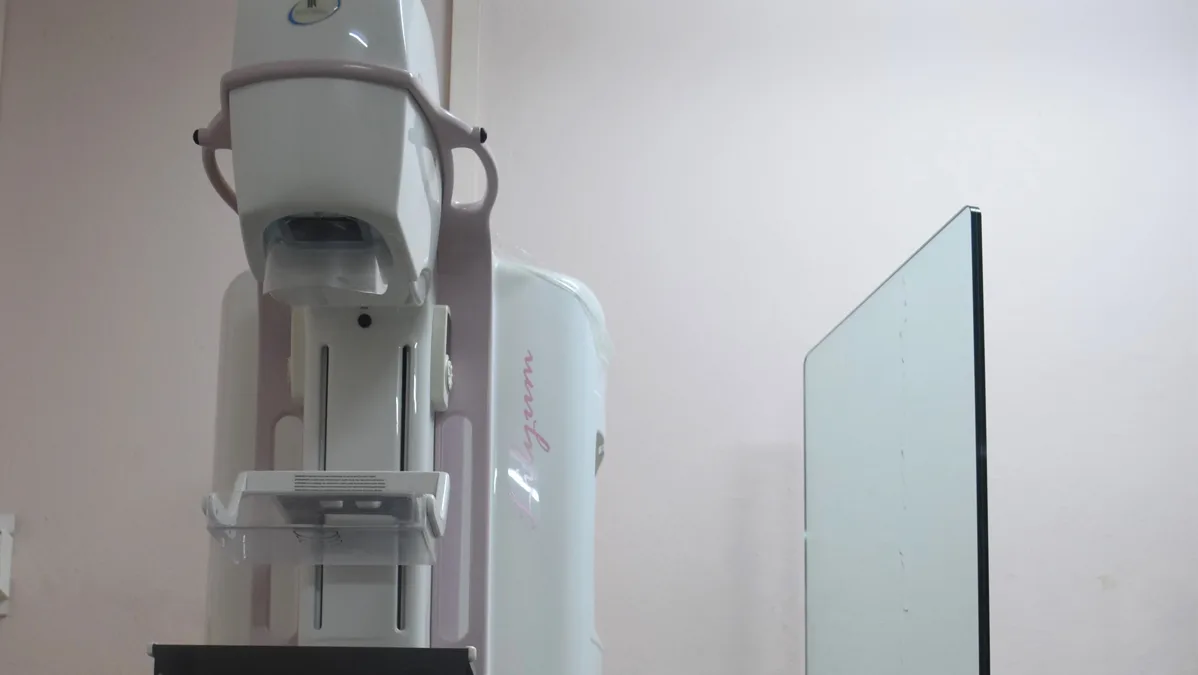
Those are strong numbers, but they come from one country’s system. Screening centres differ in equipment, in the populations they serve, and in how their teams work — which is why the NHS wants its own evidence, at a scale no one has attempted before.
What could go wrong#
The risks the trial is designed to measure are real. An AI that flags too much creates anxiety, extra appointments and biopsies for women who turn out to be healthy. There is also overdiagnosis: screening can find slow-growing cancers that would never have caused harm, and treating them carries its own costs. Then there is the money question — the price of the software, the integration work and the training, set against the radiologist hours saved. EDITH’s design, with its three-way comparison and four-year follow-up, is built to produce answers on all of these, not just on detection rates.
What to watch#
Recruitment is the first thing to track: whether the trial reaches its target across all 30 sites, and how the three reading arms compare on cancers found — and missed — as results accumulate. The follow-up data will matter most, since cancers that appear between screens are the real test of whether AI-assisted reading is as safe as double reading. And if the results are positive, the bigger question follows: whether AI becomes a routine part of breast screening across the NHS, and what that means for the radiologists whose work it changes. For now, the trial itself is the news — the largest test of AI in cancer screening ever run, and one whose results will shape screening policy well beyond Britain.
Sources: The Neuron, “NHS AI Breast Screening Trial: Can It Catch Cancer Earlier?”; Health Research Authority, “EDITH”; NHS England, “First women join world-leading AI-assisted NHS breast-screening trial”; Museum of AI, “AI news, 25 November”