China Telecom open-sources Xing4.1-Preview: a 285B agentic model trained entirely on Huawei Ascend chips
China Telecom has released the open weights of Xing4.1-Preview, a 285-billion-parameter agentic model trained end to end on Huawei Ascend chips — no Nvidia hardware anywhere in the stack. Its benchmarks are mid-pack, but the hardware story is the point.
- 285B total / ~17B active: a mixture-of-experts model with 256 routed experts, 45 layers, and a 1M-token context window.
- Trained on Ascend: 8,192 Huawei Ascend 910C chips with MindSpore, per the Xing 4 technical report — no GPUs, no CUDA.
- Open weights: Apache 2.0 licence; BF16 weights are 521.4 GiB, with an NVFP4 build at roughly 190 GB.
- Benchmarks are mid-pack: it trails GLM-5.3-Flash and Hy4-flash on most agent benchmarks on its own model card.
- Available now: downloadable weights plus an API on China Telecom’s Tianyi AI platform; serving support in vLLM, SGLang, ms-swift and LLaMA-Factory.
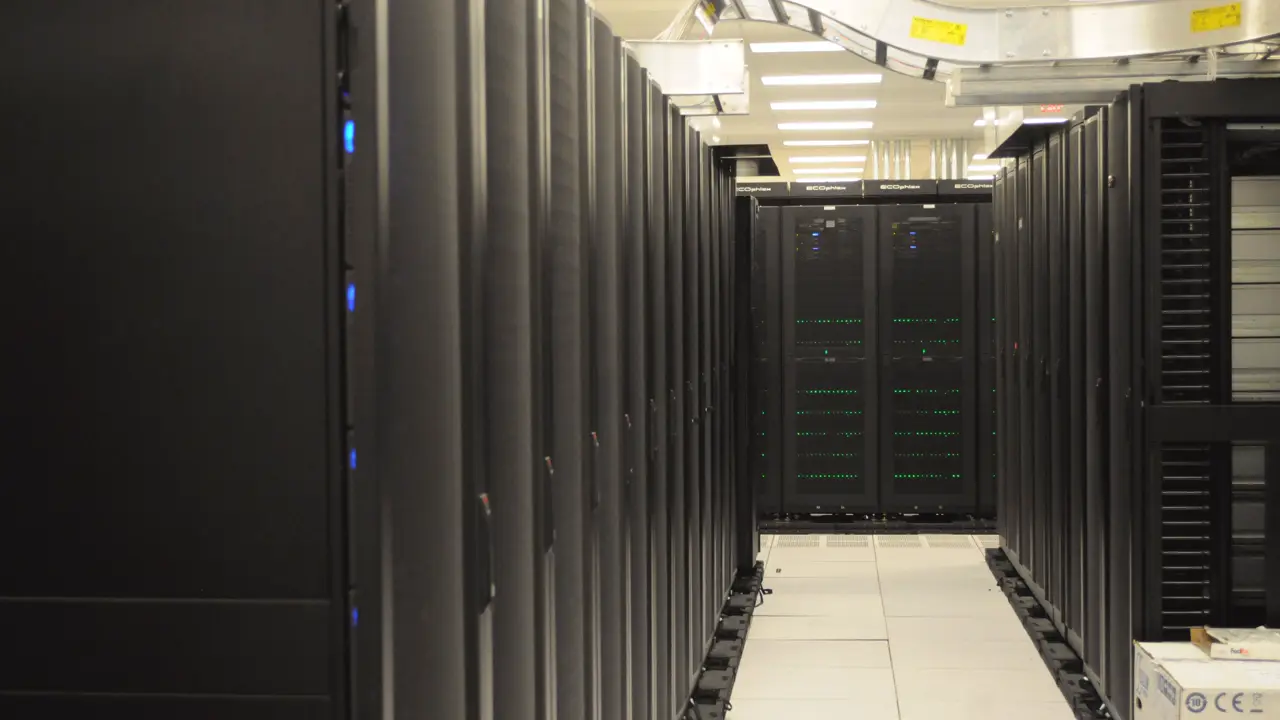
China Telecom's AI division has released the open weights of Xing4.1-Preview, the flagship of its Xing 4 model family. The 285-billion-parameter mixture-of-experts model is built for agentic coding and long-horizon agent work, carries a million-token context window, and is available now under the Apache 2.0 licence — both as downloadable weights and through China Telecom's Tianyi AI platform.
The release is notable less for what the model can do — its published benchmark scores are respectable but not chart-topping — than for how it was built. Xing4.1-Preview was trained end to end on Huawei Ascend chips, on a fully domestic stack with no Nvidia hardware and no CUDA anywhere in the pipeline. It is the largest open model yet to come out of that stack, and the clearest evidence so far that it works at frontier scale.
What was released#
The model card on Hugging Face lays out the configuration. Xing4.1-Preview activates about 17 billion of its 285 billion parameters per token, routing each token to eight of 256 experts plus one shared expert across 45 layers. Its attention design pairs multi-head latent attention with DeepSeek sparse attention, a combination borrowed from the DeepSeek-V3.2 lineage, and it supports a configured context length of one million tokens.
| Specification | Xing4.1-Preview |
|---|---|
| Total / active parameters | 285B / ~17B per token |
| Architecture | MoE — MLA + DSA attention, 45 layers |
| Experts | 256 routed (8 active) + 1 shared |
| Context window | 1M tokens |
| Weights | BF16, 521.4 GiB across 261 shards |
| Licence | Apache 2.0 |
| API | Tianyi AI platform — 896K input / 128K output tokens |
A quantized NVFP4 build was released alongside the full-precision weights, cutting the memory footprint to roughly 190 GB. The model ships with a thinking-mode toggle, tool calling and structured output through an OpenAI-compatible interface, and day-one serving support in vLLM, SGLang, ms-swift and LLaMA-Factory. The FlagOS community also offers deployment builds for eight chip platforms, from Huawei Ascend to Nvidia.

The benchmarks, honestly#
China Telecom published agent-benchmark scores on the model card, and they tell a modest story. Against same-class “flash” models — Tencent's Hy4-flash, Z.ai's GLM-5.3-Flash and DeepSeek's v4-flash — Xing4.1-Preview lands in the middle or at the back of the pack on most tests.
| Benchmark | Xing4.1-Preview | Hy4-flash | GLM-5.3-Flash | DeepSeek-v4-flash |
|---|---|---|---|---|
| Terminal-Bench 4.0 | 20.6 | 19.2 | 35.4 | 7.0 |
| AutomationBench | 45.3 | 52.2 | 48.4 | 37.7 |
| Apex-Agents | 50.7 | 63.1 | 51.5 | 55.3 |
| HLE with tools | 45.7 | 55.2 | 52.2 | 51.5 |
| Claw-Eval | 49.7 | — | — | 49.3 |
The fine print matters. The card notes that GPU sandbox tasks were skipped for Xing4.1-Preview on Terminal-Bench, and that the HLE result covers text-only data. The lab itself is cautious: its Hugging Face organisation page says full benchmark results will be published with the technical report at the official release, and that no scores should be quoted before they are confirmed through official channels. Treat the numbers above as the lab's own preliminary figures, not independent results. Nobody outside China Telecom has run the model yet.

Why the hardware is the story#
The training stack is the real announcement. According to the Xing 4 technical report, posted to arXiv on November 17, the Xing 4 family was pretrained on 8,192 Huawei Ascend 910C cards using Huawei's MindSpore framework — a domestic stack from silicon to software, with no GPUs and no CUDA. The model card says Xing4.1-Preview was co-designed around the compute profile of that training cluster rather than ported onto it.
That matters because of the context around it. US export controls have cut Chinese labs off from the most advanced Nvidia hardware for years, and the open question has been whether a fully domestic stack can train a frontier-scale model at all. A 285-billion-parameter model with open weights is a concrete answer: yes, at least this far. It is also a second data point for this blog — in September we covered the smaller Xing4.0-29B, trained on the same stack. The 285B flagship is the same bet, scaled up roughly tenfold.
There is a second-order effect worth watching. If the domestic stack can train models this large, the constraint on Chinese labs shifts from hardware access to everything else — data, algorithms, and the serving ecosystem. The FlagOS multi-chip support hints at that shift: the community is already organising around running the same weights on eight different chip families.
How to run it#
Running the full-precision weights is a data-centre job: 521 GiB of BF16 weights needs roughly eight 80 GB GPUs at tensor-parallel size eight, and longer contexts need proportionally more memory. The NVFP4 build is the practical route for smaller setups. Everyone else can try it through the Tianyi AI API, which serves the full million-token context with up to 896K input tokens and 128K output tokens per request.
One caution from the model card's disclaimer: China Telecom says the model should not be used for internet services that have not undergone security review and filing — standard compliance language for a Chinese release, but worth knowing before building anything public on it.
What to watch#
Three things. First, the full technical report and confirmed benchmark numbers — the scores above are the lab's own, and independent evaluations will say more. Second, whether other Chinese labs follow with their own flagships on Ascend: the Xing 4 report is public, and the playbook is now visible. Third, whether the domestic stack keeps scaling — the next Xing model will show whether 285 billion parameters was a ceiling or a stepping stone.
Sources: Hugging Face, “XingChen-AGI/Xing4.1-Preview” model card; Hugging Face, “XingChen-AGI” organisation page; arXiv:2611.22115, “TeleChat to Xing4: Advancing Frontier Agentic Models on Domestic Chips and Frameworks”; Chainwire, “China Telecom Open-Sources Xing4.1-Preview 285B Model”; Local Model Watch, “Xing4.1-Preview-NVFP4 285B MoE Model”