Tesla begins rolling out FSD v15: Reality View, a 25x safety claim, and a December wide release
Tesla has started rolling out Full Self-Driving v15 to a first wave of customers, with a new Reality View visualization, a claimed 25-fold improvement in handling safety-critical cases, and fixes aimed at the system’s best-known weaknesses — signs, potholes and school zones.
- The rollout: FSD v15 started reaching a first wave of customers on November 21, 2026; Tesla AI VP Ashok Elluswamy confirmed it the same day, and Elon Musk says a wide release comes next month as part of the holiday update.
- Reality View: a live, generative visualization of the drive from a virtual camera above the vehicle; it replaces the old set of model signals with one end-to-end view using less compute, and drivers can switch between fullscreen, map, split and quiet modes.
- The 25x claim: an upgraded vision encoder, shared with Robotaxi and Optimus and trained on millions of internet videos, is claimed to improve the critical intervention rate 25-fold. Tesla publishes the multiplier, not the rate itself.
- What it targets: road signs, small animals, debris, chains, potholes, deep standing water, speed handling in school zones and bad weather — plus speed-camera slowdowns and a new Bike Rack Mode.
- Still supervised: v15 remains Full Self-Driving (Supervised) — the driver must stay alert and ready to take over at all times.
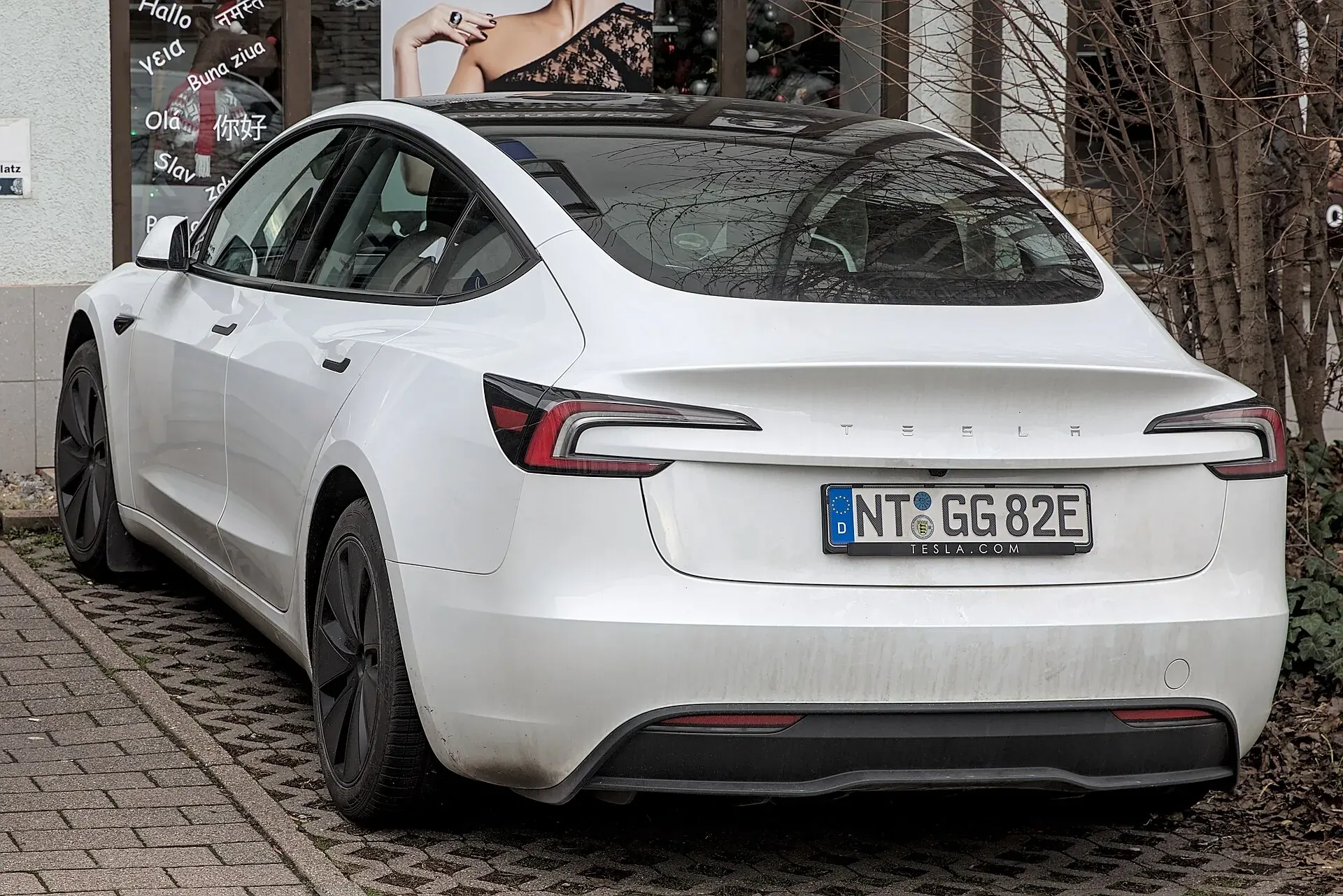
Tesla has started rolling out the biggest Full Self-Driving update in over a year. FSD v15 began reaching a first wave of customers on Saturday, November 21, and the company is pitching it as a ground-up rebuild of the driving network rather than another point release — a new vision encoder, a new way of showing the driver what the car sees, and a list of fixes aimed squarely at the complaints owners and regulators have made for years.
The catch, as ever with Tesla, is the gap between the announcement and the evidence. The flashiest piece — a photorealistic live rendering of the road called Reality View — is visible in Tesla’s own video. The boldest number — 25 times better handling of safety-critical cases — arrives without the underlying figure that would let anyone check it.
What’s actually in v15#
Tesla’s release notes say v15 “upsgrades every part of the end-to-end driving network.” The technical core is a shared vision encoder: one encoder now serves FSD, the Robotaxi fleet and Optimus, trained on millions of internet videos for better generalization and data efficiency. Around it, the update touches almost everything the driver interacts with:
| Area | What changes in v15 |
|---|---|
| Vision encoder | Upgraded, shared across FSD, Robotaxi and Optimus; Tesla claims it improves the critical intervention rate 25-fold |
| Reality View | New live visualization from a virtual camera above the car, replacing the old set of model signals |
| Navigation | End-to-end learned model using route preferences from the fleet; trip start and end for now, full routes later |
| Parking | Chooses spots from the owner’s parking history and shows several options on the map |
| Driver monitoring | Vision-based attention checks work more often with hats and sunglasses; stricter monitoring eased in higher-speed profiles |
| Detection | Better reads on road signs, small animals, debris, chains, potholes, road details and deep standing water |
| Speed handling | Tuned per driver profile, plus school zones, speed limits and bad weather; slows for speed cameras |
| Bike Rack Mode | FSD works with a bike rack or hitch accessory fitted; car pulls over near the destination instead of backing up |
| Autoshift | Gear selection unified with FSD-based gear predictions |
Navigation learns route preferences from the fleet, though only the start and end of trips for now; parking draws on the owner’s own history and shows several options at the destination. One change runs the other way: Tesla is loosening driver-monitoring strictness in higher-speed profiles, even as drivers falling asleep with FSD engaged keep making headlines.
Reality View is the part you can already judge#
Reality View replaces the old visualization — the simplified top-down diagram of lanes and blobs — with a live rendered scene from a virtual camera floating above and behind the car. Tesla says it lets the driver see and control what FSD is planning to do, with upcoming turns drawn into the scene and a choice of fullscreen, map, split-screen or quiet layouts. The release notes call the same thing “Tesla Augmented Reality” and say it consolidates the separate model signals into one end-to-end view that uses less compute.
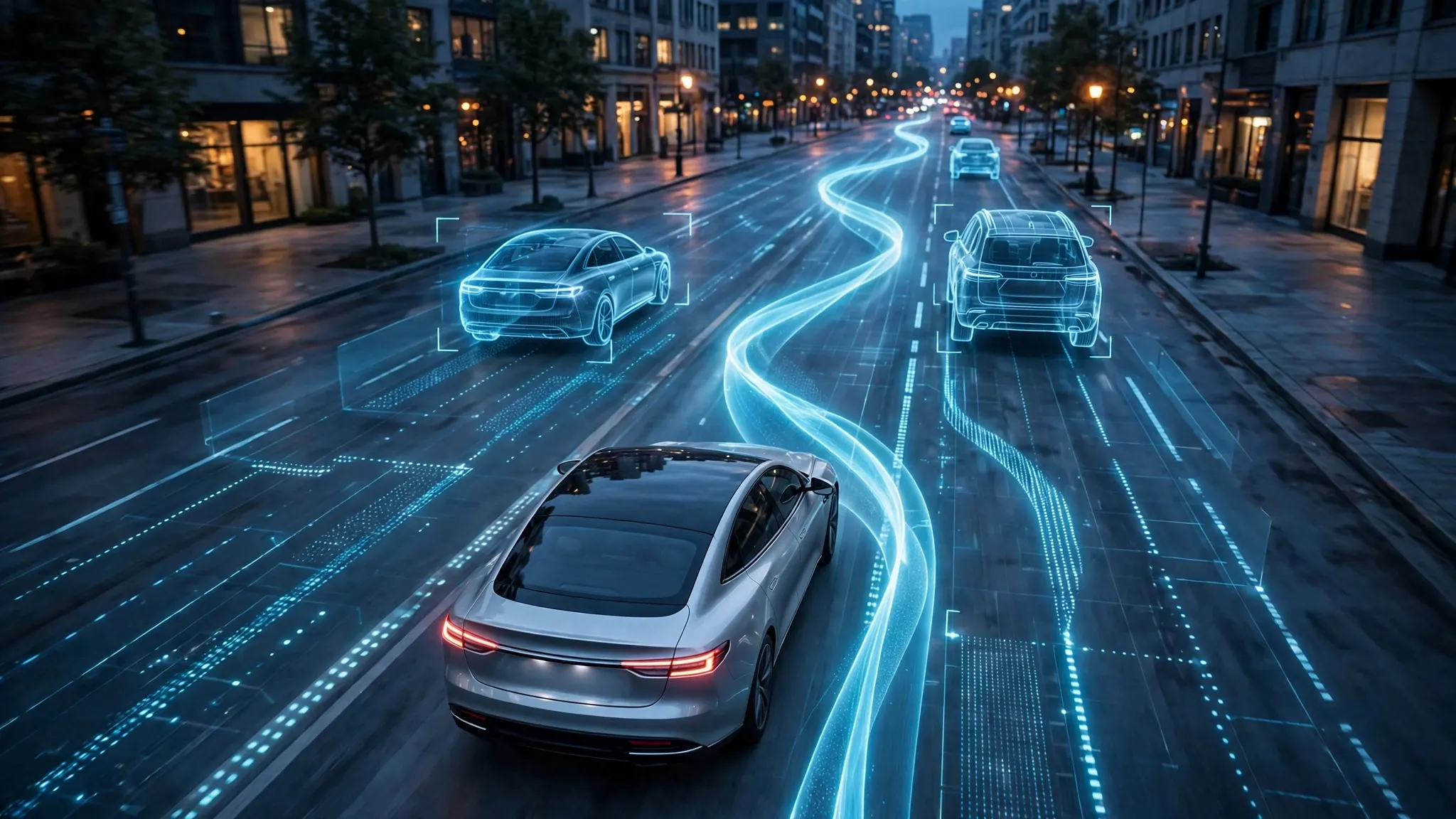
Why it matters: supervision is the whole job in a supervised system, and the old display told the driver relatively little about what the car intended to do next. A clearer picture of the plan could make that job easier — if the rendering faithfully reflects what the model actually sees. That is the question early users will answer.
Tesla has not said which cars get Reality View, and it has not said which vehicles get v15 first at all. It has previously told investors that its AI4 hardware is enough to run the new version, and DriveTeslaCanada expects Reality View to need HW4 cars with the newer AMD Ryzen computer.
The 25x claim, and what it doesn’t say#
The number at the centre of the announcement is the critical intervention rate — how often a human has to step in when something safety-critical happens. It is the right metric for measuring progress toward unsupervised driving. But Tesla publishes only the multiplier: the new encoder, it says, improves that rate by 25 times. Without the starting rate, 25x could mean anything from transformative to modest.
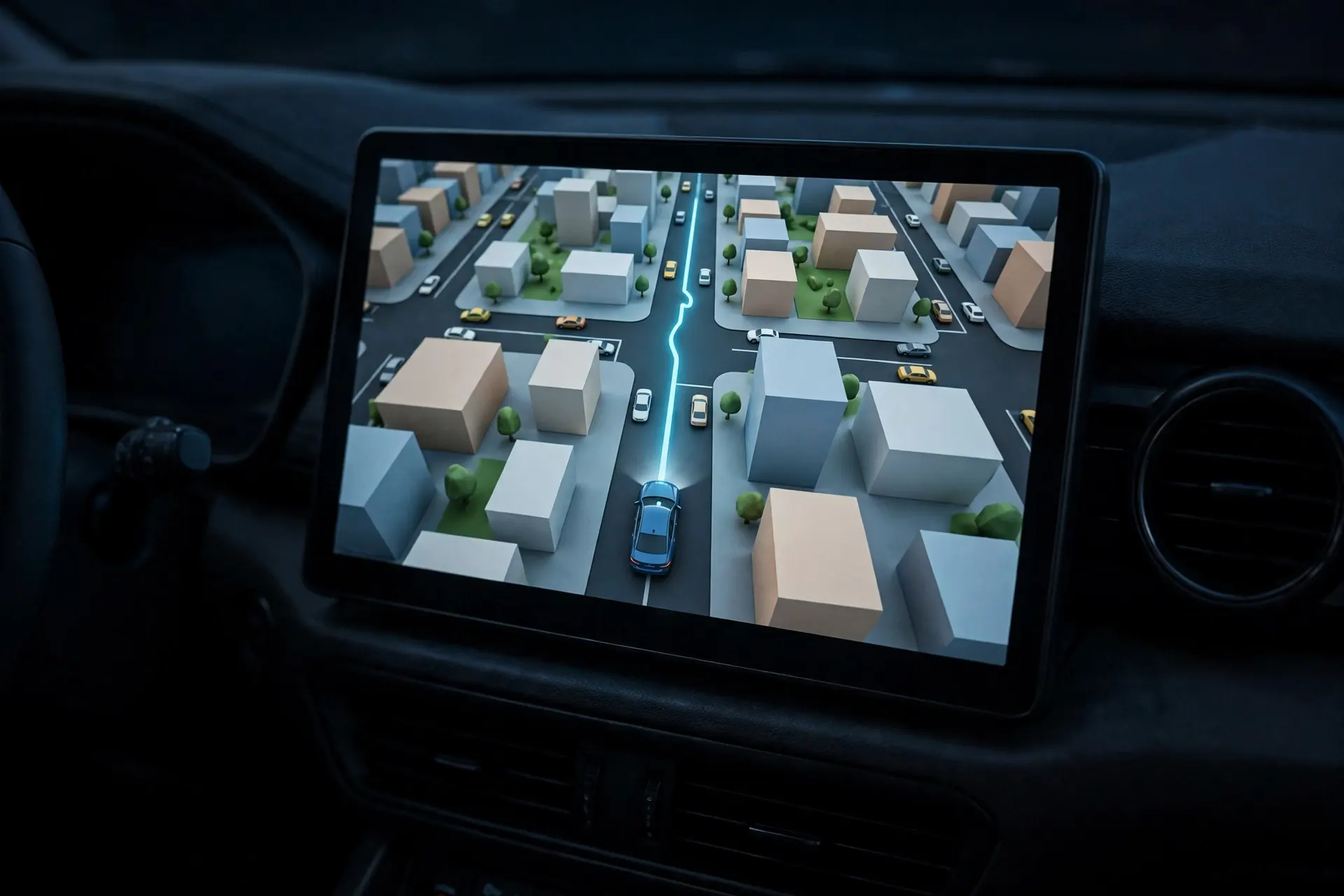
Electrek, working from its own earlier data, put the arithmetic in context: it estimated v14 could go a couple of thousand miles between critical interventions, so a 25-fold improvement would imply roughly 50,000 miles — well past the roughly 10,000 miles the outlet has said Tesla needs for limited unsupervised service. That calculation is Electrek’s, not Tesla’s. Treat it as a signpost, not a measurement.
History counsels patience. When v14 arrived in October 2025 it came with hallucinations, brake stabbing and excessive speeding; early crowdsourced data put it around 732 miles between critical disengagements, and the v14.2 updates then went backward. Musk has made big promises about v15 before — in April he wrote that it “will far exceed human levels of safety, even in completely unsupervised and complex situations,” after saying similar things about v12 and v14.
It goes straight at the weak spots#
The detection list reads like a catalogue of FSD’s most-cited failures: misread speed limits, potholes it drives straight through, school zones. A test published in September by Brussels nonprofit Johanna.be found FSD exceeding the limit in 55% of the 30 km/h zones it drove through, averaging 44 km/h while the car’s screen showed a 50 km/h limit. The U.S. regulator NHTSA is reviewing a petition claiming Robotaxis speed through active school zones, on top of an investigation it opened in October 2025 into FSD traffic-law violations including running red lights.
The new speed-camera slowdown fits the same pattern — and raises its own question, since it implies the car is content to exceed the limit where no camera is watching. Drivers can override it, and cancelling it twice at the same camera saves the location so it will not slow there again. Bike Rack Mode, meanwhile, lets owners run FSD with a bike rack or hitch accessory fitted: the car pulls over near the destination instead of backing up, and Autopark, Summon and backup chimes switch off while it is active.
What to watch#
First, whether the first-wave reports match the announcement: how faithfully Reality View reflects what the car actually sees, whether sign and pothole detection visibly improves, and whether the 25x figure shows up in independent disengagement data — Tesla still does not publish its own.
Second, the December wide release, when the multiplier meets the fleet. And the regulator angle stays live: NHTSA’s school-zone review and the October 2025 investigation are the backdrop for a release that loosens driver monitoring at higher speeds while claiming big safety gains. If v15 delivers, it is the most meaningful step toward autonomy Tesla has shipped in years. The next month of owner data will say whether it does.
Sources: Electrek, “Tesla launches FSD v15, targets its biggest weaknesses, from signs to potholes”; Drive Tesla Canada, “Tesla Begins FSD v15 Rollout With Major Safety and Navigation Upgrades”
Frequently asked questions
When can I get FSD v15?
The rollout started on November 21, 2026 with a first wave of customers. Elon Musk says v15 goes to wide release next month, in December, as part of the holiday update. Tesla has not said which vehicles get it first, but it has previously said its AI4 hardware is enough to run v15.
What is Reality View?
A live, rendered visualization of the drive from a virtual camera above the car, replacing the old simplified display. It shows what FSD plans to do, with upcoming turns drawn into the scene, and drivers can choose fullscreen, map, split-screen or quiet layouts. Tesla’s release notes call the same feature “Tesla Augmented Reality.”
Does the 25x safety claim mean FSD is 25 times safer?
Not exactly. Tesla says the new vision encoder improves the critical intervention rate — how often a human must intervene in safety-critical moments — by 25 times. Tesla has not published the underlying rate, so the claim cannot be independently checked yet.
Is v15 unsupervised driving?
No. FSD v15 remains Full Self-Driving (Supervised): the driver must stay alert and ready to take over at all times.