Claude Code blocked a developer from debugging his own software — and Reddit says it's happening to everyone
A developer asked Claude Code to fix a browser reconnect bug in his own project. It refused, calling the request reverse engineering — and the thread that followed says he's far from the only one.
- The post: u/berkayraifov on r/ClaudeAI, posted November 6, 2026 — 441 upvotes and 76 comments when read on Saturday.
- The refusal: a “reasoning_extraction” block on writing an acceptance test for the developer’s own app, citing Anthropic’s terms on reverse engineering.
- The thread: the top comment (144 upvotes) calls the guardrails out of control; the thread’s summary describes near-unanimous agreement that false positives are widespread.
- The context: Anthropic confirmed a two-sentence prompt change on Opus 5.5, around October 27, against recreating specific games — revised November 5 — but no evidence ties it to this refusal.
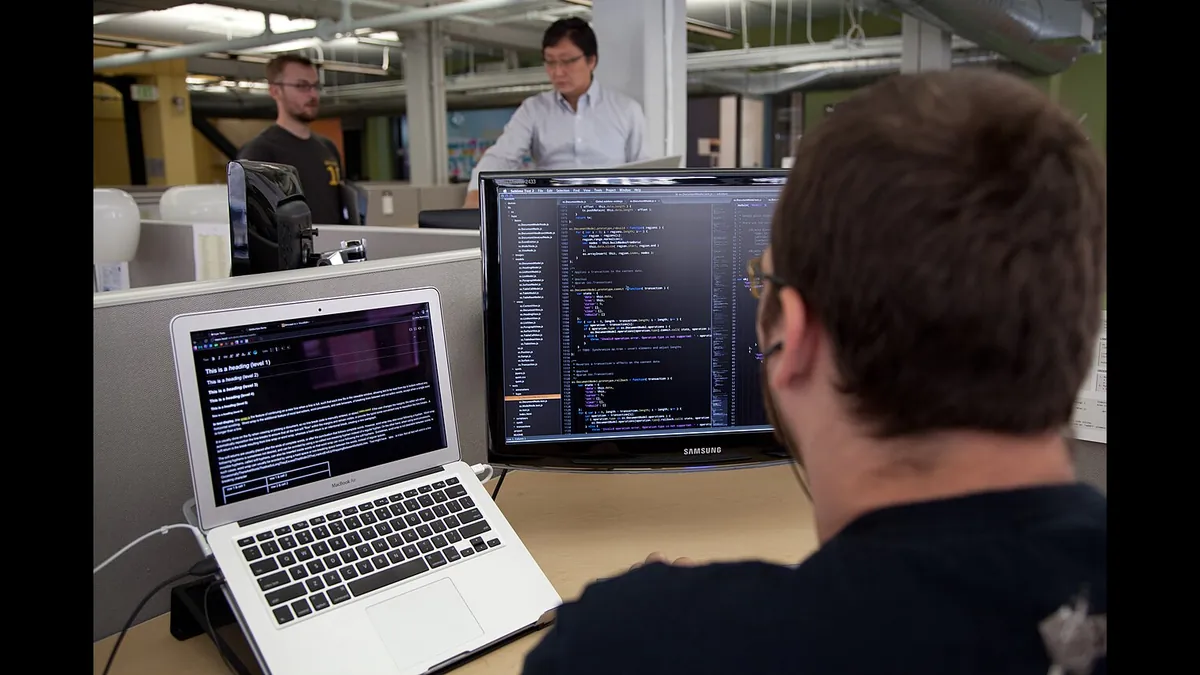
On Friday night, a developer who posts as u/berkayraifov put a silent screen recording on r/ClaudeAI — an ordinary debugging session going wrong in real time. He had asked Claude Code, running Sonnet 5.5, to fix a browser reconnect bug in VSTMX, a project of his own, after a tmux crash. Instead of writing the fix, the tool blocked the file write. The refusal banner in the recording said the request appeared to breach Anthropic’s terms on reverse engineering or duplicating model outputs. By Saturday midday the post had 441 upvotes and 76 comments, and the thread was still growing.
The blocked job was small and specific: an acceptance test that would kill the app’s private tmux server with SIGKILL and check that the browser reconnected afterwards. The developer wrote that he had checked the session log and found the refusal had struck during a code-writing step — not on a prompt containing pasted credentials or a public host and port. He could not tell which part of the request the safeguard had matched: the log records the refusal, but not the classifier’s reasoning. His question to the thread was simple: had anyone else hit a false positive like this on ordinary debugging, and was there any way to report it or find out what had triggered it?
The thread’s verdict#
The answer, in short, was yes — repeatedly. The top comment, with 144 upvotes, called the guardrails out of control and suggested switching to open-weight models. Others piled in with their own blocked tasks: translating a Korean song, writing a script to control an air conditioner through its published local API, building simple games, auditing code Claude itself had written. One commenter, who said he uses Claude for interpretability research, described the refusals as brute-force keyword matching wrapped in liability paranoia. The thread’s auto-generated summary put it bluntly: nearly everyone replying had hit something similar.

The workarounds on offer were practical rather than defiant. Several commenters said they had dropped back to older models — Opus 4.8 or 4.6 — which they described as less trigger-happy. Others suggested switching providers entirely, naming Kimi and DeepSeek among the alternatives, or rewriting requests as plain development tasks with no justifying language. One commenter said filing a report through Claude Code’s /feedback command had cleared a similar block within a day. The original poster replied that his blocked write had nothing to do with cloning a repository or authorization wording: the pattern he could see was process termination plus recovery testing.
The wider pattern — and what Anthropic has actually confirmed#
The post landed in the middle of a wider argument that has been running since late October. Around October 27, Anthropic added two sentences to the prompt Claude Code runs on Opus 5.5, steering it away from recreating specific existing video games — a change users spotted and Addy Osmani, a member of Anthropic’s technical staff, later confirmed, saying the aim was to stop the model being used to infringe intellectual property. Osmani said original games, genre games, and projects built from a developer’s own designs and assets were meant to keep working, and invited developers whose own code was being turned down to send him their cases. On November 5, he said the rule had been revised in Claude Code 2.1.317 so developers could name an existing game when describing the mechanics they wanted, while still getting an original game back — acknowledging the earlier version had blocked projects it should have allowed.
But the link between that game rule and this refusal is not established, and the distinction matters. The refusal in the recording carries a “reasoning_extraction” label and cites the terms of service, not the game instruction. Other reports in the same wave describe refusals on crash-dump analysis, anti-cheat work, and workflows built around the Reverse Engineer Anything tool — and the reporting has been careful to say the game rule has not been shown to cause any of them. One outlet’s test even found Opus 5.5 agreeing to help with a decompilation question, explicitly distinguishing reverse engineering from recreating a game. This post is best read as a fresh, documented case in an unresolved pattern — not as proof of what caused it.

What to watch#
- Whether Anthropic says anything about the reasoning_extraction trigger itself. What it matches on, and whether developers can ever see why a request was flagged, is the question the original poster actually asked — and so far it is unanswered.
- Whether the November 5 revision quiets the complaints. The revised rule is meant to let developers reference games as design inspiration without being blocked. If refusals on tasks that have nothing to do with games keep coming, the problem is bigger than one prompt tweak.
- Whether the /feedback reports change anything. Developers are filing them, and at least one says a report cleared a block within a day. If that holds up at scale, it is a workable pressure valve; if not, the workarounds harden into habit.
- Whether the debate shifts from individual refusals to the structural question. Claude Code’s behavior can change overnight through server-side instructions, with no client update and no changelog entry. Teams that depend on it mid-project can be caught out by a change they never saw coming.
For now, the recording is the story: a developer, his own code, a test file that never got written — and a thread full of people who recognized the refusal immediately. The guardrail did what it was built to do. The argument is about whether it is doing it to the right requests.
Sources: the original post by u/berkayraifov on r/ClaudeAI; Windows Forum’s report on Anthropic’s confirmed game-recreation restriction; Silicon Report’s coverage of the broader refusal claims.