Photos to playable plants: Claude Fable 5.2 turns snapshots into AAA-style Unity foliage for $8
An indie developer fed photos of plants to Claude Fable 5.2 and got a reusable Unity foliage pipeline: 18 low-poly plants, wind-blown grass, and an $8 generation bill. The 69-second video is the talk of r/ClaudeAI.
- Posted Sunday, November 22 at 1:15 AM EST by u/Delicious-Shower8401 to r/ClaudeAI; 767 upvotes and 31 comments by midday, still climbing.
- The 1:09 video, hosted on Reddit with no audio, shows a Unity 6 URP scene with 18 low-poly plant models — red poppies, sunflowers, daisies, lavender and grass — swaying in the wind.
- The pipeline: a photo goes in; Nano Banana Pro makes references and ground textures; Meshy AI’s Smart Topology turns them into low-poly 3D parts; Blender cleans up and bakes; Claude Fable 5.2 orchestrates it all and builds the Unity scene.
- The creator’s numbers: about 8 hours of agent time at Extra High effort across two 5-hour Claude Max windows; $8 in generation costs — $4 on images, $4 on untextured 3D parts.
- No code, guide or repo yet — the creator says a plugin/addon is planned, and commenters are already asking for the link.
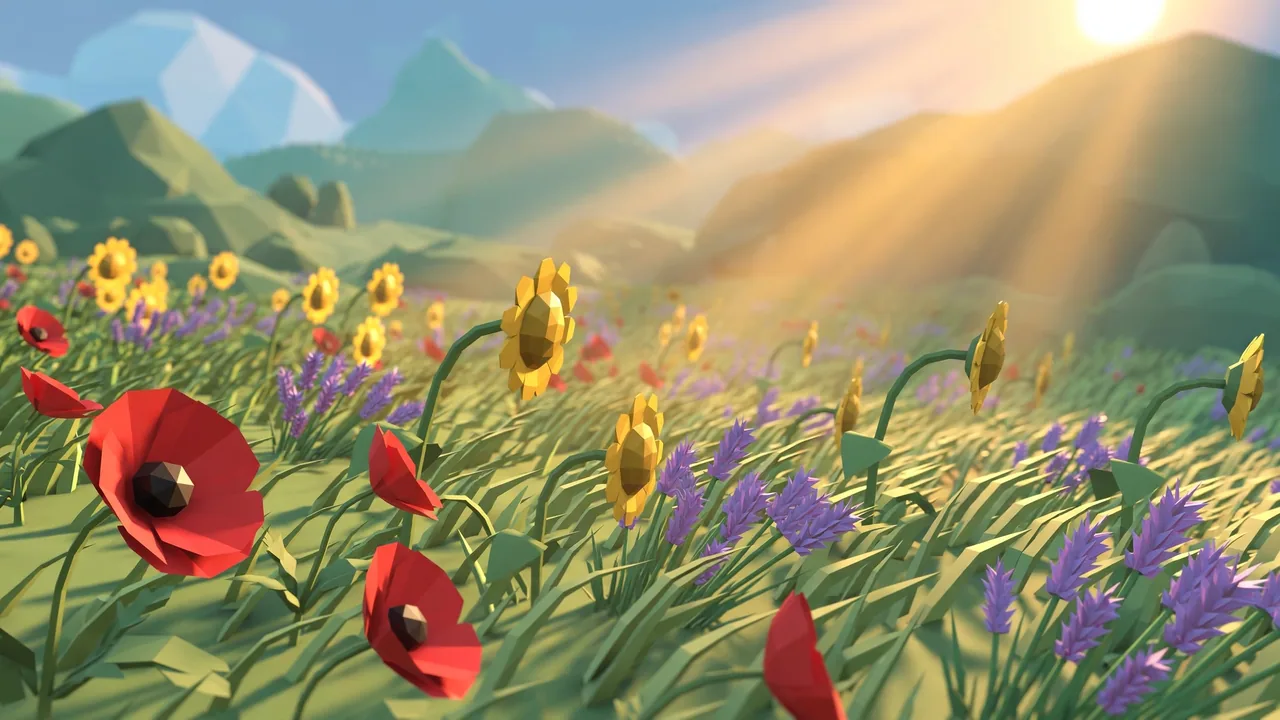
A meadow that never grew anywhere is one of the most upvoted posts on r/ClaudeAI this weekend. In a 69-second video posted early on Sunday morning, a Unity scene fills with red poppies, sunflowers, lavender and grass — every blade bending in the wind — and the whole field, the creator says, started as ordinary photographs. The tool that turned the photos into plants was Claude Fable 5.2, and the generation bill for the entire workflow was $8.
The video is silent and the post is a how-it-works write-up, but the reaction is the story: 767 upvotes and 31 comments by midday Sunday, with the top comment — 65 points — declaring the creator had “skipped buying a foliage pack and built a foliage factory instead.”
What the video actually shows#
The clip is a screen recording of the Unity 6 editor, running the Universal Render Pipeline. It opens on a terrain grid planted with 18 low-poly plant models, then moves in close on a dense field of red poppies, sunflowers, daisies, lavender and grass swaying under sun rays, a Unity editor panel visible at the left of the frame. No narration, no music, no text overlay — the plants and the wind are the whole content.
The post, by u/Delicious-Shower8401, went up at 1:15 AM EST on Sunday, November 22, and was still climbing when we read it. The creator’s goal was practical: custom grass and flowers for indie games, painted straight onto Unity terrain. Set the art style once, then hand Fable a photo whenever a new plant is needed.
From a photo to a plant#
The workflow has five stations, and Fable 5.2 runs the line. The creator starts with a photo of a plant; Fable finds reference images and passes them through the pipeline. Nano Banana Pro, Google’s image model, produces the plant references and ground textures. Meshy AI’s Smart Topology, its low-poly image-to-3D pipeline, turns the references into low-poly 3D parts via the API. Blender handles mesh cleanup and texture baking; Unity 6 with URP provides the terrain, wind and lighting.
Fable did more than glue the steps together. According to the creator, it generated textures, built some of the geometry itself, called the Meshy API for a few untextured parts, built the lower-detail meshes and set up the materials — all steered by feedback in plain English, one flower at a time, up to the full set of 18 models. The test scene was the hinge: start with one flower, look at it from every angle, say what looks off, and let the agent adjust the shape.
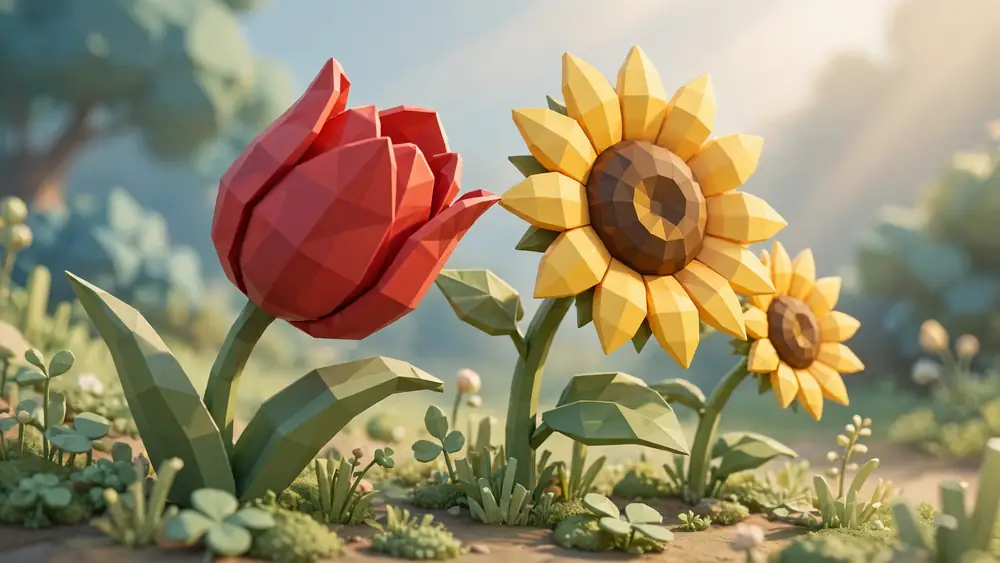
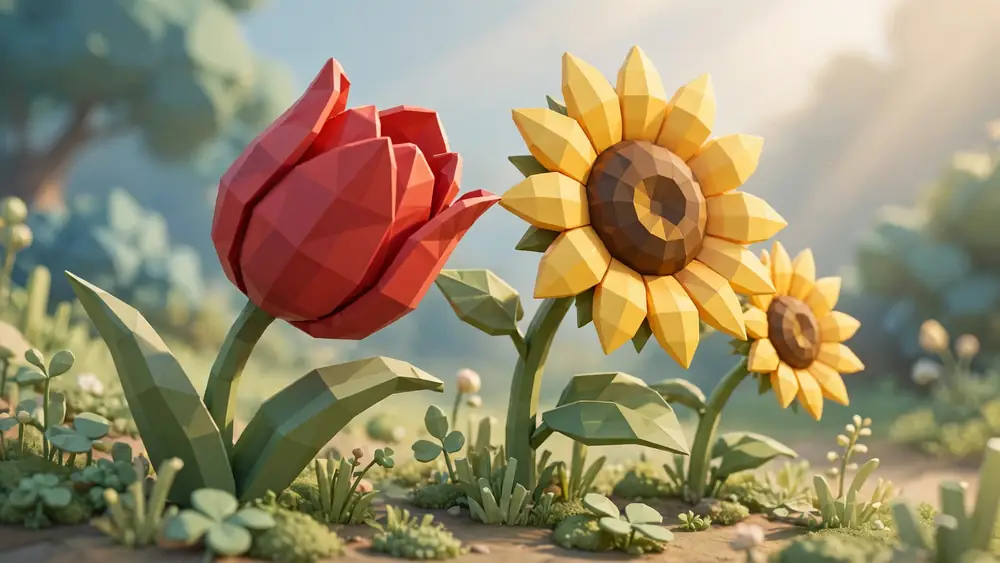
What makes the result read as game-ready rather than a render is the discipline underneath it. Each grass blade is 18 triangles and bends in the wind. Every blade and petal has real thickness instead of being a flat card. Each plant ships in three levels of detail — the tulip runs 500 triangles up close, 250 at mid-range and 100 at a distance. Normal maps add surface detail, transmission maps control how much sunlight passes through leaves and petals, and several flowers share one texture atlas.
Then came the repeatability test. Once the lineup was done, the creator asked Fable to turn the steps into a reusable workflow: photo in, plant out, the same setup portable from one Unity project to the next. It worked on the first try for a couple of plants — the claim the whole post hangs on. Not that one pretty meadow exists, but that the next one costs a photo and a few minutes.
The $8 question#
The numbers are the part of the post that will travel furthest, so they deserve a careful read. The creator reports about eight hours of agent time at Extra High effort, spread across two five-hour usage windows on Claude Max, and $8 in generation costs: $4 on 1,000 images and $4 on untextured 3D parts. Those are the creator’s own figures, and nobody in the thread independently verified them.
Two caveats sit inside the $8. It covers generation only — the Claude Max subscription behind those two five-hour windows is not in the number. And one commenter questioned whether Extra High effort is worth it at all, saying they had heard it only raises the price and the time without noticeably better results. The creator did not answer that one.

The thread pushed back on the tooling, gently. One commenter asked whether Tripo AI’s API would do the job better than Meshy. Another, u/SquizzOC, said the whole thing is achievable without Meshy at all — “it’s more about speed and where you want to spend your money” — and described running a similar pipeline locally for every prop in a game, trees included. None of that disputes the result; it argues about the cheapest route to it.
The reaction: “a foliage factory”#
The comment section reads like a waiting list. Asked “do you have the code?”, the creator answered they are planning to package the workflow as a plugin or addon — the most-endorsed reply in the thread after the top comment, at 18 points, with a small queue of people asking to be linked when it ships. Others asked whether the same workflow could make buildings, trees and people, and how the wind animation was done; the creator’s answer on the wind was a wind-map texture in Unity.
What the thread does not contain is also worth noting: no comment challenges the result, and no one accuses the creator of copying someone else’s work. The discussion is practical, not hostile — people asking how, not whether.
Why it matters — and what to watch#
The interesting shift is not that an AI model made some flowers. It is that a one-off demo hardened, inside a single session, into a repeatable pipeline with a price tag and a parts list — and the community’s first instinct was to ask for the plugin. Fable 5.2 has had a busy fortnight on Reddit: it built a swimmable underwater world in a single 97 KB HTML file and painted a Bob Ross landscape in a browser Paint clone. This one is different in kind: not a spectacle, but a tool an indie developer can reuse on the next project.
The economics are the wedge. A foliage pack from an asset store costs real money and still looks like everyone else’s game; $8 of generation and a photo of a plant buys a look nobody else has. If the plugin ships, the marginal cost of a distinctive art style for a small team drops toward zero — which is exactly why the top commenter thinks asset-store sellers should be sweating.
Three things to watch. First, whether the plugin actually arrives, and what it costs — the thread’s enthusiasm is priced in, the product is not. Second, whether the workflow generalises: trees and buildings are the questions commenters asked first. Third, whether “AAA-quality” survives contact with a shipped game rather than a 69-second showreel. For now, the video is the evidence, and the evidence is a field of poppies that started as photographs. Watch it on the original Reddit post.