Embo raises $110M to build a robot brain that learns physics from video
A robotics startup that has shown the public nothing — no robot, no demo, no benchmark — just raised one of the largest seed rounds in AI history. Embo, founded by two of the researchers behind the Dreamer line of world-model agents, announced on November 23 that it has raised $110 million led by Andreessen Horowitz to build a single AI model it calls a robot brain.
- $110 million seed, announced November 23, 2026, led by Andreessen Horowitz; Khosla Ventures, DST Global, and NVIDIA’s venture arm NVentures joined, plus other strategic investors.
- One unified model, pretrained from scratch on internet-scale video and text, fine-tuned on robot experience from Embo’s humanoid fleet, and post-trained by reinforcement learning.
- Founders: CEO Danijar Hafner, behind the Dreamer line of world-model agents, and CTO Wilson Yan, whose work includes VideoGPT.
- Team background spans Google DeepMind, Meta Superintelligence Labs, NVIDIA Cosmos, UC Berkeley, and MIT.
- Nothing public yet: no model, benchmarks, customers, valuation, headquarters, or launch date disclosed; Andreessen Horowitz says early results are “remarkably promising” but published no numbers.
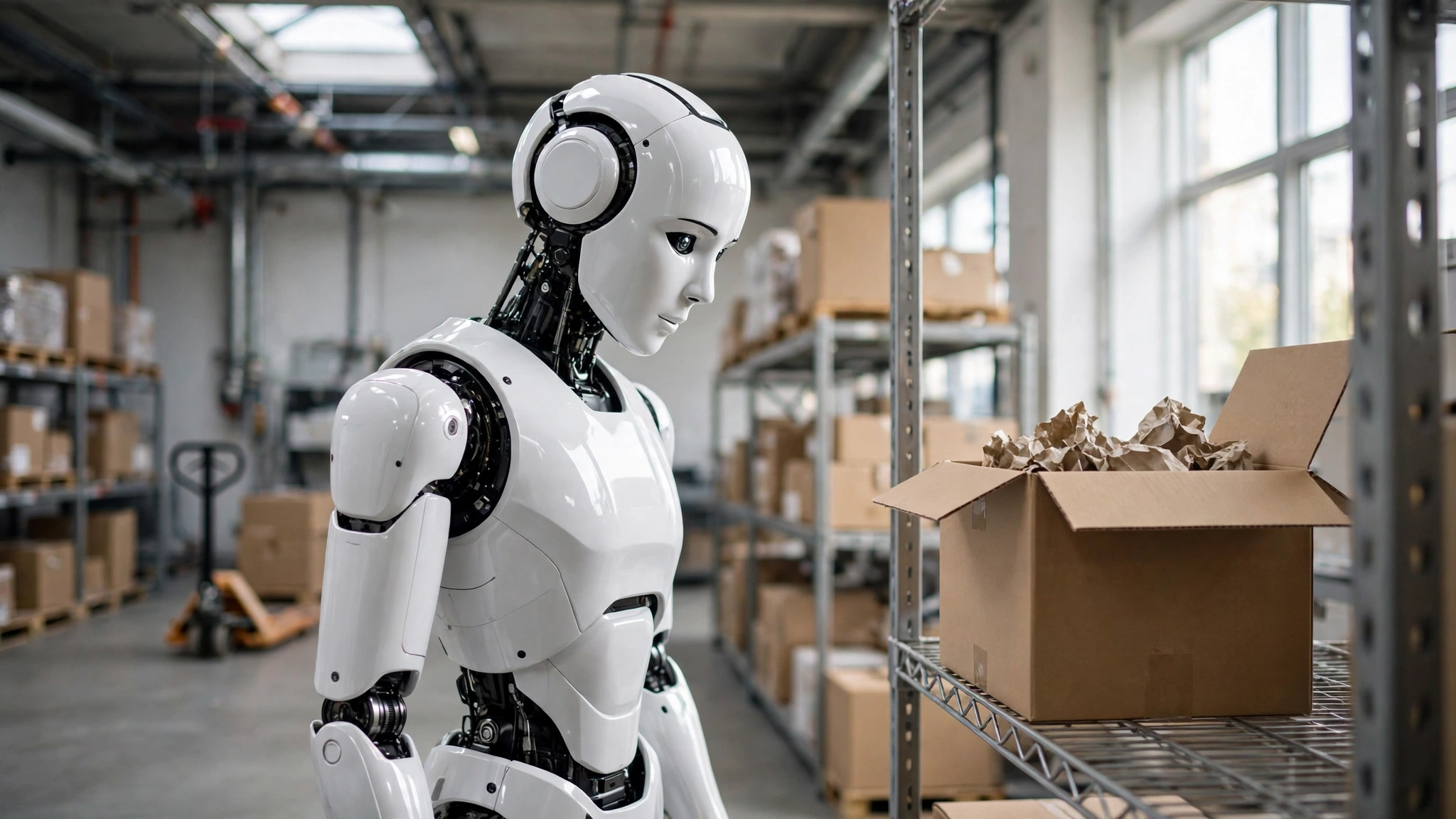
The bet is that humanoid robots do not need more task-by-task training. They need a model that understands how the physical world works — learned from video at internet scale — and then practices inside its own imagination until the skills hold up in rooms it has never seen.
That is a large claim for a company with nothing to show yet, and the funding reflects it: $110 million is an enormous seed round by any measure. Dealroom ranks it in the top 1% of seed rounds for US computer-vision startups across 1,189 comparable deals. What investors are buying, for now, is a team and a thesis.
The pitch: learn physics from video, practice in imagination#
A world model is an AI system that learns how the physical world behaves — how objects fall, slide, stack, and break — by predicting what happens next in video. Embo says it pretrains one unified model from scratch on internet-scale video and text, giving the robot broad common sense about physics before it ever touches a real task.
Then comes the part that makes the approach different from simply collecting more robot data. The model becomes a virtual training ground: an agent practices skills inside it, trying different actions across thousands of imagined scenarios and improving through reinforcement learning, including learning from its own failures. The idea is that skills learned in imagination transfer to the real machine — and survive the surprises a real room throws at it.
The pitch lands because the problem it names is real. Robots can already do remarkable things in demos, but those skills are fragile: move an object, change the lighting, or introduce something unfamiliar, and the robot can struggle. Embo frames its approach around two failures to fix — generalization, so a robot trained in one kitchen works in an unseen one, and resilience, so it recovers when an object slips or a drawer sticks.

Why the pedigree is doing the heavy lifting#
With no product to judge, the founders are the evidence. Danijar Hafner spent nearly a decade building world-model agents, including the Dreamer series, which learn to act by practicing inside a learned model of the world. Andreessen Horowitz points to Dreamer 4, which learned to obtain diamonds in Minecraft using only previously collected data, with behavior trained entirely in imagination. Wilson Yan built VideoGPT and has worked on world models with Hafner for years.
The wider team draws from Google DeepMind, Meta Superintelligence Labs, NVIDIA Cosmos, UC Berkeley, and MIT. The company also says it previously built infrastructure to train multimodal models across 70,000 GPUs.
That pedigree is also the risk: world models are now a crowded thesis, and a famous team is no guarantee the approach scales from game worlds and video prediction to fine motor control on a real humanoid.
A crowded, well-funded race#
Embo enters a field that has already absorbed billions. Physical Intelligence raised $600 million in November 2025, and Skild AI raised $1.4 billion in January 2026 at a $14 billion valuation, according to Dealroom. Against those numbers, $110 million is a seed — large for a first round, small for the ambition.
The field is splitting into two camps. One collects robot data in the real world, at great expense, betting that enough demonstrations will generalize. The other, Embo’s camp, bets that video plus simulation can substitute for most of that data.
So far, no approach has produced a humanoid that works reliably in genuinely unfamiliar settings. That is the bar Embo has set for itself, and the reason the round is notable: it is the largest single bet yet that the world-model route, rather than the data-collection route, gets there first.
What is still unproven#
Everything beyond the funding is, at this point, a promise. Embo has published no model weights, no benchmarks, no fleet size, and no launch date. It has named no customers and disclosed no valuation, headquarters, or headcount. The lead investor’s note says early results have been “remarkably promising,” but that is Andreessen Horowitz’s assessment, not a measured result — it comes with no numbers, tasks, or public model to check it against.
The thesis itself is also unproven at the scale Embo proposes. Pretraining on internet video teaches a model how the world looks and moves, but whether that transfers to the fine motor control of a humanoid — gripping, balancing, recovering from a slip — is the open question.

What to watch#
The first public demonstration will tell us more than the funding ever could: a robot running Embo’s model in a room it was not trained for, handling the small surprises — a moved object, a stuck drawer — that break today’s demos. Until then, the honest summary is the one the announcements themselves support: serious money, a serious team, and a thesis that has yet to meet a real robot.
Sources: TSN Media, “Embo Raises a $110m Seed Led by a16z for a Robot Brain,” November 23, 2026; Dealroom, “Embo raises $110M seed to build robot brains with world models,” November 23, 2026; Unite.AI, “Robot AI Startup Embo Secures $110M Seed Investment Led by A16z,” November 23, 2026; AI Parabellum, “Embo Raises $110M Seed Led by a16z to Build a Robot Brain,” November 23, 2026.