Someone built a playable Yu-Gi-Oh! AR game on smart glasses — with GPT-6 Astra’s help
A developer’s 39-second demo of a Yu-Gi-Oh-style AR card game running on unreleased SPECS glasses — built with AI assistance in about two days — has Reddit’s r/OpenAI convinced the future of tabletop gaming is wearable.
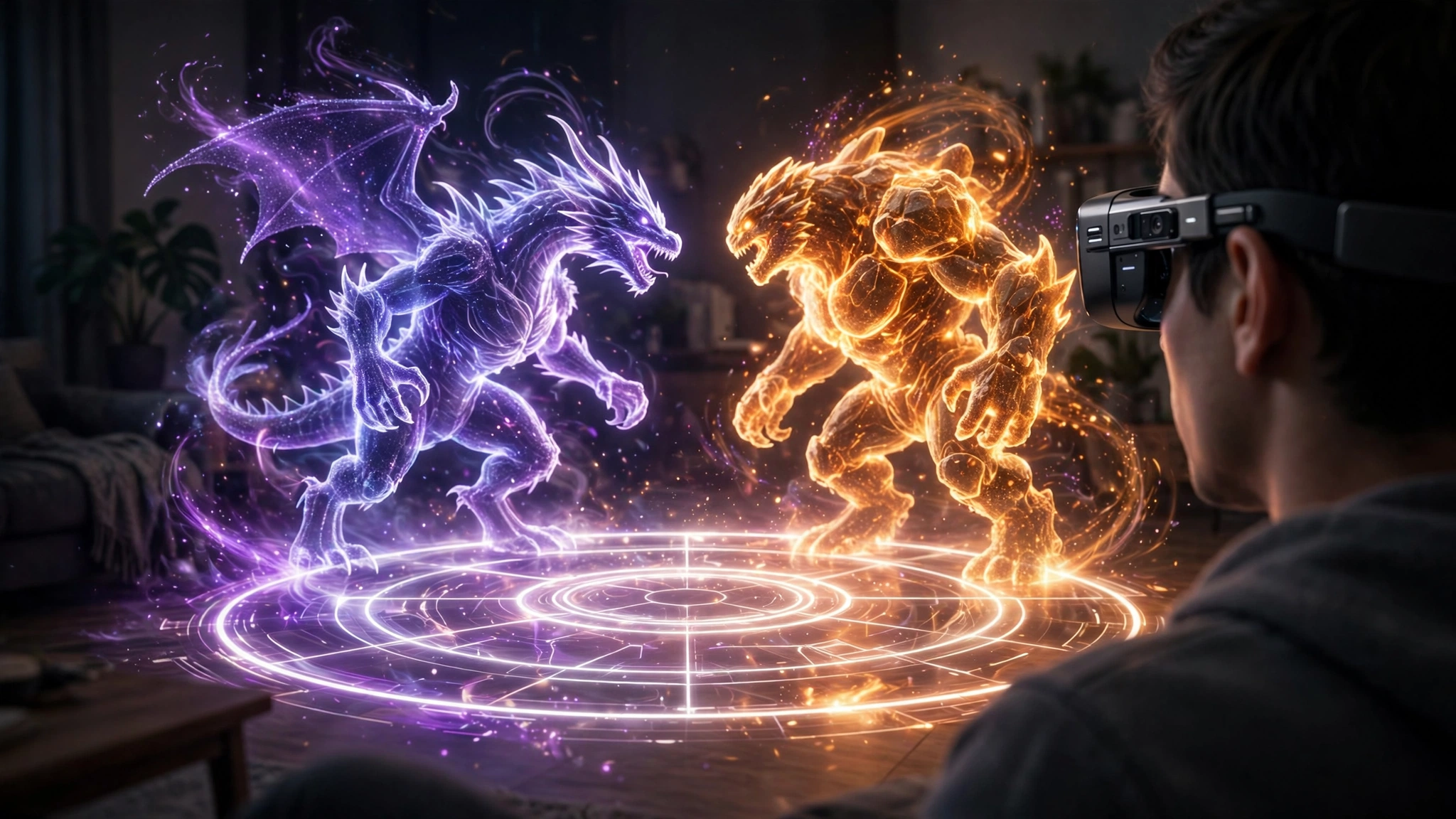
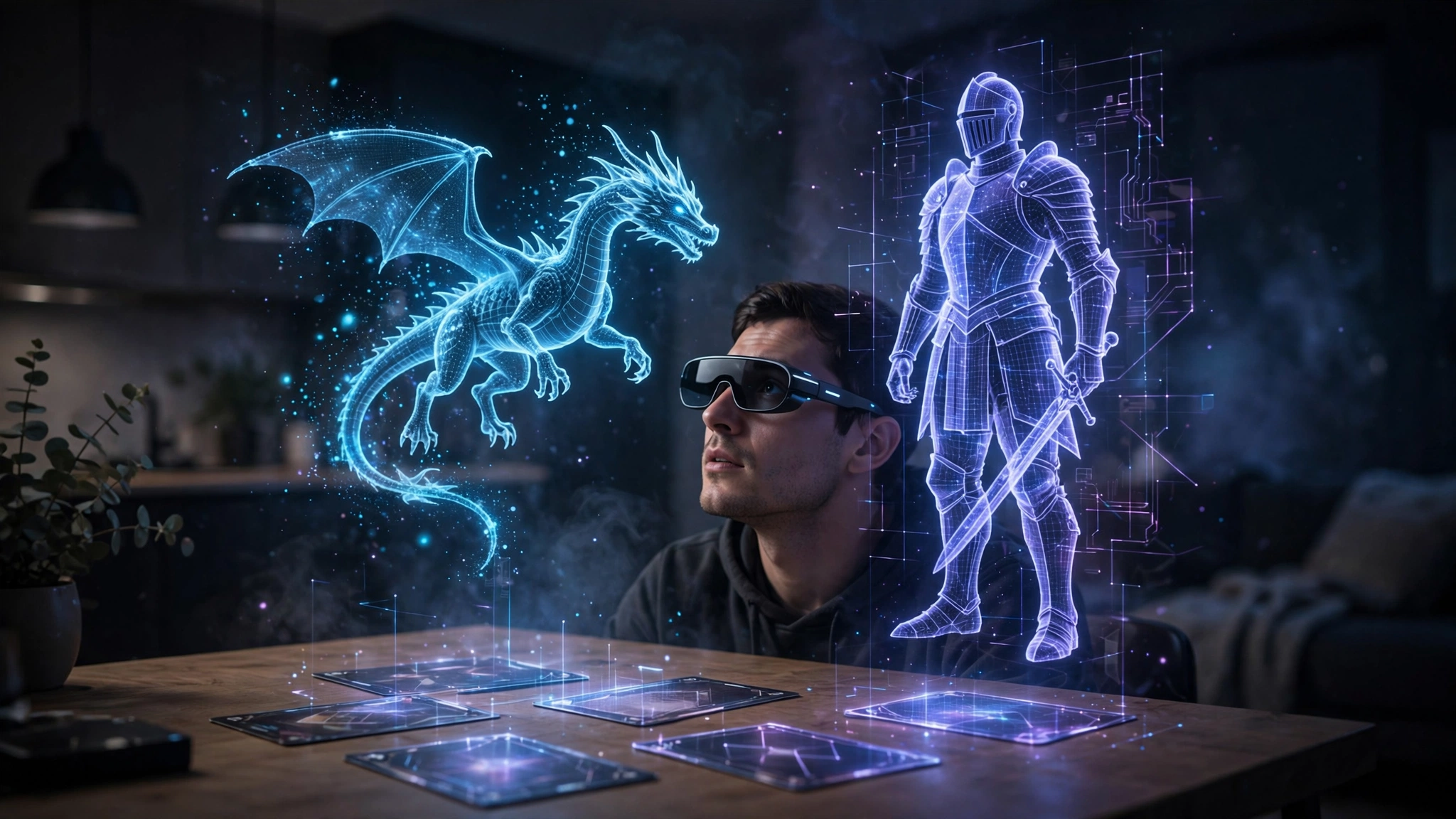
Some demos need a white paper to explain why they matter. This one needs thirty-nine seconds. A Reddit user has built a working Yu-Gi-Oh-style card game in augmented reality on a pair of SPECS smart glasses, summoned monsters dueling in the middle of a living room, and put the whole thing together with an AI coding assistant in about two days.
The clip, posted to r/OpenAI on Thursday by u/shincreates, picked up more than 600 upvotes and 50-odd comments within hours — and, unusually for a build showcase, the comment section’s harshest critics walked away impressed.
The demo#
The video shows exactly what it promises: cards played in physical space trigger holographic monsters that tower over the table — dragons, knights, the full playground-duel fantasy. It is currently player-versus-AI, a prototype rather than a finished game, and part of the footage is a third-person view captured through a second pair of SPECS glasses, which is a neat detail in itself: the AR scene is shared across devices, not just rendered for one wearer.
Per the creator’s comments, the hardware is the story’s other half. SPECS glasses are not on sale yet — the creator says they are “shipping later this fall” — and commenters put the expected price at roughly entry-level-MacBook territory. Multiplayer, with each duelist wearing their own pair, is already in progress.

How it was built#
The build story is as interesting as the demo. According to the creator, a Pokémon AR demo going viral on X rekindled a childhood dream of playing Yu-Gi-Oh in augmented reality — and GPT-6 Astra did the heavy lifting on implementation, with the whole prototype coming together in roughly two days of on-and-off work.
That timeline is the part that made the thread. A few years ago, a real-time AR card game with gesture input, spatial anchoring, and animated 3D creatures was a small studio’s quarter-long project. Here it is a side project, assembled with an AI pair programmer, running on glasses most people cannot buy yet. The commenters noticed: one thread debated how much of the difficulty is the game-rules math versus the tracking and rendering, with the consensus being that the monsters and gestures — the parts that look like magic — are the hard bit, and the part the demo nails.
Why Reddit is paying attention#
Build-showcase threads usually attract one of two reactions: polite applause or a teardown. This one got a third. “Im usually the first to scream ‘vibe coded slop’, but this is actually pretty impressive,” wrote one commenter, in the thread’s most-endorsed verdict. Others immediately started designing the product around it — one joked about wanting a “real life HUD,” another called it straight-up amazing.
There was pushback, and it is worth logging. One commenter read the whole thing as an ad for the unreleased glasses; a few questioned whether a two-day build claim undersells the real engineering. Neither objection dented the thread’s overall verdict, but they are the right caveats: this is a creator’s showcase on pre-release hardware, not an independent review.
What to watch#
The demo lands at an interesting moment for wearable AI. Smart glasses are having their first real consumer push, and the missing piece has always been the software that makes the display feel essential rather than decorative. A card game will not be that killer app — but a shared, spatial, multiplayer game built in a weekend with AI help is a credible preview of what the killer apps will look like to build.
What to watch: whether the creator ships the promised multiplayer demo with two SPECS wearers, whether the project (or its code) goes public, and what happens when the glasses themselves ship this fall and the barrier to entry drops from “pre-release hardware” to “a purchase.” If this is what two days and an AI assistant produce before launch, the after-launch builds should be worth watching.
Sources: the original thread and comments on r/OpenAI (u/shincreates). Images in this article are AI-generated illustrations; watch the actual demo via the link above.