The viral “AI-designed” rocket engine: real hardware, not an LLM — and the presenter might be AI too
A 59-second clip of a rocket engine with alien-looking, vein-like internals took off on r/ArtificialInteligence. But the most interesting part isn’t the engine — it’s what the comments did to the story: the hardware is real, the “AI” is nothing like ChatGPT, and the man presenting it all appears to be AI-generated himself.
 ▶
▶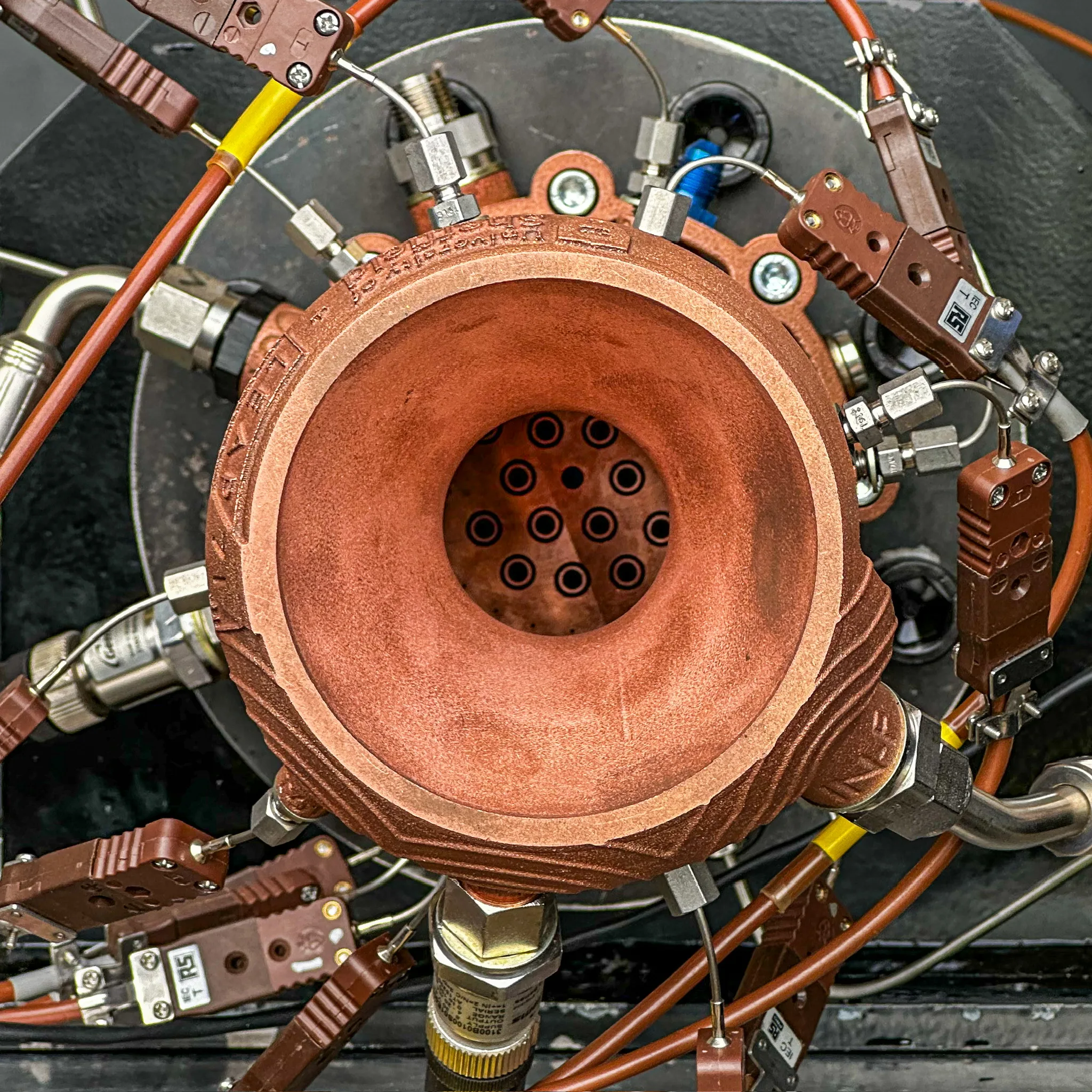
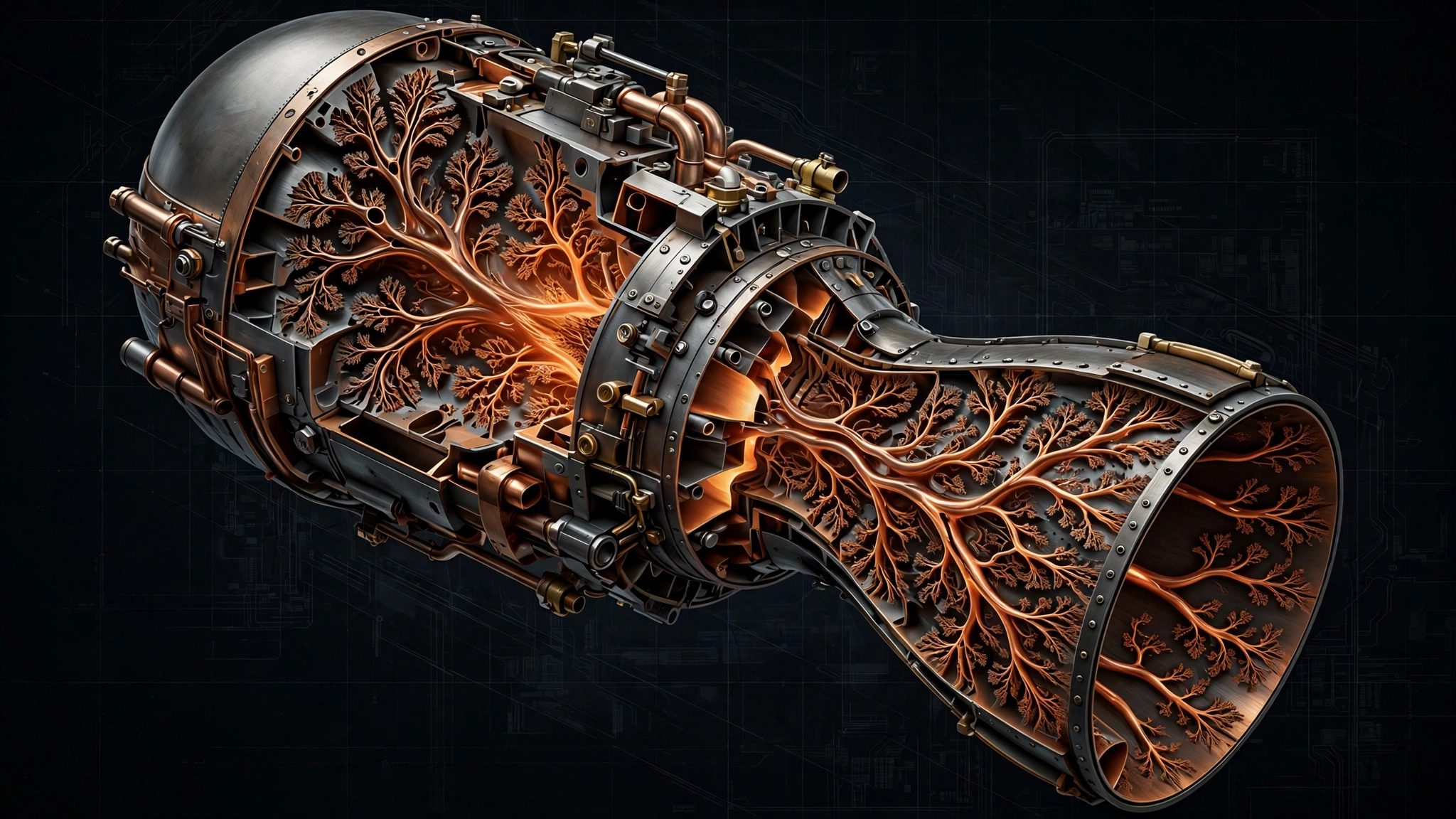
The video is only 59 seconds long, and it is doing exactly what it was designed to do. Posted Saturday afternoon by u/alanskimp on r/ArtificialInteligence under the News flair, the vertical clip — branded with the red-and-gray LEAP 71 logo — tours a turbine-like component with flowing, organic internal vanes, then tilts down into a nozzle throat laced with vein-like, fractal geometry. A narrator walks through the design, name-drops Dubai and Navier-Stokes calculations, and closes on a test firing with an eerie green-tinted exhaust plume. Within ten hours it had pulled in more than 370 upvotes and 125 comments.
And then Reddit did what Reddit does. The thread is a masterclass in informed skepticism — not the reflexive kind, but the kind that arrives with arXiv links, combustion chemistry, and a working knowledge of what green flames mean. By the time the dust settled, the community had corrected nearly every implied claim in the video. The hardware is real. Almost everything else needed footnotes.
What the engine actually is#
The company is LEAP 71, a Dubai-based engineering outfit founded by aerospace engineer Josefine Lissner and Lin Kayser. Its system, Noyron, is what the company calls a “Large Computational Engineering Model” — but the thread’s top comment, from u/Here0s0Johnny (156 points), is adamant about what that doesn’t mean: “this isn’t like ‘Claude, create a rocket engine in blender’ or whatever.”
The verified record backs that up. In June 2024, LEAP 71 hot-fired a Noyron-generated 5 kN liquid-fuel thruster — 3D-printed in copper, burning liquid oxygen and kerosene — at a test stand in Westcott, UK, after a design process the company says took under two weeks. It worked on the first attempt, including a full 12-second burn that reached steady state. The engine was printed by Germany’s AMCM and prepped for the test by the University of Sheffield’s Race 2 Space team. Since then Noyron has generated an aerospike engine (hot-fired in December 2024) and a pair of 20 kN methalox engines.
So the “AI designed it” part is real — and the achievement, as the top commenter puts it, is the model itself: deterministic, physics-informed computational engineering with humans doing substantial optimization work around it. “This has been done way before LLMs,” notes another commenter, and they’re right — generative design and topology optimization predate the chatbot era by years. Noyron, per a detailed fact-check in the thread, is explicitly not a chat-style LLM; it runs recursive improvement loops, benchmarking candidate designs against traditional ones in simulation (one commenter links an arXiv paper on the method).
The green flame, the ad, and the AI presenter#
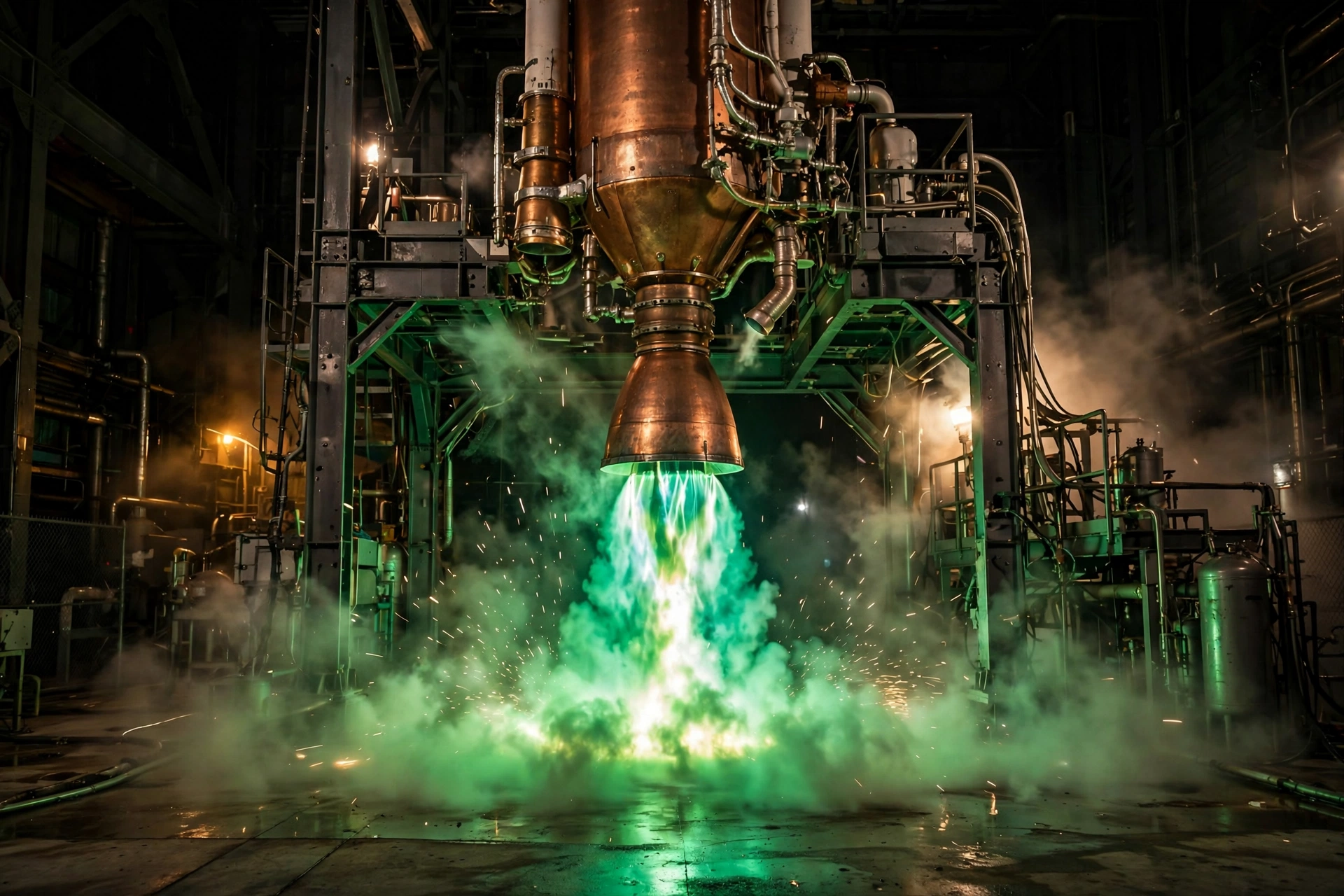
The thread’s sharpest moments are the small ones. Several commenters clocked the green tint in the exhaust plume — and green, in a copper engine, is a tell. “That green in the plume tells me that the copper from the nozzle is combusting,” wrote u/MirthMannor; another added the flame comes from copper vaporizing. In other words: the engine may have been eating itself a little on camera. (The company reported nominal performance and steady state in its official test writeup — the thread’s reading is plausible, not proven.)
Then there’s the provenance question. “I’m sorry but my bullshit-o-meter is going off. It’s a pretty blatant ad for this company,” wrote u/shumpitostick (106 points), and the mention of Dubai sent another commenter’s skepticism “through the roof.” The video is, after all, company-branded content — a marketing asset wearing a News flair.
And the thread’s best twist: the presenter himself. “Even the guy is ai,” wrote u/VoloNoscere; “Even the dude is AI,” echoed u/IvanStroganov. Multiple commenters flagged slightly off mannerisms and awkward finger movements. An AI-designed engine, presented by what looks like an AI-generated human, in a video posted as news. Nobody in the thread could prove it — but the irony did not go unappreciated.
Why this one matters#
Strip away the hype and the skepticism and you’re left with something genuinely interesting: a working, hot-fired rocket engine whose geometry no human drew, designed in weeks instead of years, iterated in minutes. The organic, almost biological shapes — the ones a commenter dubbed the “H. R. Giger Engine” before the OP chimed in with “Nostromo Engine” — aren’t styling. They’re what optimization looks like when it doesn’t care about human aesthetics. (One engineer in the thread pushed back on exactly that point, arguing the asymmetry looks like marketing on a problem that should converge on symmetric solutions — a fair challenge the company would presumably answer with test data.)
The bigger lesson is about the word “AI” itself, which in this thread means at least three different things: a chatbot people imagine prompting, a physics-informed computational model that actually did the work, and possibly the synthetic presenter selling it. The community sorted all three out in ten hours. The video got its views. Reddit got the footnotes.
What to watch: whether LEAP 71’s approach scales beyond small thrusters — the newer 20 kN methalox engines suggest it’s trying — and whether “computational engineering” becomes its own category, distinct from both traditional CAD and LLM hype. And whether the next viral engineering demo bothers to disclose when its presenter is synthetic.
Sources
- “Ai being used to build rocket engines...” — u/alanskimp, r/ArtificialInteligence (Reddit, September 26, 2026)
- LEAP 71 hot-fires 3D-printed liquid-fuel rocket engine designed through Noyron — LEAP 71 press release (June 18, 2024)
- LEAP 71 successfully hot fire tests additively manufactured aerospike engine — TCT Magazine
- LEAP 71’s AI-designed rocket engine passes first hot-fire test — 3DPrint.com (cover image courtesy of LEAP 71)
- Recursive improvement loops paper — arXiv (linked in the thread’s comments)