Innodata opens a motion-capture lab to train humanoids on real bodies — sub-millimeter 3D data, not pixel-guessing
On September 30, Innodata (Nasdaq: INOD) announced a new R&D laboratory in New Jersey, built with motion-capture leader Vicon, that records human and robot movement with infrared optical cameras down to the sub-millimeter. The product is ground-truth motion data — for training humanoids and industrial robots, and for independently validating how they move.
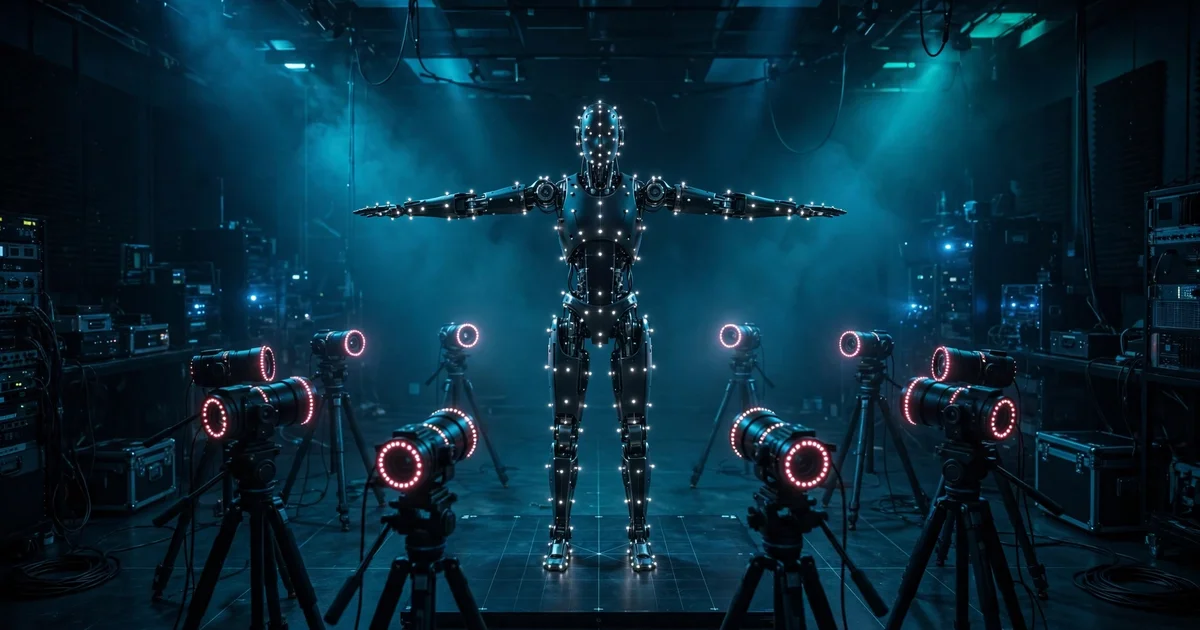
The humanoid race has a data problem. Vision-language-action models can only learn to move from the movement they have seen — and most of the world’s robot-motion data is inferred from flat video, not measured in three dimensions. Innodata’s answer, announced September 30, is a lab that measures it directly: a New Jersey R&D facility fitted with high-precision, low-latency infrared optical tracking cameras that record movement down to the sub-millimeter level.
The lab was developed with Vicon, the motion-capture company whose cameras are the film-and-games industry standard, which consulted on the lab’s design and continues to provide technical consulting, according to the company’s announcement. The stated target market: training data for humanoids, industrial robots, and other forms of physical AI.
Why 3D beats 2D#
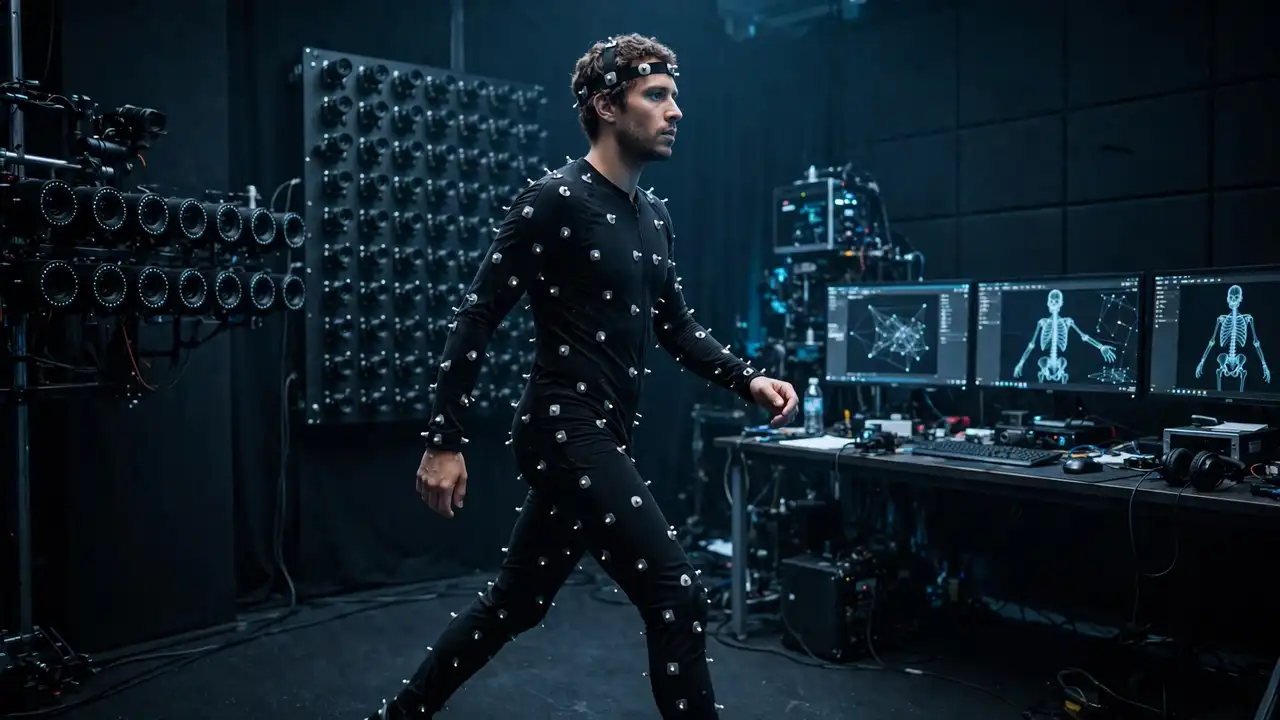
Most data providers estimate depth by analyzing 2D video — effectively asking a computer-vision model to hallucinate the third dimension. Innodata captures it from the bodies themselves, whether those bodies are human or mechanical. That is a deliberate contrast the company draws with two cheaper alternatives: wearable inertial measurement unit (IMU) sensors and single-camera, or monocular, video analysis, neither of which typically reaches sub-millimeter accuracy.
“There’s just no substitute for direct 3D motion capture,” said Frank Tanner, Innodata’s vice president of robotics and physical AI. “When a computer vision model tries to make sense of a 2D grid of pixels, mistakes inevitably creep in. Our sensors are designed to register the tiniest motion of every joint, which makes training more accurate and efficient. When you’re training a humanoid that weighs almost 200 pounds, your readings can’t be in the ballpark. They need to be precise. And with this lab, they are.”
Data as the product#
The lab is not just a research facility — it is a commercial data operation. Per the announcement, the lab will offer motion-capture data packages and custom projects for clients. A second, quieter business line may matter just as much: independent validation. The lab can externally verify the performance data that robots generate internally — a real service in an industry where a robot’s own telemetry is often the only evidence of how well it moves.
That validation angle is the one Vicon’s side is leaning on. Andrew Knox of Vicon noted that precise, externally captured data prevents the approximations that creep into robot training when companies rely on self-reported movement — a failure mode plenty of robotics teams will recognize. The pitch, in short: trust, but measure.
Why now#
Physical AI is having a data-infrastructure moment. The same day Innodata announced its lab, Daimon Robotics showcased tactile-sensing data infrastructure for dexterous manipulation at IROS 2026 — a parallel bet that the binding constraint on robot intelligence is the quality of interaction data, not the size of the model. The pattern is consistent: money is flowing to whoever can supply the ground truth that humanoids train on.
Innodata’s version is the conservative one. No new robot, no foundation model — just measurement, at a precision cheaper methods can’t match, sold to the labs that need it. If humanoids really are the next compute cycle, somebody has to be the data company. Innodata just bought the cameras.
Sources
- “Innodata Opens Motion-Capture AI Lab to Help Humanoids Move Like Humans” — Innodata Inc. press release (ACCESS Newswire, September 30, 2026)
- “Innodata Opens Motion-Capture AI Lab to Help Humanoids Move Like Humans” — ACCESS Newswire (September 30, 2026)
- “Daimon Robotics Showcases Tactile Intelligence Infrastructure for Physical AI at IROS 2026” — Robotics Tomorrow (September 30, 2026)