NVIDIA releases Nemotron-Labs-Image-30B, an image model that rivals GPT Image 2 — and treats pixels as code
NVIDIA has released the weights for Nemotron-Labs-Image-30B-A3B, a 30-billion-parameter image generator that beats GPT Image 2 on several benchmarks in NVIDIA’s own numbers — the first public piece of a larger ‘Pixel as Code’ framework for agentic visual creation. The catch: the license is research-only, and the framework around the model isn’t out yet.
- What happened: NVIDIA posted the weights for Nemotron-Labs-Image-30B-A3B on Hugging Face on November 24, with the technical report (arXiv:2611.31358) submitted on November 23.
- The model: a 30-billion-parameter autoregressive image generator (3 billion active per token), built on NVIDIA’s Nemotron-H architecture and initialized from Nemotron 3 Nano, with a bundled 642-million-parameter visual tokenizer.
- The numbers: GenEval 92.86 against 89.00 for GPT Image 2; WISE Verified 91.50; BizGenEval 86.0 — but GPT Image 2 leads GenEval2, 81.00 to 65.43. All figures are NVIDIA’s own, best-setting, system-level results.
- The catch: the weights carry NVIDIA’s license, which limits use to non-commercial research and evaluation; the VisualCreation harness and VisionCode models are not released, pending legal clearance.
- The hardware: NVIDIA’s reference inference setup needs four H100 80GB GPUs; the weights ship as 32 safetensors shards totalling about 133 GB.
The paper went up on arXiv on November 23, the weights landed on Hugging Face on the evening of November 24, and the release surfaced on Reddit’s r/LocalLLaMA around midnight. It is NVIDIA’s first serious entry into image generation — and the thread that surfaced it immediately flagged the gap between ‘open weights’ and what the license actually allows.
What NVIDIA actually released#
The model is an autoregressive image generator: 30 billion parameters in total, 3 billion active per token, built on NVIDIA's Nemotron-H architecture and initialized from Nemotron 3 Nano. It generates images as sequences of discrete visual tokens, rendered by a bundled tokenizer — a roughly 642-million-parameter encoder-decoder with 16×16 patches and a fixed codebook of 196,560 entries. The weights ship as 32 safetensors shards totalling about 133 GB; NVIDIA's reference setup wants four H100 80GB GPUs, Python 3.12 and CUDA 13.
On its own numbers, the tokenizer is a genuine improvement over the baseline NVIDIA compares against: reconstruction quality rises from 26.08 to 29.57 dB PSNR against Emu3.5 IBQ across roughly 178,000 test images, and at batch size one on an A100 it encodes about 7 times faster and decodes about 11 times faster. That speed matters, because the framework generates many candidate images and picks between them by looking at the results.

The benchmark table, honestly read#
NVIDIA reports its best configuration per benchmark, and the headline numbers favour its system: GenEval 92.86 against 89.00 for GPT Image 2, WISE Verified 91.50, BizGenEval 86.0, LongTextBench 97.98. But the table cuts both ways — NVIDIA publishes the unfavourable rows too: GPT Image 2 leads GenEval2 by a wide margin, 81.00 to 65.43, and Qwen-Image-Bench 65.23 to 52.46, while Nano Banana Pro leads OneIG 58.30 to 54.63.
| Benchmark | Nemotron-Labs-VisualCreation | GPT Image 2 | Nano Banana Pro |
|---|---|---|---|
| GenEval | 92.86 | 89.00 | — |
| GenEval2 | 65.43 | 81.00 | 59.00 |
| LongTextBench | 97.98 | 96.00 | 97.60 |
| WISE Verified | 91.50 | — | 87.60 |
| BizGenEval | 86.0 | 83.2 | 76.7 |
| OneIG | 54.63 | 51.60 | 58.30 |
| Qwen-Image-Bench | 52.46 | 65.23 | 59.33 |
Two caveats belong next to that table. First, these are NVIDIA's own reported numbers from its paper, using its best setting per benchmark — not independent verification. Second, they describe the full VisualCreation system, including its selection and repair steps, not the bare image model alone. The paper is candid that the system-level configuration lifts GenEval2 from 31.71 to 52.56 using the same raster generator — much of the gain comes from the harness, not the weights.
Pixel as Code: the bigger idea#
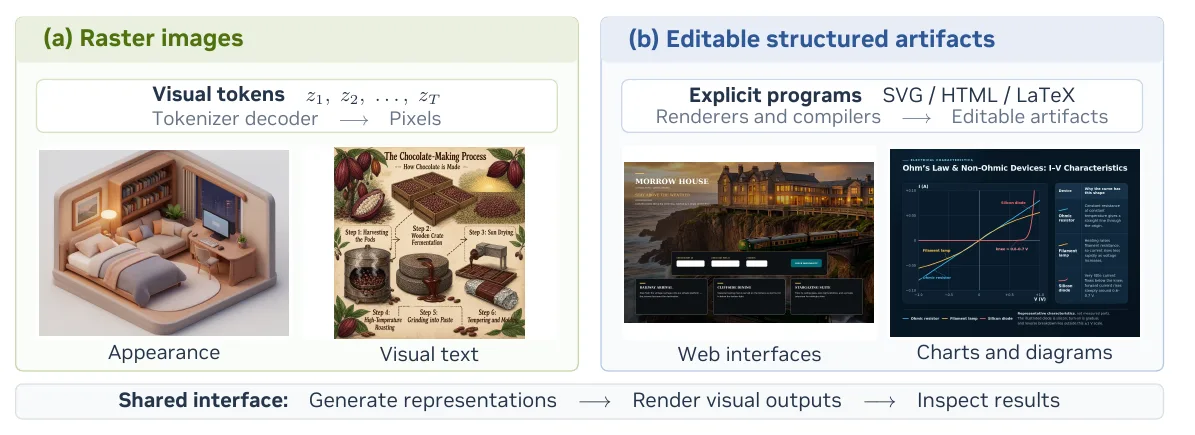
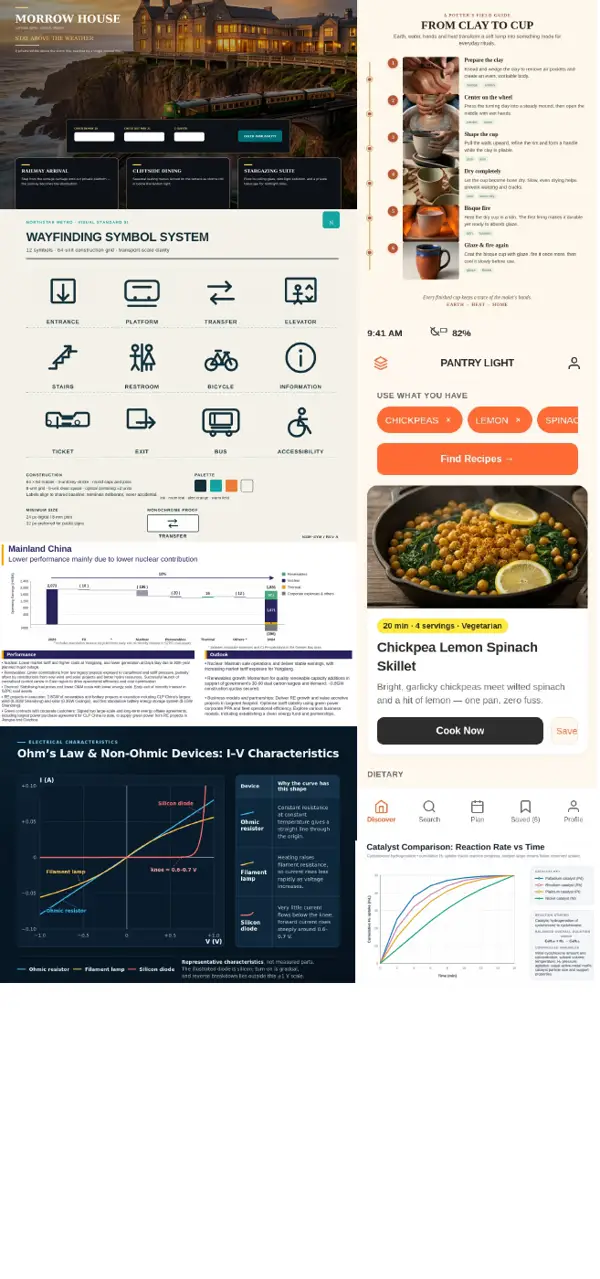
The model is the smallest part of what NVIDIA is proposing. VisualCreation is an agentic framework: a request is routed to one of three paths — direct raster generation, browser-based structured or hybrid creation, or native-format generation for presentations, documents and SVG. For raster images, the model generates candidates and Nemotron-3.5-Super-VL picks the best by visual inspection. For structured artifacts, Nemotron 3 Ultra and Super-VL act as a dual coder, with renderer checks and visual audits diagnosing problems and assigning targeted repairs.
Alongside the image model, the paper introduces VisionCode, structured-code models in 30B and 120B sizes for that interface; the 120B variant leads the paper's five-task aggregate, ahead of Kimi K3.1 Pro. The idea: an agent that produces a finished, editable deliverable — a slide deck, a chart, a webpage — rather than a flat image file.
The catches: license, hardware, missing pieces#
Start with the license, because the Reddit thread that surfaced the release got this right and the "open weights" framing wrong. The weights are released under NVIDIA's own license, which states they are intended for non-commercial use — research or evaluation purposes only. That is a research release, not an open model in the sense of the Nemotron 3.5 family members the blog has covered before. Anyone building a product on it would need a different arrangement with NVIDIA.
Then the missing pieces: the release plan lists only the image model and its tokenizer as released. The harness and both VisionCode models are marked "will be released upon legal clearance" — no date given. The part of the system behind much of the benchmark advantage cannot be downloaded yet, and the paper's system-level numbers cannot be reproduced end to end from what is public today.
And the hardware bar is high even by open-weights standards: four H100 80GB cards for the reference setup. This is a model for labs and well-equipped builders to study, not something most people will run at home.
Why it matters, and what to watch#
Even with those limits, the release matters. First, NVIDIA is now a serious participant in image generation, not just the company selling the GPUs everyone else trains on — and its model is competitive with the best closed systems where text rendering and structured output matter most. Second, "Pixel as Code" points at where image models are heading: from generating a picture to producing editable, verifiable artifacts, with the model checking its own work visually.
What to watch: whether the harness and VisionCode models actually appear once legal clearance lands, whether independent evaluations reproduce NVIDIA's numbers — particularly on GenEval2 and Qwen-Image-Bench, where GPT Image 2 leads by a wide margin — and whether NVIDIA relaxes the research-only license, which will decide whether this becomes a tool developers build on or a paper they cite.
Sources: the model card and release plan on Hugging Face; the technical report on arXiv (arXiv:2611.31358, submitted November 23, 2026); the release thread on r/LocalLLaMA. Benchmark figures are as reported in NVIDIA's paper and have not been independently verified.
Sources: NVIDIA, “Nemotron-Labs-Image-30B-A3B” on Hugging Face; Nemotron-Labs-VisualCreation: Pixel as Code for Agentic Visual Creation, arXiv:2611.31358 (submitted November 23, 2026); r/LocalLLaMA release thread (November 25, 2026)