OpenAI's GPT-6 designs proteins that bind real targets in the lab
OpenAI’s GPT-6 family can design new proteins using only reasoning and general-purpose code — and in laboratory tests, the designs actually worked. In a preprint published on November 24, OpenAI reports that proteins based on GPT-6.2’s designs bound their intended targets in wet-lab experiments run with research partner Onava: 35 of 322 small designed proteins, across all five targets tried. It is the first wet-lab evidence OpenAI has published for a general model doing protein design without a specialist biology model generating the designs. It is also, by the company’s own account, a long way from designing medicines.
- What happened: OpenAI published a preprint, “GPT-6 as a Universal Foundation Model for Protein Biology: Beyond Specialized Models”, on November 24, showing its GPT-6 models designing proteins with reasoning and code.
- The headline numbers: 35 of 322 minibinders bound their targets (10.9%) across five targets; 128 of 182 redesigned antibody loops (70%) kept binding IL-4Rα; 179 of 272 therapeutic antibody fragments (66%) kept binding PD-1 or PD-L1.
- How it worked: GPT-6.2 wrote code to design three-dimensional protein shapes from plain-language prompts; specialist models (SolubleMPNN, Boltz-2, ESMFold2) supplied sequences and filtered candidates before lab testing with Onava.
- The weak spot: predicting a complete protein structure from its sequence alone — a TM-score of 0.38 for OpenAI’s best internal model, against 0.93 for the specialist ESMFold2.
- What’s next: harder targets, designing for biological effect, and wider molecule classes; independent replication and peer review still pending.
OpenAI’s GPT-6 family can design new proteins using only reasoning and general-purpose code — and in laboratory tests, the designs actually worked. In a preprint published on November 24, OpenAI reports that proteins based on GPT-6.2’s designs bound their intended targets in wet-lab experiments run with research partner Onava: 35 of 322 small designed proteins, across all five targets tried. It is the first wet-lab evidence OpenAI has published for a general model doing protein design without a specialist biology model generating the designs. It is also, by the company’s own account, a long way from designing medicines.
Protein design is normally a relay race between specialist models. One generates three-dimensional shapes, another proposes the amino-acid sequence that folds into that shape, a third predicts whether the result will hold together. Each accepts particular inputs and resists new instructions. A general-purpose model that could do several of those jobs from a plain-language prompt would be far easier to steer — and that is the claim OpenAI is testing.
A general model does a specialist’s job#
The preprint, titled “GPT-6 as a Universal Foundation Model for Protein Biology: Beyond Specialized Models”, describes a model that takes instructions in natural language — where a protein should attach, what overall shape it should have, how many coils or strands it should contain — and then reasons about the problem and writes code to explore designs. OpenAI says its latest internal model followed shape instructions with near-perfect fidelity in its three-dimensional designs, and that the models’ written reasoning shows them drawing on mathematics, physics, chemistry and biology to work out how two proteins might fit together.
On computational tests across 14 protein-design tasks, OpenAI’s latest internal model matched or outperformed specialist models on many of them. The more interesting results are the ones that came back from the lab.
The lab results: 35 of 322 bind#
The first experiment asked GPT-6.2 to design minibinders — small proteins engineered to grip a chosen spot on a larger target. The model was given the three-dimensional structures of five target proteins, with the intended attachment sites marked, and wrote code to create candidate shapes. Onava then made 322 of those designs into real proteins and tested whether they stuck. Thirty-five did: a 10.9% hit rate, with at least one binder for every target.
| Target | Minibinders that bound |
|---|---|
| IL-17A | 18 |
| VEGF-A | 8 |
| PD-L1 | 5 |
| IL-7Rα | 3 |
| TrkA | 1 |
| Total | 35 of 322 (10.9%) |
That headline number needs its caveats, and OpenAI states them plainly. The pipeline was hybrid: a specialist model called SolubleMPNN supplied the amino-acid sequences for GPT-6.2’s shapes, and other specialist models — Boltz-2, OpenDDE and ESMFold2 — filtered the candidates before anything reached the bench. The original RFdiffusion study, the specialist baseline, reported higher hit rates, though OpenAI notes that hit rates swing heavily with how strictly designs are filtered before testing. The honest reading is that GPT-6.2’s shapes can become real binding proteins — not that the model did the whole job alone.
Antibodies keep their grip#
The second set of experiments tested whether GPT-6.2 could write the sequences itself. Given the three-dimensional structure of a confirmed minibinder with its original sequence withheld, the model proposed new ones. In initial lab screens, binding showed up in 75 of 88 designs for MDM2 (85%), 26 of 42 for VEGF-A (62%) and 8 of 59 for PD-1 (14%). The proposed sequences often differed sharply from the originals — a median of 50% of amino acids different for VEGF-A — which OpenAI reads as evidence the capability goes beyond memorising known proteins. For three unpublished minibinder shapes the model had generated earlier, 14 of 107 proteins made from its new sequences (13.1%) bound their targets.
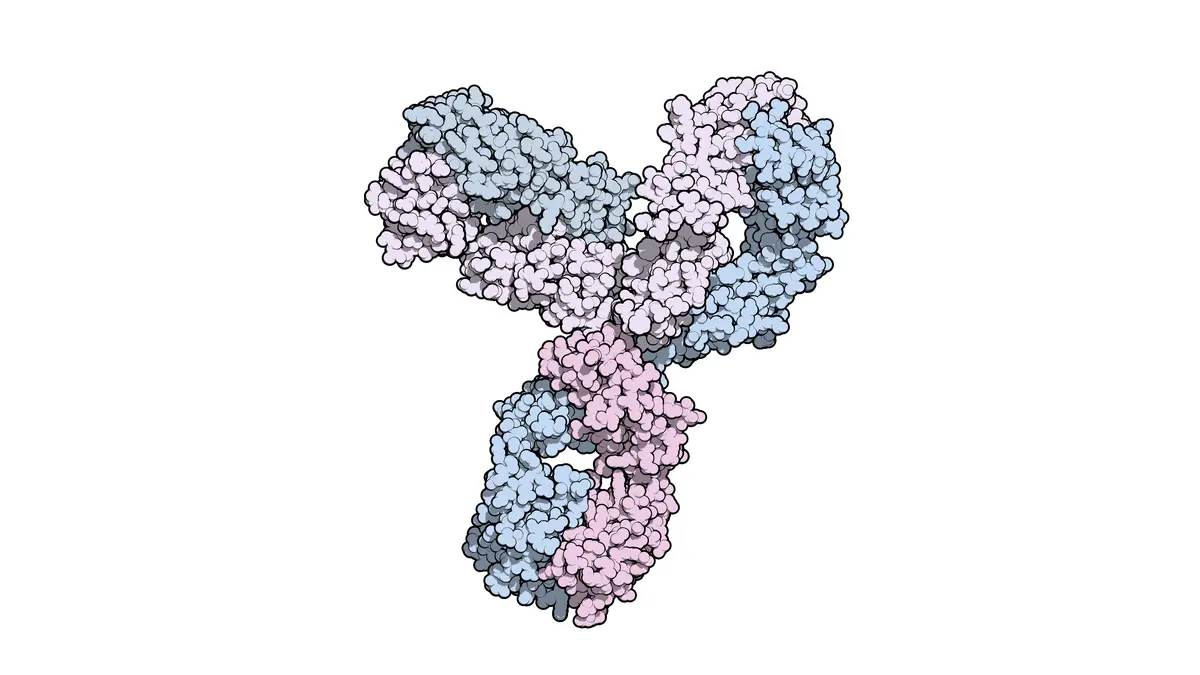
Antibody redesign fared better still. Asked to rewrite the three loops that help six small antibodies grip their target, the model produced designs of which 128 of 182 (70%) still bound IL-4Rα. And when asked to change about half the amino acids in the binding loops of five therapeutic antibodies while keeping the rest intact, 179 of 272 fragments (66%) still bound their original targets, PD-1 or PD-L1.
Where it falls short#
The weak spot is the most basic task of all. Asked to predict how a protein folds from its amino-acid sequence alone — the job specialist structure predictors do — OpenAI’s best internal model averaged a TM-score of 0.38, against 0.93 for ESMFold2. On that measure the general model is not close. OpenAI is explicit that the work does not yet show its models generating new minibinders end to end, zero-shot, without help from specialist models.
Other results cut the other way. On small-molecule docking, GPT-6.2 closely matched the experimentally observed position and orientation in 93% of scored PoseBusters predictions, against 50% for the specialist DiffDock-L. On motif scaffolding — building a protein around a fixed arrangement of amino acids — the latest internal model succeeded on 43.7% of designs, against 27.8% for RFdiffusion. The picture is jagged: strikingly capable on some component tasks, far behind on others.
And binding is only the first rung. The lab assays measured whether a designed protein attaches to its target — not whether it changes a biological pathway, let alone treats a disease. The preprint publishes no affinity constants, potency or toxicity data, and it has not been peer-reviewed. Some of the computational scores may also partly reflect memorisation, since the structures used were public. OpenAI also flags the dual-use risk: the same capabilities that help design medicines could be misused, and says its Preparedness Framework guides how it assesses those risks.
What to watch#
OpenAI frames the work as an early step toward programmable molecular design: scientists describing what they want a molecule to do in plain language and getting candidates to test. The next steps it names are harder targets, designing for what happens after binding — such as killing a cancer cell — and wider classes of molecules, including multi-target binders, RNA and small molecules.
Three things decide whether this becomes a real tool or a striking demo. First, independent replication and peer review: the strongest claims here are vendor-reported, from a preprint and company-run experiments. Second, whether hit rates hold up on harder targets, where the current numbers are thinnest. Third, whether the generalist approach keeps its edge as the tasks get messier — the structure-prediction gap is a reminder that specialist models still own the hardest part of the pipeline.
Still, the direction of travel is the news. Four days earlier, OpenAI released MedChemBench, a benchmark for AI on real drug-discovery decisions. Now the same model family is producing designs that bind real targets in a real lab. General-purpose models are moving from talking about science to doing parts of it — and the parts they can do are growing.
Sources: OpenAI, “GPT-6 models demonstrate intrinsic protein-design capabilities” (November 24, 2026); AlphaSignal, “OpenAI’s GPT-6.2 Designs Real Proteins That Bind Drug Targets in the Lab” (November 24, 2026); AI Weekly, “OpenAI’s GPT-6.2 hits 10.9% wet-lab rate on new minibinders” (November 24, 2026)