Pokémon Claude Red: Opus 5.5 remade all of Pokémon Red in 25,000 lines of JavaScript
A developer's three-day loop with Claude Opus 5.5 produced a playable Pokémon Red remake — 224 maps, all 151 Pokémon, zero image files. Every pixel is code.
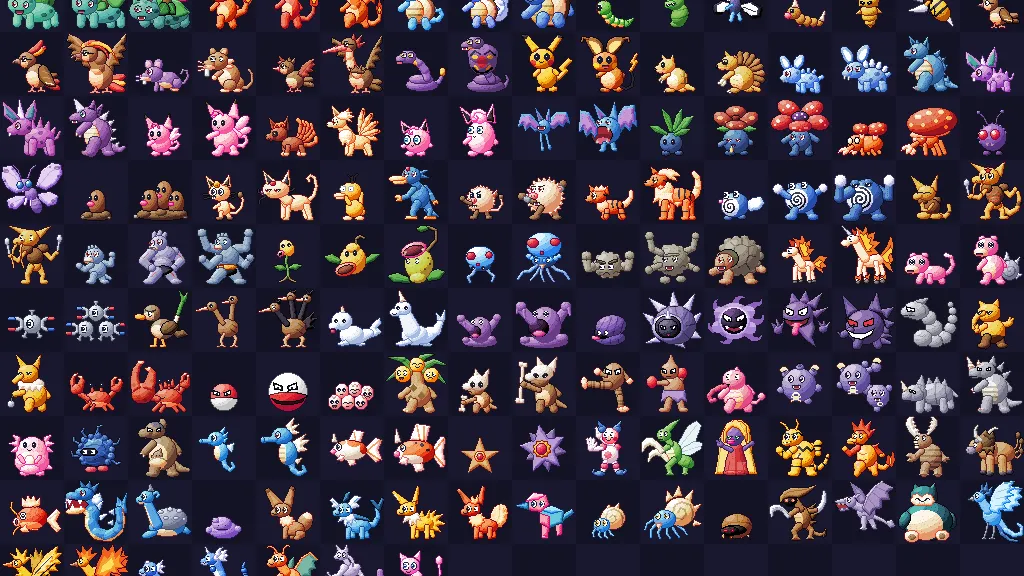
This weekend, a developer called Levy Street shipped a playable, browser-based remake of Pokémon Red — the full Kanto adventure, all 224 maps, all 151 Pokémon, the Elite Four, the music, even the glitches — written in roughly 25,000 lines of JavaScript by Claude Opus 5.5 working inside Claude Code. There is not a single image file anywhere in the game. Every sprite, tile, building, battle effect, and song is code that draws or plays itself at runtime. You can play it right now at claudered.dev, no install required.
The post announcing it on r/ClaudeAI pulled in 175 upvotes and 92 comments within its first hour, and the top reactions split neatly in two: awe at the engineering, and dread about Nintendo's lawyers.
#From one sentence
According to the project's public README, the whole thing started from one message typed into Claude Code:
"using only pixels directly remake a beautiful pokemon red remake but with better graphics, environments and vfx. visualise everything perfectly as pixel art using raw pixels. absolute pixel art perfection. keep the story exactly as pokemon red (research on web for all dialogue etc)"
Everything in the repository grew from that sentence, the README says, followed by "a few days of playing it and asking for fixes." The build ran from September 24 to 27, 2026 — three days of an agent coding, the human playtesting, and the agent fixing.
#Everything is code
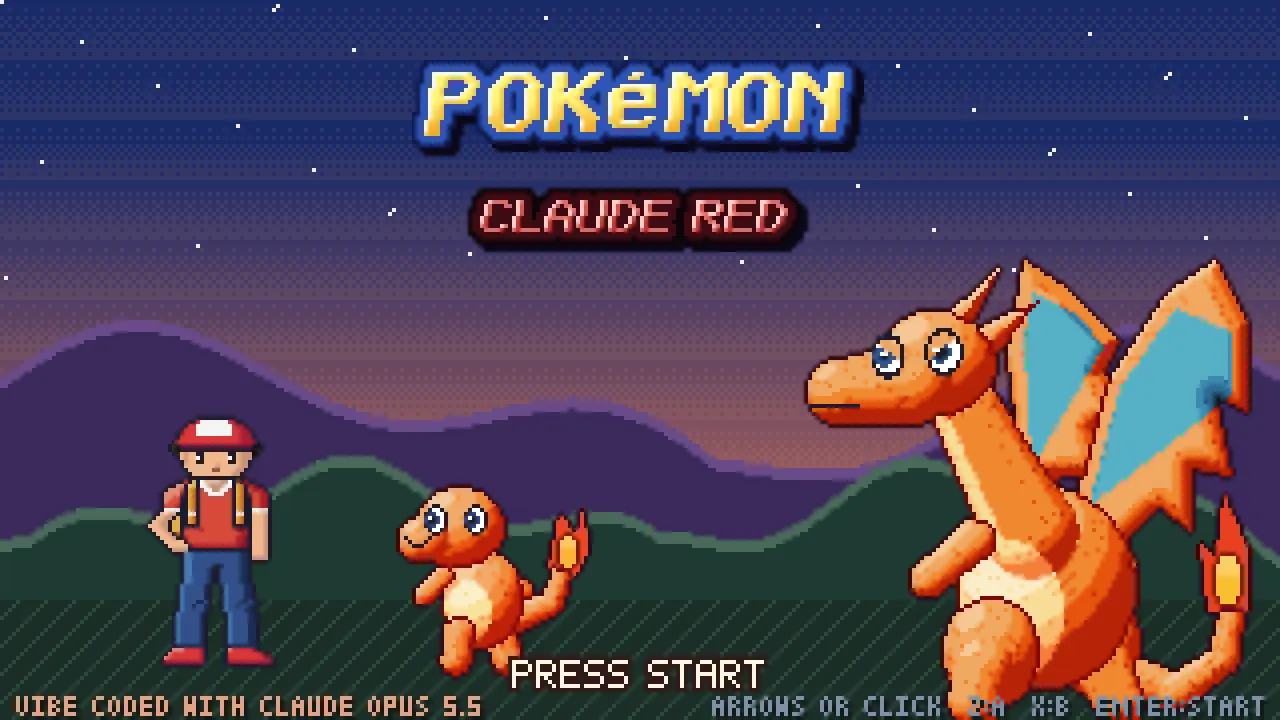
The trick is procedural rendering. The game draws into a 320×180 framebuffer — a raw array of pixels — and scales it up with crisp nearest-neighbour sampling. Each map cell carries a semantic label like "tall grass" or "roof," and a procedural painter draws it with shading and texture. Buildings are painted as whole objects with roofs, windows, doors, and shadows. There's a day/night cycle with lit windows, fireflies, and flickering torches.
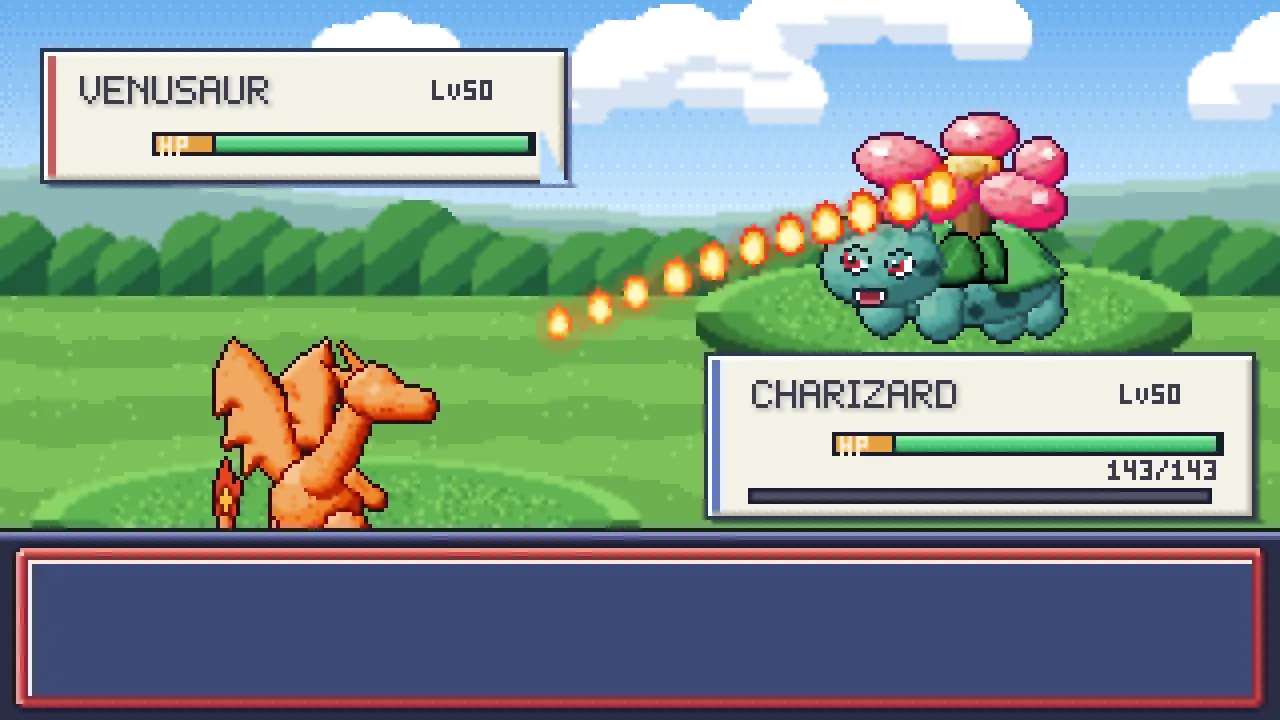
The Pokémon are the showpiece: all 151 are described in a small drawing language of ellipses, polygons, spots, stripes, and eyes, which the game rasterises into outlined, shaded pixel art at runtime. Back sprites and party icons are derived from the same descriptions. Every one of the 165 moves has its own animation, and the original music was re-voiced — the note data of all 52 songs, converted from the open pret/pokered disassembly, played through new Web Audio instruments timed to the Game Boy's exact frame timing.
#A complete game, not a tech demo
What separates this from the usual AI codegen demo is completeness. The README lists the whole Kanto story with Red's event order and gating: all 224 maps, every trainer, the eight gyms, Team Rocket, Silph Co., the Elite Four, the Champion, and Cerulean Cave. Roughly 2,500 lines of dialogue follow the original story's beats, rewritten in new words.
Even the classic glitches are here, recreated from how the original code works: MissingNo. with its +128 item duplication, and the Mew trick — and the README walks you through performing both. There's a character customiser, a link-battle "Social Zone" with shareable links, a daily "Who's That Pokémon?" quiz, and Easter eggs: "the world has opinions about AI. Talk to everyone."
The game data — map layouts, collision, trainers, encounters, species, moves, and music note data — was converted from the pokered disassembly. The README is explicit that no graphics or original text were taken from it, and the Legal section states plainly: a free, non-commercial fan project, not affiliated with or endorsed by Nintendo, The Pokémon Company, GAME FREAK, Creatures Inc., or Anthropic.
#Tested like software, not vibe-checked
Perhaps the most telling detail is the testing rig. A headless runner plays the entire game inside Node without a browser, and a battery of fuzzers sits on top: one visits all 224 maps and talks to every NPC (over 1,000 conversations), another fires random battles with random species and movesets looking for crashes, a third fires every script on every walkable cell under random story states to catch NPCs walking through walls, and a warp-graph checker verifies every exit leads back where it came from. That is the part that makes a three-day agent-built game plausibly complete rather than plausibly broken.
#The reaction: awe and legal dread
The r/ClaudeAI thread (posted September 27) treated it as a legitimate benchmark moment for what agent coding can do in a long-horizon run. The most upvoted comment (67 points): "Hope you have good lawyers (who tell you to cave immediately)." Another (38 points): "Not a bear I would personally poke, but well done." The community is collectively impressed and collectively braced for Nintendo's legal team — which, to be fair, the project's own README already anticipates with its non-affiliation disclaimer.
#What to watch
Two things. First, whether Nintendo notices — fan remakes this faithful have a well-documented half-life. Second, the method: a three-day loop of "agent codes, human plays, agent fixes," backed by fuzzers that treat a game as software to be tested rather than a demo to be admired. That loop is the real story. When the test harness is automated and the feedback loop is a human playing the game, three days is suddenly a long time — long enough to remake an entire classic.