Riemann proof clears its first independent check: MIT recompiles the Lean code, final audit still pending
This morning, the most famous claim in mathematics was still waiting for its first independent check. By the afternoon, that check had come back — and the mathematicians who ran it say the proof looks real. One audit remains, and until it lands, the Riemann Hypothesis stays officially unsolved.
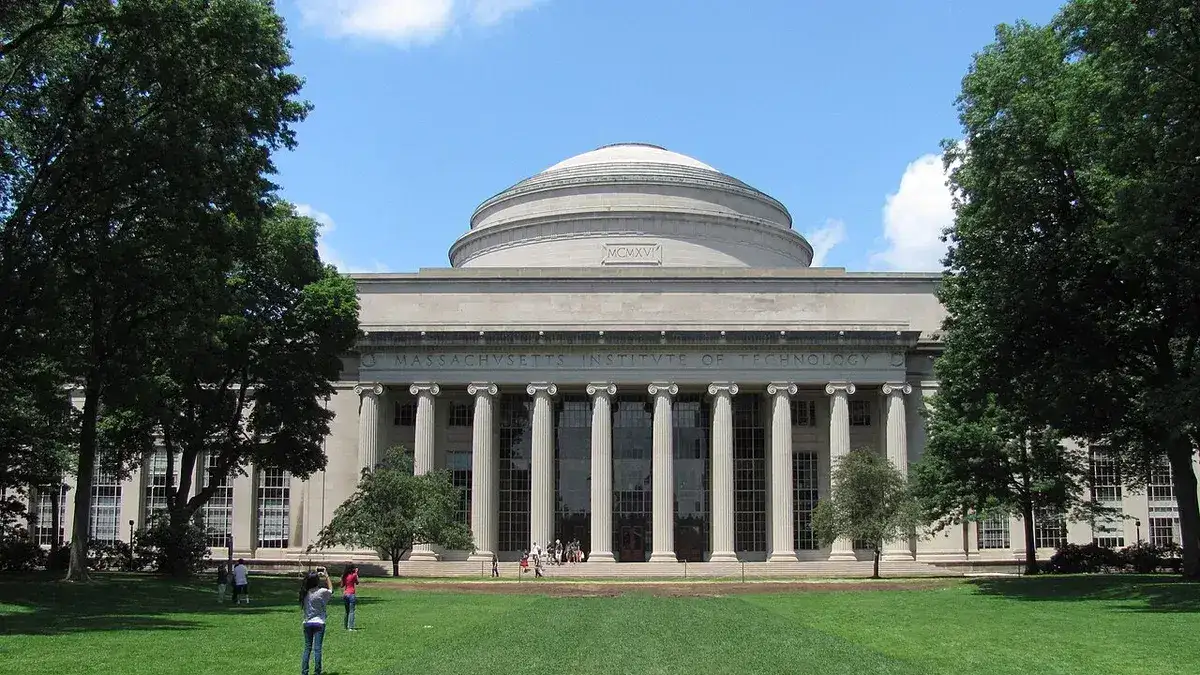
- MIT mathematician Andrew Sutherland independently built Alpöge's Lean proof — all 175,187 modules compiled with no errors — and the Lean kernel rechecked it using only the three standard axioms.
- “Honestly the chance that anything is fishy here is approximately zero.” — Sutherland, quoted in Scientific American, November 20, 2026.
- Kevin Buzzard of Imperial College London checked the question that matters most: whether the Lean code states the actual Riemann Hypothesis, rather than a subtly different theorem.
- A second, independently written proof checker, nanoda, accepted the full proof export on Friday afternoon.
- Still pending: the “comparator run,” which verifies the code doesn't redefine any symbols and compiles under several independent kernels in paranoid mode. The Clay Institute still lists the hypothesis as unsolved.
This morning, the Riemann Hypothesis claim was exactly that: a claim. Levent Alpöge, a mathematician at Anthropic, had posted a four-page note saying he and Claude had proved the most famous open problem in mathematics, along with a 14-part archive of Lean code. Nobody outside his circle had checked it. Our morning coverage said so plainly: no independent expert had verified the claim yet.
By the afternoon, that had changed. Independent researchers rebuilt the proof from scratch, the Lean kernel rechecked it, and a second, independently written checker accepted the export. The claim is no longer unverified — it is verified up to one final audit, and the people who ran the checks are using words like “almost certainly” true.
What the checkers actually did#
Alpöge posted his note and the Lean archive on his personal site on Friday morning. Within hours, an outside team had mirrored the archive, written its own formal statements of the results it expected the submission to prove, and started building.
The headline result came from MIT’s Andrew Sutherland. His independent build of the full proof finished without errors across all 175,187 modules, and the modules then passed a replay through Lean’s proof-checking kernel. Later that afternoon, a separately implemented proof checker called nanoda accepted the full proof export from Sutherland’s build.
The scope of what was checked matters as much as the pass. Sutherland verified the formal statement against the standard Riemann Hypothesis in Mathlib, Lean’s shared mathematics library, and his audit reports that all five headline theorems rely only on Lean’s three standard axioms — no extra assumptions smuggled in. The checked scope covers the classical hypothesis and its generalization to Dirichlet L-functions.
For scale: the formalization spans fourteen archive parts; a third-party tally puts it at about 17.4 million lines of Lean code, and a footnote in Alpöge’s statement mentions more than 250,000 pages of formalization. Nobody has read it. The machines have run it.
What still isn’t checked#
The check that remains is called a comparator run, and it exists because a formal proof can pass every step and still prove the wrong thing. It verifies two things: that the code doesn’t do anything nefarious like redefine the meaning of the symbols in the theorem statement, and that the proof compiles under several independent kernels in paranoid mode — so the result isn’t an artifact of an unknown bug in Lean’s official kernel.
The run typically takes a matter of hours, and as of Scientific American’s report it was still awaited. Until it succeeds, the honest status is the one the checkers themselves use: the proof has been independently compiled and kernel-checked, and the final audit is pending.
There is a second gap no compiler can close: no human has explained the argument yet. Alpöge says he intends to take on a readable write-up of the strategy. Until then, the community can run the proof but cannot yet follow it — which is why even the most enthusiastic mathematicians are describing the result as “almost certainly” true rather than settled.

The other proof, and the prize#
Alpöge’s isn’t the only Riemann claim from Friday. Hours later, Stanford’s Ravi Vakil posted a 940-page manuscript by postdoc Alessandro Masullo claiming the Generalized Riemann Hypothesis by an entirely human route, refined over twelve years and reviewed for months by Brian Conrad. As of Friday, no public end-to-end verification of Masullo’s draft existed — Vakil’s post was an invitation to check it.
Neither claim moves the official scoreboard yet. The Clay Mathematics Institute still lists the classical Riemann Hypothesis as unsolved, and its $1 million prize requires publication in a qualifying outlet, a wait of at least two years after publication, and general acceptance by the global mathematics community.
What to watch#
Three things, in order. First, the comparator run: its result is expected within hours and is the last purely mechanical check. Second, Alpöge’s promised human-readable explanation — the moment the argument becomes something mathematicians can argue about rather than merely execute. Third, the first independent reviews of Masullo’s draft, which would tell the community whether Friday produced one serious proof or two.
The morning’s story was a claim with no independent check. The afternoon’s story is different: a proof that has survived its first encounter with other people’s computers. That is not a proof of the Riemann Hypothesis. It is, for the first time, a reason to think one might exist.
Sources: Scientific American, “The AI Riemann hypothesis proof is almost certainly true, independent mathematicians attest,” November 20, 2026; Kingy, “Two Riemann proof claims in one day. What counts as first?” November 20, 2026; Xenospectrum, “Anthropic Mathematician Claims Riemann Hypothesis Proof With Claude; Independent Verification Under Way,” November 20, 2026; Levent Alpöge, statement, November 2026; AI Frontier Post, “RUMOR: Anthropic mathematician claims Claude proved the Riemann Hypothesis — Lean code posted, verification pending,” November 20, 2026.