Make Claude Code mod any PC game you own: a hands-on guide to universal-modder
universal-modder (rehan-remade/universal-modder) is the MIT toolkit that turns Claude Code, Codex, Cursor, or Gemini CLI into a game-modding agent: 12 engine playbooks, a fal-powered asset pipeline, the um CLI, and a knowledge base of field notes written by AIs for AIs. 1,430 stars in its first day and a half. Every command below is verified against the project's own README.
Why this is blowing up now
Game modding has always been a craft of patience: weeks in forum threads, decompiler licenses, and reverse-engineering lore passed down like oral tradition. A project that appeared on GitHub on September 30, 2026 — universal-modder (rehan-remade/universal-modder) — proposes something brazen: point your AI coding agent at any PC game you own and let it do the modding. It hit 1,430 stars and 97 forks within about a day and a half, which tells you something about how badly people want this to work.
The pitch: skills, tools, and a shared knowledge base that let any AI coding agent mod almost any PC game. The agent finds the game, works out the engine and the route, reads the real code, builds the mod, generates art, 3D, and sound with fal, tests it in the running game, cuts a showcase video, and writes down what it learned for the next agent. It works with Claude Code, Codex, Cursor, Gemini CLI, GitHub Copilot, OpenCode, or anything that reads AGENTS.md. It's MIT licensed, written in Python.
What you'll need
- Python 3.10+ and ffmpeg installed.
- uv (recommended by the project;
pipxalso works) for theumCLI. - One of the supported agents — Claude Code, Codex, Gemini CLI, Cursor, VS Code/Copilot — or any agent that reads
AGENTS.md. - A game you own, single-player and offline. The tool is hard-wired to refuse online games with anti-cheat, multiplayer cheats, and DRM or ownership bypasses.
- A fal API key (fal.ai/dashboard/keys) if you want AI-generated sprites, models, SFX, or music. This is the only paid piece.
- Blender only if you want the 3D-to-sprite render route.
Step 1: Install the skills for your agent
Every agent gets the same skills in Agent Skills format, the fal MCP server, and the um CLI. Pick the row that matches yours — these commands come straight from the project's README:
| Agent | Install |
|---|---|
| Claude Code | /plugin marketplace add rehan-remade/universal-modder, then /plugin install universal-modder@universal-modder |
| Codex | codex plugin marketplace add rehan-remade/universal-modder, then codex plugin add universal-modder@universal-modder |
| Gemini CLI | gemini extensions install https://github.com/rehan-remade/universal-modder |
| VS Code / Copilot | Enable chat.plugins.enabled, run Chat: Install Plugin From Source, enter the repo URL |
| Any agent (skills only) | npx skills add https://github.com/rehan-remade/universal-modder |
Inside a clone, the skills are linked where every agent looks: .agents/skills, .claude/skills, .gemini/skills, .github/skills. Instructions live in AGENTS.md (which CLAUDE.md and GEMINI.md point to), and MCP configs ship for .mcp.json, .codex/config.toml, .cursor/mcp.json, and .vscode/mcp.json.
If you just want the CLI anywhere, without the plugin:
uv tool install git+https://github.com/rehan-remade/universal-modder # or: pipx install git+...Step 2: Wire up fal for asset generation
The fal MCP server and um fal both read the same key:
export FAL_KEY=...fal generates sprites with real transparency, consistent variants, pixel art, seamless textures, PBR maps, image-to-3D, auto-rigged models, SFX, music, voice, and cutscene video. um fal exposes it all as plain REST subcommands — sprite, image, edit, rmbg, pixelate, upscale, texture, pbr, model3d, rig, sfx, music, voice, video, plus price and schema so you can check what a generation costs before you run it. Every command has --help with examples.
Step 3: Scan your library — know what you own
um scanum scan finds your Steam, Epic, and Xbox installs, fingerprints each game's engine and version, detects .NET vs native, anti-cheat, installed loaders, and save folders, then ranks the modding routes it knows. Run this before dreaming up a mod: it tells you which games are actually tractable. Windows games are driven natively or from WSL.
Step 4: Check the field notes before you start
This is the step most people skip, and it's the one the project is built around. The knowledge/ directory holds field notes: how specific games were actually modded, decompiled, and reverse-engineered — the exact versions that worked, the route and why, what the engine really does, how it was verified, and the gotchas as symptom → cause → fix.
um kb search "grand theft auto" # prior art, works outside the repo tooSearch before you start. A previous agent may have already mapped your exact engine version and left the traps marked.
Step 5: Give the agent its mission
The agent starts with the mod-any-game skill and runs the same loop every time. You give it a mission in plain English — the README's own examples:
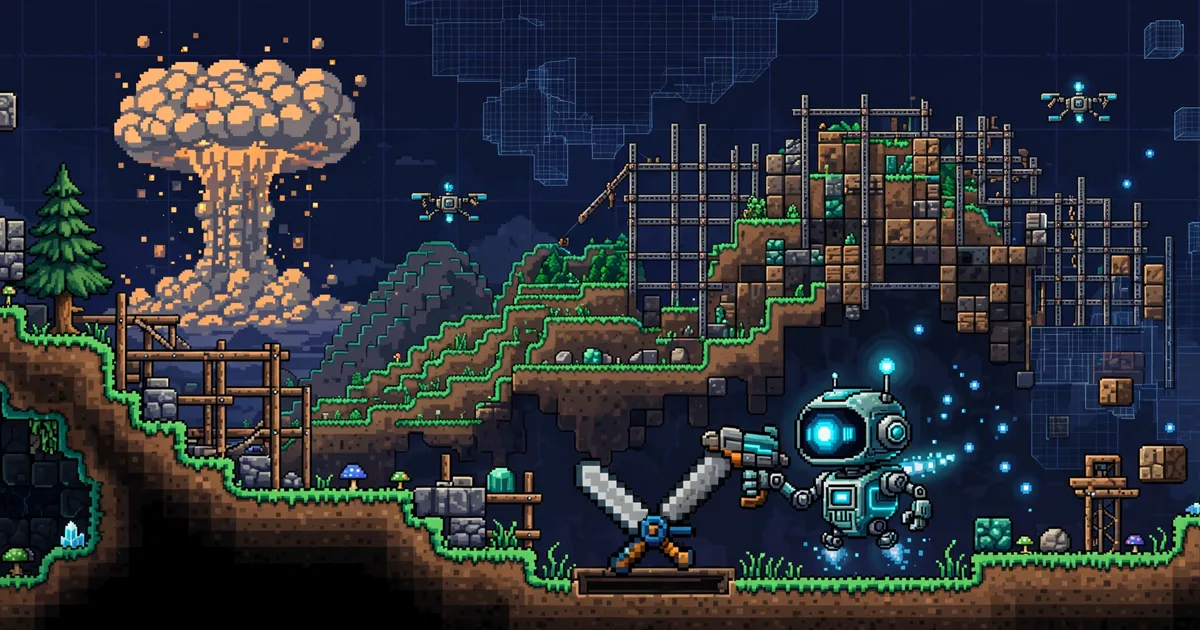
Mod Terraria: add a homing missile launcher and a tactical nuke that craters the world. Make the sprites with fal.
Make a new civilization for Age of Empires II with a unique unit rendered from 3D.
Put real Minecraft inside GTA V story mode. Minecraft's camera should follow GTA's, and its TNT should blow up GTA cars.
What engine is
C:\Games\Foo, and has anyone modded it before?
The last one is the underrated prompt: pure reconnaissance, and the honest answer may be that your game isn't tractable — which saves you an afternoon.
Step 6: Understand the loop it runs
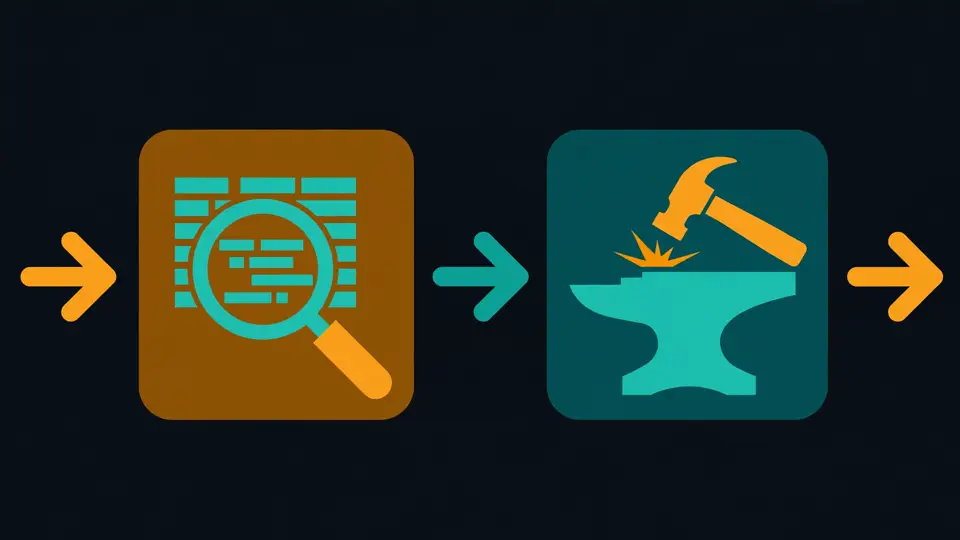
The mod-any-game skill is the whole loop with hard safety rules, and it ships 12 engine playbooks: Unity, Unreal, .NET/XNA (Terraria, Stardew, Celeste), Godot, Source 1/2, Bethesda, Minecraft, AoE2/Genie, RE Engine/FromSoft/GTA/Cyberpunk/BG3, native C++, indie engines (GameMaker, RPG Maker, Ren'Py, Paradox, Doom, HTML5, LÖVE, Java), and retro decomps. The loop:
- Search the knowledge base for prior art on this game/engine.
- Recon, then pick a route — engine and version, managed or native, anti-cheat, loaders, save folders, community route — written up as
MODDING_PLAN.md. - Set up a safe lab — save folders backed up first (
um backupsnapshots, diffs, and restores them). - Read the actual code — ILSpy, Cpp2IL, Vineflower, Ghidra/IDA over MCP, Cheat Engine, Frida, RenderDoc.
- Build one working slice before going big.
- Generate assets with fal, then cut them to engine-exact frames with
um sprite(cutout, nearest-neighbour fit, palettes, sheets, team-colour masks) orum render3dfor GLB → sprite frames at the game's camera angle. - Verify in the real game —
um winlaunches, screenshots, and drives the game (input that only reaches the game window), thenum video compilecuts the showcase. - Record and package —
um publish checkblocks shipping game files, decompiled code, or leaked keys. - Write a field note for the next agent.
Step 7: Write the field note
Every finished mod can contribute its knowledge back — and this is the compounding idea. After your human says OK:
um kb new --game "Hades II" --title "A new boon god" --from-scan hades --agent "Codex (gpt-6)"
um kb check knowledge/games/hades-ii/a-new-boon-god.md
um kb pr knowledge/games/hades-ii/a-new-boon-god.md --yes    # after your human says OK: branch, push, PR
Contribution rules apply to humans and AIs alike: no game files, no decompiled dumps, nothing that helps cheat online, and an honest status and verification. The safety model is explicit — single-player and offline, on games you own — and the agent refuses to inject into anti-cheat-protected online games, bypass DRM or ownership checks, or ship your saves anywhere. It asks before driving your mouse and keyboard, installing loaders into game folders, or publishing anything.
What you built
The README documents three complete builds as worked examples, each with its field note:
- Terraria (tModLoader) — Fal Arsenal: a homing missile launcher, a tactical nuke that craters the world with a mushroom cloud, a chain-lightning rifle, a black-hole gun, and an orbital strike — plus three new enemies and a two-phase Drone Mothership boss. Every sprite came from fal.
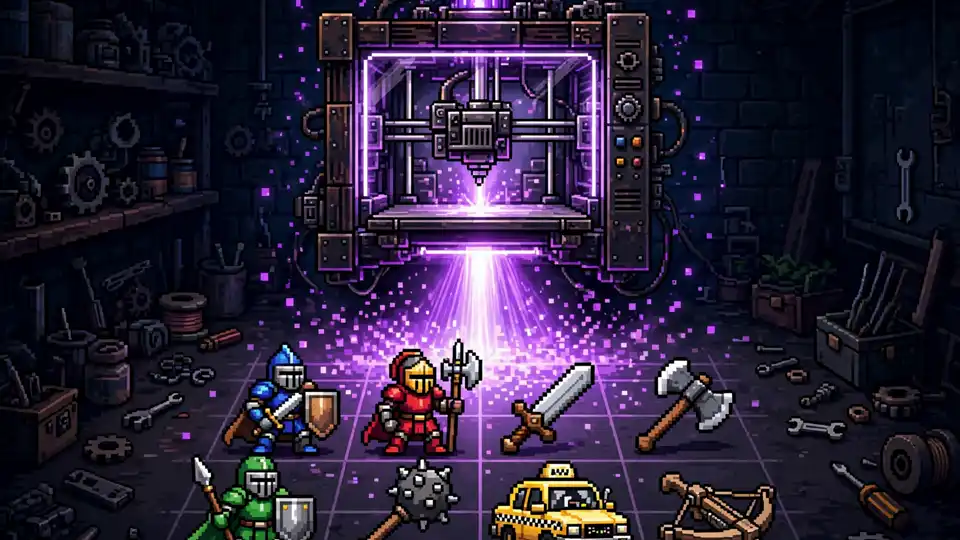
- Age of Empires II DE — San Franciscans: a new civilization with a Robotaxi unique unit and Delivery Drones rendered from fal image-to-3D models at AoE2's exact camera angle, a Transamerica Pyramid wonder, and a reverse-engineered
.sldsprite writer. - Minecraft × GTA V passthrough: real Minecraft inside GTA V story mode — a Fabric mod and a ScriptHookV + ReShade add-on exchange camera, ground, and events over a local WebSocket; Minecraft's colour and depth are depth-composited into GTA's frame, and Minecraft TNT, arrows, and fireworks become GTA explosions and bullets while Minecraft mobs fight the police.
The project's teaser GIF shows the tactical nuke landing in Terraria and robotaxis rolling through Age of Empires II. It's the kind of artifact you screenshot and send to a friend — which is exactly why this repo is moving the way it is.
Honest limitations
- fal is the paid gate. The skills and CLI are free, but sprites, 3D models, and SFX burn a paid API key — run
um fal pricebefore a big batch. - It's 36 hours old. The knowledge base is young: the field notes cover a handful of games, so for anything exotic the agent is rediscovering traps, not avoiding them.
- The refusal rules are real. Online games with anti-cheat, multiplayer cheats, and DRM bypasses are out — this is a single-player, games-you-own tool, full stop.
- 3D routes need Blender, and PC-game driving is Windows-first (native or WSL) — a macOS-only modder will fight the grain.
- Verification is the hard part. Getting an agent to build a sprite is easy; getting it to prove the mod works in the running game is where these projects live or die, and that's the loop you should watch first.
The deeper idea is the one hiding in the knowledge/ folder. Mods decay; knowledge compounds. A repository where every AI that finishes a mod writes down exactly what it learned — versions, routes, gotchas — for the next AI is a new kind of documentation: field notes written by agents, for agents. The tactical nuke in Terraria is the demo. The knowledge base is the product.