A 1:1 Minecraft replica of Earth went viral — but the 'entire world' claim is doing heavy lifting
A 36-second flyover of blocky San Francisco and New York racked up 20 million views on X and hundreds of upvotes on Reddit within hours. The builder says he trained a 'world-to-Minecraft generator' on maps data — but the thread underneath is doing what Reddit does best: checking the fine print.
- The post: r/ChatGPT, Thursday November 19, 1:42 p.m. EST; a 0:36 Reddit-hosted video reposting thijs (@cdngdev)'s X post from November 16; 766 upvotes and 132 comments at reading, still climbing.
- The claim: a “SOTA world-to-minecraft generator” trained on maps data recreated the entire world at 1:1 scale, with furnished home interiors; playable at worldcraft.gg.
- The catch: the creator says the first release is the United States only, “with the entire world following soon after” — and the 36-second video shows only US cities.
- The method: elevation data plus open map data (OpenStreetMap) plus 3D overhead imagery, through a “program learning” system of 250+ agents tuning one algorithm of distilled classification models and rules.
- The reality check: no full-world download — a pre-generated file would run to about two petabytes; only a ~6 GB San Francisco map is downloadable, and players report queues and long load times.
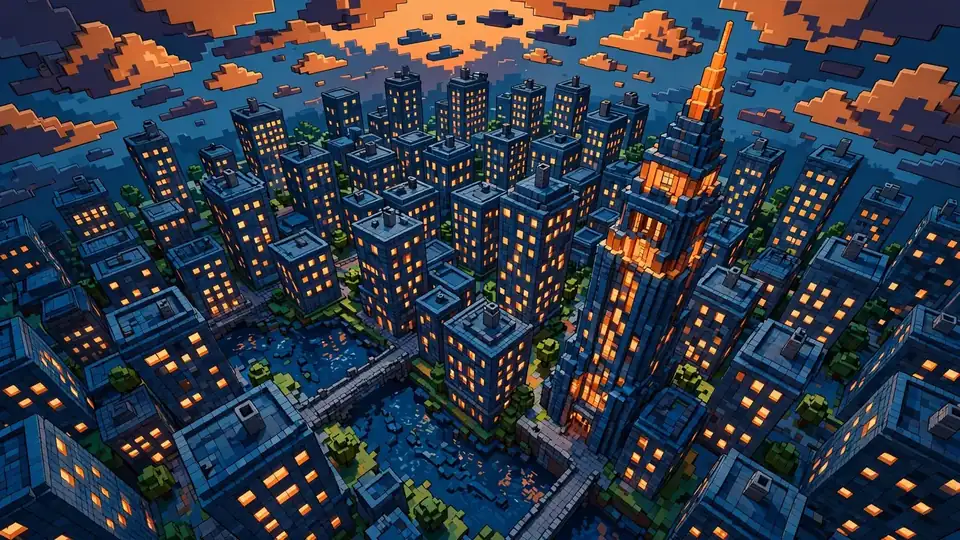

The clip is 36 seconds long, silent, and mostly a flyover of two American skylines rendered in cubes. By Thursday afternoon it had been watched 20.6 million times on X, gathered 766 upvotes and 132 comments on r/ChatGPT in under five hours, and crashed the servers of the project behind it. The claim attached to it is enormous: someone rebuilt the entire world in Minecraft, at 1:1 scale, every building on Earth, including your house. The thread underneath it is doing what Reddit threads do best — admiring the video, then checking the claim line by line.
The Reddit post, from u/Puzzleheaded-King584 at 1:42 p.m. EST on Thursday, is a repost. The video comes from thijs, a 20-year-old builder who posts as @cdngdev on X and whose bio lists past work at OpenAI's robotics team, a16z, Discord and lmarena. His original post, from November 16, says he “trained a SOTA world-to-minecraft generator on maps data, complete with furnished home interiors” and points to worldcraft.gg, where anyone with Minecraft: Java Edition can join a server and walk around it. The Reddit version adds nothing to that text — the video did the travelling.
What the 36 seconds actually show#
The flyover opens on San Francisco — a white tower on a hill that reads as Coit Tower, the Transamerica Pyramid at about twenty-two seconds — and closes on a New York-style skyline with a tall spire-topped tower. It is a handsome piece of footage, and it is also, as several commenters were quick to point out, entirely American. “Made the world. Just shows America,” reads one reply. Another jokes about spotting “the famous Great Pyramids of Nebraska.” The video never leaves the United States, and that turns out to be the first crack in the headline.
How it was supposedly built#
Thijs has been unusually forthcoming in the replies to his X post, and his account is more interesting than the headline. The pipeline, as he describes it, starts with elevation data, adds streets and building silhouettes from open map data, and finishes with detail drawn from 3D overhead imagery. The “AI” in the story is not a single model and not a chatbot: thijs says the generator was trained through a process he calls “program learning”, in which a team of more than 250 agents works through a huge dataset of places, tuning a single algorithm built from smaller distilled classification models and rules-based code, with grader agents reviewing the results so the team can hill-climb toward accuracy. The project site credits OpenStreetMap and other data sources. A pre-generated file of the whole world would run to about two petabytes, by his own estimate, so there is no download: the world is generated and streamed on demand from the worldcraft.gg server, and the only downloadable map is San Francisco, at roughly six gigabytes. To play, you need Minecraft: Java Edition, the multiplayer menu, and the server address worldcraft.gg — then “/go” plus an address to teleport. That is the pitch. The reality, on Thursday at least, was a queue: thijs says tens of thousands of players tried to join infrastructure he built for about a hundred, and the site now carries a banner saying demand is outrunning the servers while the team rewrites its systems. He says he is working with the creators of CubeCraft and Hypixel to scale up, and that hosting is sponsored by Paradigm and EcoGPT.
The fine print Reddit found#
The top comment, with 366 upvotes, is a polite version of the thread's central objection. “I'm confused. Not even Google Maps has a quality 3D render of my house; it's incredibly messy,” writes u/GratefulForGarcia. “I'm assuming smaller buildings are completely generated if they also have ‘furnished interiors’.” The creator's own words back the skepticism: he says the first release covers the United States, “with the entire world following soon after”. The whole world, in other words, is a roadmap, not a delivery — even as thijs publicly complained that Community Notes was trying to say the project was “just SF or just the US”, insisting “it is, in fact, the entire world”. Both statements are his; they do not sit comfortably together.
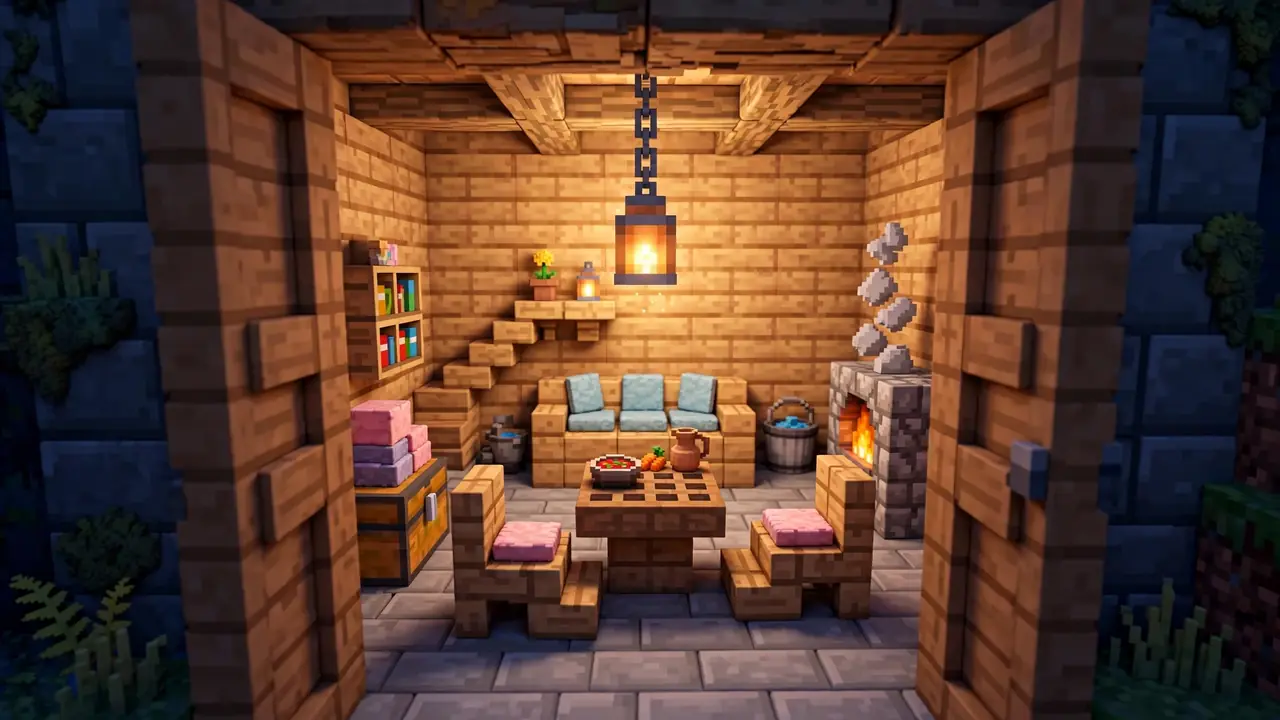
The first-hand reports are harsher. One player who got in writes that the house interiors were “just random layouts of crafting tables and stairs”, that most houses looked too short, that they could not tell which house in their own neighbourhood was theirs, and that teleporting took ten to fifteen minutes, with only a small area loading at a time. Another commenter, with 60 upvotes, grants that the scale is impressive but notes the underlying trick is not new: heightmap-to-Minecraft generation predates the current AI boom, with a Manhattan build circulating as far back as 2017 or 2018. Others point to existing efforts — Arnis, which converts OpenStreetMap data into Minecraft worlds, and Build the Earth, the volunteer project that has been rebuilding the planet block by block for years. And one reply notes a geometric limit no generator can dodge: the Minecraft world is flat, so “1:1” at every latitude is impossible by construction.
None of that makes the video fake. What it makes it is a demo with a headline that outruns its own footnotes — a familiar shape on this beat, and one the thread handled with unusual care. The upvotes kept climbing while the corrections piled up underneath, which is roughly the correct response to a 36-second clip of a blocky Transamerica Pyramid: enjoy the flyover, read the thread, and wait for the rest of the world to actually arrive.
Why it matters#
Strip away the headline and two things remain that are genuinely worth watching. The first is the method: 250 agents tuning one algorithm, with grader agents scoring the output, is a different shape of “AI built this” than a single model call — a small, concrete example of agents being used to build systems rather than to answer questions. The second is the demand: tens of thousands of people tried to join a Minecraft server to walk around their own street, which says something about how much appetite there is for a navigable digital twin of the real world, even a rough one. If the team behind it can keep the servers up and extend coverage beyond the United States, the next video will be harder to argue with. Until then, the honest version of the claim fits in one sentence: a clever generator has turned American map data into a playable blocky country, and the rest of the planet is still on the way.
What to watch#
Whether the world beyond the US actually ships, and how quickly — that is the promise the headline already made. Whether the server survives its own virality: the queue numbers and the “extreme demand” banner suggest the current infrastructure is the bottleneck, not the generator. And whether the interiors and small buildings improve, since those are the details that decide whether this feels like your street or a plausible imitation of it. The San Francisco download is the easiest way to judge for yourself — six gigabytes, no queue, and no headline required.
Sources: r/ChatGPT (November 19, 2026); thijs (@cdngdev) on X, November 16, 2026; worldcraft.gg; OpenStreetMap (data source credited on worldcraft.gg).