A 4B model read one sentence and fetched a netherite ingot from bare hands
A 1:58 split-screen clip shows a tiny local decision model turning one plain-language Minecraft request into a full bare-hands run — porkchops and a netherite ingot. The maker is candid about what the model didn’t do, and Reddit’s sharpest comments say so too.
- The post: u/Top-Evidence174 on r/LocalLLaMA, October 28, 2026 at 2:21 PM EDT — about 230 upvotes and 39 comments at the time of writing, with a 1:58 split-screen video.
- The request: “I’m hungry, get me at least 3 porkchops and also make me a netherite ingot.” Mica v0.5 4B split it into two goals and worked from bare hands through wood, tools, iron, diamonds, obsidian, a portal, the Nether, ancient debris and gold.
- The method: the request is broken into a chain of small multiple-choice questions — how many items, which category, which subcategory, which exact item from the game’s own list, for whom, how many — each answered with a probability, while a recipe planner lists the valid next actions.
- The pushback: commenters note a MineFlayer-style bot handles pathfinding and the tedious work, and that Dreamer 4, which learns from raw pixels with human-like controls, is more impressive. The maker agrees with both points.
- The caveats: the Minecraft harness is not released (planned for Mica v1.0); waits are cut from the video; decision times shown are RTX 3090 estimates while the maker runs AMD hardware; the model’s speed claims are the maker’s own measurements.
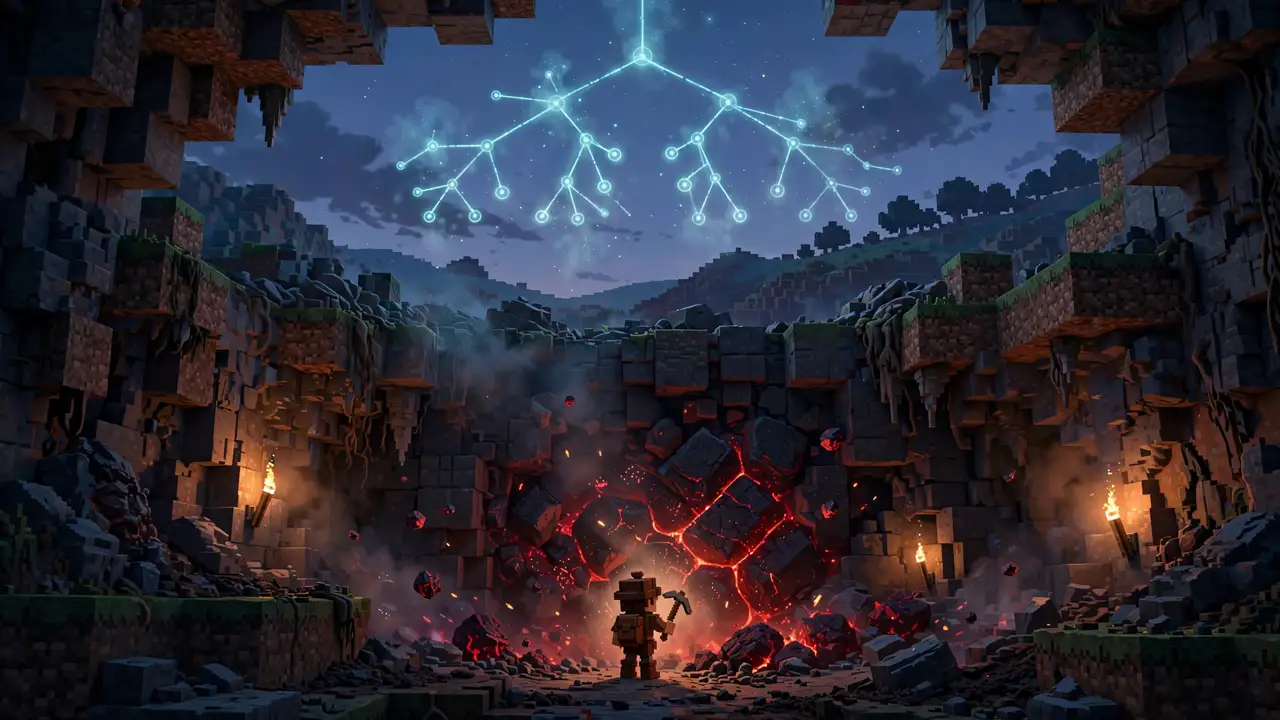
The request is one sentence, typed into Minecraft chat: a hungry player wants at least three porkchops, and also a netherite ingot. What follows, in a split-screen video posted to r/LocalLLaMA on Wednesday afternoon, is a small local model working through that sentence like a to-do list written by someone who has never played the game — and then, somehow, getting it done. On the left, blocky gameplay starts from bare hands. On the right, a panel shows every question the model was asked, the options it saw, and the probability it gave each answer. By the end, the player’s view shows the delivery: porkchops and a netherite ingot, handed over.
The clip is 1:58 long, and it is worth watching before reading any claim about it, because the interesting part is not the loot. It is the method — and the unusually honest argument around it, in which the maker volunteers the demo’s limits before anyone else can, and the thread’s sharpest commenters mostly agree with him.
What the video shows#
According to the maker, u/Top-Evidence174, the model is Mica v0.5 4B, a small local model built for decisions rather than open-ended chat. It reads the sentence, works out that it contains two goals and how many of each item is wanted, and then starts from nothing: wood, then tools, then iron, then diamonds, then obsidian, then a portal into the Nether, then ancient debris and gold, and finally the ingot itself. A recipe planner lists which actions are valid at each moment; Mica picks what to do next. The panel on the right is the whole point of the video: you can watch the model narrow a vague request down, question by question, instead of taking its success on faith.
That panel also carries the demo’s most important disclosure, printed in the post itself: the waits are cut from the video, and the decision times shown are estimates for an RTX 3090, while the maker’s own graphics card is AMD and runs the decisions more slowly. The video is a demonstration of a decision pipeline, not a real-time speed record, and it should be read that way.
The trick: small decisions, not one big plan#
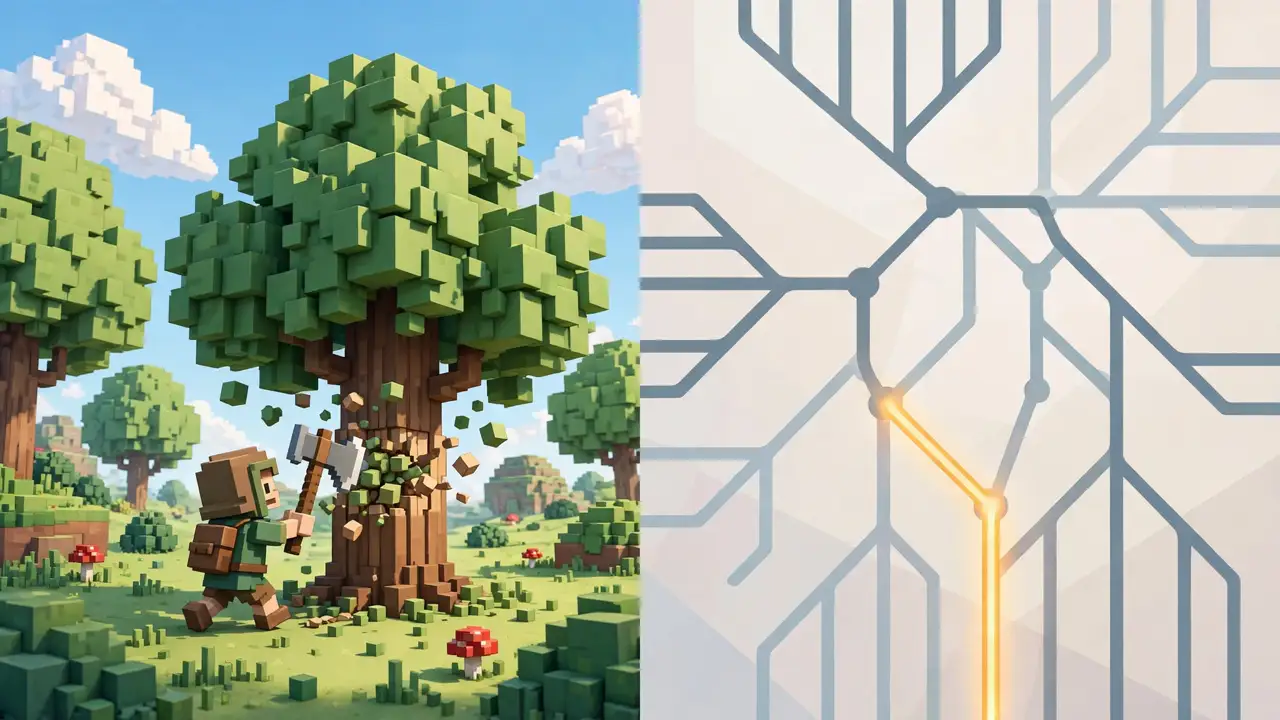
The idea behind Mica is deliberately unglamorous. Instead of asking a model to understand a whole sentence in one attempt, the request is broken into a chain of small multiple-choice questions, and each answer narrows down the next one. How many different items does the message ask for, and is there an action like “come here”? Then, for each item in the order named: which category (food, tools, ores and materials, and so on), which subcategory (for ores, overworld or Nether), which exact item — picked from the game’s own item list, with no keyword matching — and who it is for, and how many? The code only supplies the options from game data. Mica makes every choice, and every answer comes with a probability.
That is why a 4B model can do this at all, on the maker’s account. Small models are much better at picking from a few options than at writing a plan from scratch, and each extra judgment is another chance to push accuracy up. The maker’s broader claim is that this kind of judgment model generalizes far beyond Minecraft: whenever something is too hard to settle in one request, break it into smaller judgments and narrow it down step by step. It is a modest claim, and that modesty is part of its appeal.
What Reddit pushed back on — and what the maker conceded#
The thread, about 230 upvotes and 39 comments at the time of writing, did not debunk the video. It did something more useful: it priced the achievement accurately. The second-highest comment points out that MineFlayer-style wrappers make Minecraft much easier for a language model, because they handle pathfinding and the tedious tasks a human player would do, and holds up Dreamer 4 — which learns from raw pixels with human-like controls — as the more elegant and impressive approach. The maker’s reply is a plain “yeah, fair,” followed by the distinction he is actually claiming: a fast local decision model making the big calls at roughly human speed, which a full language model cannot really do, with natural-language understanding that works better split into many small decisions than attempted in one shot.
Another commenter probed the obvious failure mode: what happens when an early answer is wrong — say the model miscounts the items? The maker confirmed that undercounting is a real gap: right now the chain mostly runs with whatever it picks, and if it reads two items as one, the second just gets dropped. The fix he sketches — a confidence check, since wrong answers in his tests came in under about 0.8 confidence — has not been wired in yet. He is equally direct about the division of labour: Mica is the brain, but a bot is its hands and feet, doing the walking, mining and crafting, and Mica itself is not comfortable operating the game directly. He also rules out the strongest reading of his own demo in advance: he is not claiming the model takes in every frame as a continuous stream, reacts at superhuman speed, or generalizes to any situation.
Two more caveats belong in any honest account. The Minecraft harness itself is not released — the maker says it will probably arrive with Mica v1.0 — so readers cannot yet reproduce the full agent from the post, though the model weights are public. And the speed figures in the post (API-only decision models about 60 times slower than Mica on average, Mica itself 3 to 6 times faster than other 4–9B models in his tests) are the maker’s own measurements, not independently verified in the thread. Treat them as his benchmarks, not as settled results.
Why it matters beyond Minecraft#
Strip away the game, and the demo is a small argument about where small models belong. The frontier conversation usually treats size as the answer to every hard problem: if the model cannot do it, get a bigger one. Mica’s pitch is the opposite — that for judgment tasks, a small model asked many cheap, well-formed questions can beat a big model asked one expensive, vague one, and run locally while doing it. If that holds up beyond one showcase, it matters for anyone building agents that have to make lots of small calls quickly: customer-service triage, warehouse routing, game companions, or any workflow where the bottleneck is decision volume rather than raw reasoning depth.
It also fits a pattern this blog has been tracking: tiny models doing surprisingly specific jobs well. A 4B model recently turned heads by learning to code 3D scenes on a single GPU, and the lesson there was the same — narrow the task, and small stops meaning weak. Minecraft is a friendlier test than the real world, with a fixed item list, a recipe book, and a bot to do the walking. The question now is whether the multiple-choice trick survives contact with messier domains, where the options cannot simply be read out of game data.
What to watch#
Three things will tell us how much this demo is worth. First, the v1.0 harness release: once other people can run the full agent, the claims about decision quality stop resting on one video. Second, whether the confidence-based re-check for miscounts actually lands, since that gap is the clearest known failure mode. Third, whether anyone ports the judgment-model idea out of Minecraft into a domain where the option lists are not handed to the model for free — that is where the idea either becomes a technique or stays a neat demo.
For now, the fair summary is the maker’s own: a 4B model turned one sentence into two goals and a long chain of sensible calls, inside a game, with a bot doing the physical work and the video’s waits cut for viewing. That is less than “an AI that plays Minecraft,” and more interesting than a parlour trick — a small model doing the one thing small models are actually good at, which is deciding, one question at a time.
Sources: the original post by u/Top-Evidence174 on r/LocalLLaMA (October 28, 2026); the Mica project on GitHub and Hugging Face. Speed and accuracy figures are the maker’s own measurements as stated in the post. The editorial illustrations are AI-generated.