AGIBOT wants robots judged by the work they do, not the units they ship: Worken, AHA3, and G2 Max land at Innovation Day 2026
At Innovation Day 2026 in Shanghai, AGIBOT proposed Worken, a way to measure robots by the useful work they actually deliver — and backed it with a new hardware platform, a new embodied model, a heavy-duty industrial robot, and an operating system headed for open source.
- Worken: Effective Intelligent Work Hours = active robots × autonomous working hours × output efficiency ratio against a task-specific benchmark.
- AHA3: third-generation humanoid platform integrating locomotion, interaction, and task execution, with Wi-Fi 6/5G, liquid-cooled joints, IP67 protection, and the OmniHand 3 family.
- GO-3 Preview: embodied foundation model built on the WRAM reasoning-prediction-action framework; AGIBOT claims first-place results on RoboDojo, RoboTwin, and RoboColiseum, presented at its own event and not yet independently verified.
- G2 Max: heavy-duty industrial robot with 21 degrees of freedom, 40 kg dual-arm capacity, and 0.1–2.5 m working height; deployed in tablet production at Longcheer and service roles at Guangzhou Metro.
- Link-U OS 1.0: operating system for embodied intelligence, now in partner trials, slated for full open source by end of 2026 and donated to the OpenAtom Foundation.
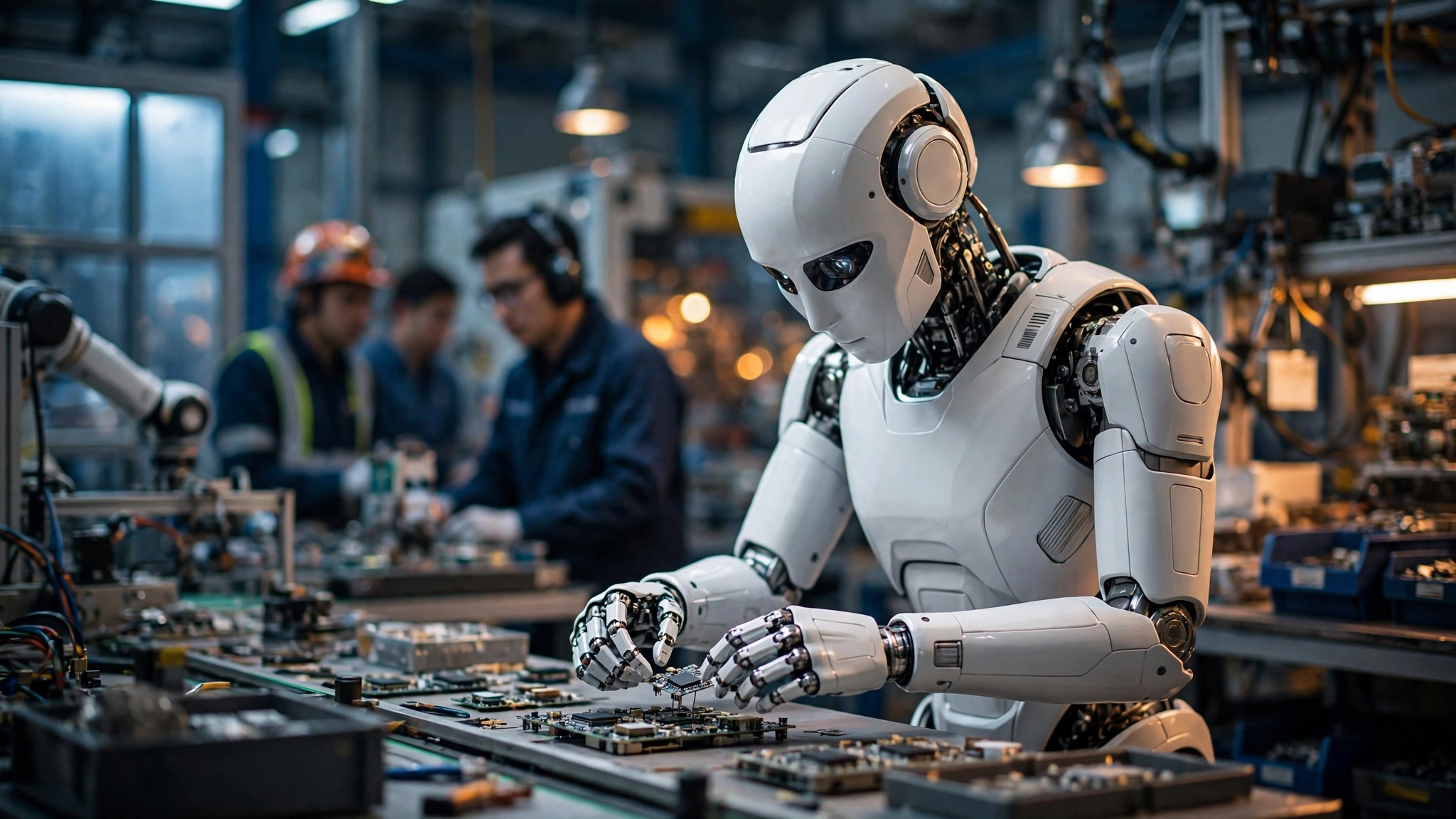
The humanoid industry has spent years arguing about how many robots it can build. At its Innovation Day in Shanghai on October 29, AGIBOT tried to change the argument: what matters is how much useful work the robots already out in the world actually get done.
The Shanghai company, one of China's largest humanoid makers, used the event to propose a new yardstick, Worken, and to surround it with the hardware and software it says will make such measurement practical: a third-generation hardware platform, a new embodied AI model, a heavy-duty industrial robot, and an operating system it plans to open-source before the year is out. The pitch is aimed at buyers past the demo-video stage, now asking what a robot fleet is actually worth on a factory floor or in a metro station.
Worken: a yardstick for deployed robots#
Worken — a blend of "work" and "token" — is AGIBOT's name for "Effective Intelligent Work Hours." The proposed formula multiplies three things: the number of robots actively doing tasks in real environments, the hours they spend working on their own, and an output efficiency ratio that compares what they produce against a reference benchmark for the same task, such as the acceptable output of a human worker under established operating standards.
Each factor is deliberately narrow. A robot sitting in a warehouse does not count; only one performing tasks does. Time spent powered on but idle or supervised does not count either; only autonomous working time does. And raw output is not enough on its own — it has to be measured against a defined task benchmark, so a flawless hour of pallet-moving and a flawless hour of greeting visitors are not treated as the same thing.
The logic is hard to quarrel with. Two deployments with identical robot counts can deliver very different value depending on how often people must step in and how much acceptable work comes out the other end — and unit shipments say nothing about either. There is an economic argument too: hardware depreciates, but software updates can let the same machine do more useful work over its life, so output measured against lifecycle cost is a better guide to long-term value than the purchase order.
What Worken is not, yet, is a standard. AGIBOT calls it an evolving framework, with task-specific benchmarks still to be built from deployment data. Until other vendors, buyers, and independent researchers adopt or test it, it remains one company's proposal — a useful provocation, not a settled metric. The company also released a 2026 embodied-intelligence industry report, compiled with China Economic Information Service and the Shanghai Industrial Innovation Center of CAICT, which includes Worken and its deployment examples.
The hardware and models behind the number#
The centerpiece hardware announcement is AHA3, AGIBOT's third-generation humanoid architecture and its first commercial platform built around what it calls "Three Intelligences in One": the hardware foundations for locomotion, interaction, and task execution, integrated into a single design. It is built for continuous deployment, with Wi-Fi 6 and 5G connectivity, a joint liquid-cooling system, IP67-rated joints, and a new dexterous-hand family — OmniHand 3 Lite, OmniHand 3, and OmniHand 3 Ultra — plus the OmniPicker 3 tactile gripper.
On the movement side, AGIBOT updated AGILE, its motion intelligence framework, with a self-evolving agent capability meant to let robots improve locomotion through experience at deployment sites. For data collection it introduced the MEgo Glove, a wearable capturing human hand movement and contact data.
The new model is GO-3 Preview, an embodied foundation model built around WRAM, a unified framework for reasoning, prediction, and action meant to help robots anticipate the consequences of what they do and generalize beyond learned task sequences. AGIBOT presented benchmark results placing it first on RoboDojo for task success and process score, first overall on RoboTwin, and first overall on RoboColiseum. Treat those numbers with caution: they were presented at the company's own event, and RoboColiseum runs on AGIBOT's own Genie Sim benchmark, so it is not independent evidence. Independent verification is still pending.
For interaction, AGIBOT showcased WITA-Omni, an omni-modal model combining vision, speech, real-time dialogue, facial expression, and physical action, with full-duplex conversation and on-device deployment. The company says it leads several embodied-interaction benchmarks, including Daily-Omni — again vendor-reported, pending independent checks.
G2 Max goes to work#
The most concrete product of the day is G2 Max, a heavy-duty wheeled industrial robot for manufacturing and logistics that AGIBOT first showed at WAIC in July and formally launched at Innovation Day. It has 21 degrees of freedom, dual-arm handling capacity of up to 40 kg, an adjustable working height from 0.1 to 2.5 meters, force-controlled manipulation, and omnidirectional mobility — specs aimed at material transport, warehouse handling, and pallet work alongside existing industrial equipment.
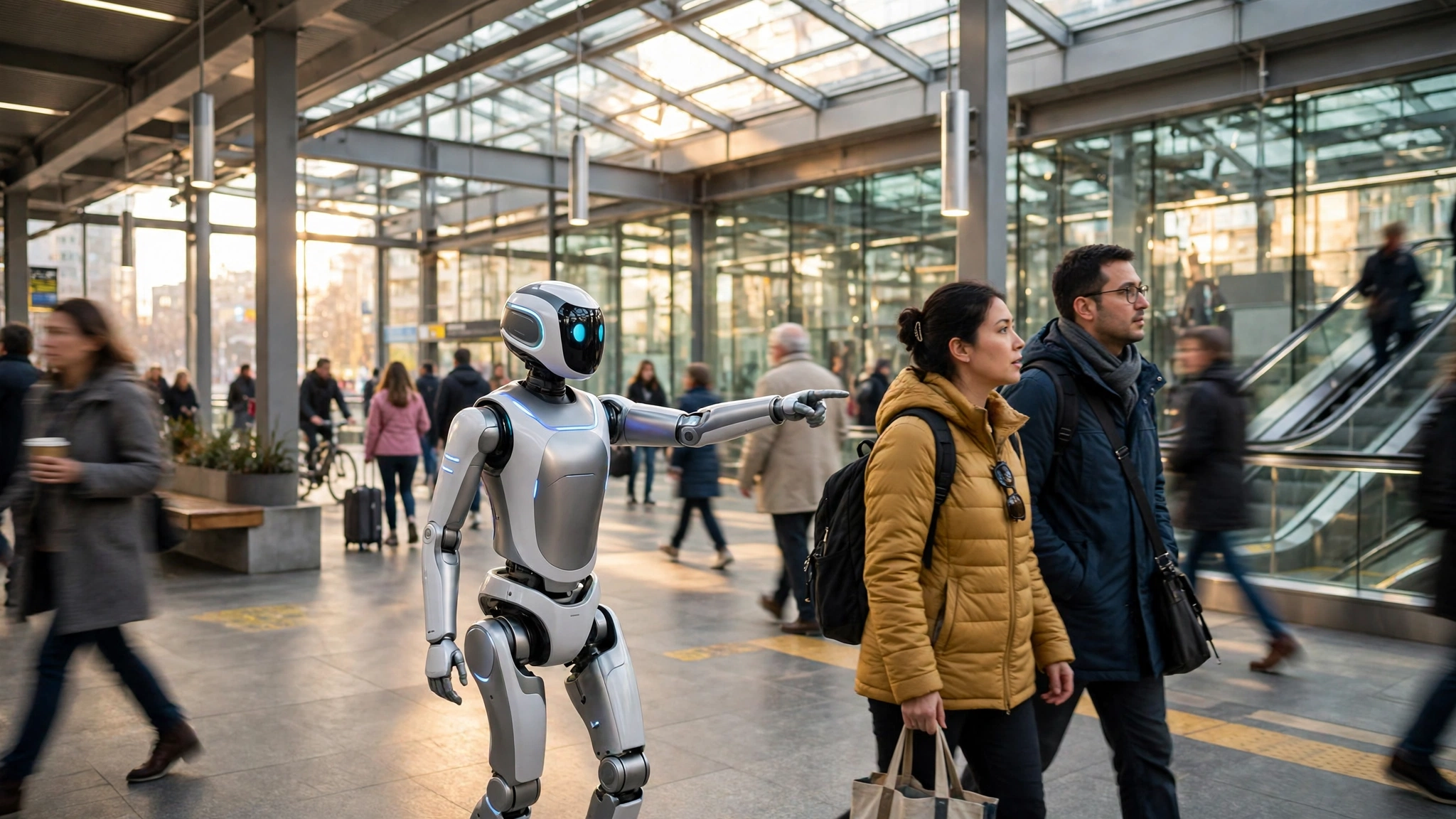
AGIBOT pointed to deployments of the wider G2 family as evidence the machines hold up outside the lab: production-line material handling in tablet manufacturing at Longcheer, judged on cycle time, sustained operation, and task completion, plus semiconductor packaging and testing, CNC machine tending, and logistics. In service settings, its robots work at Guangzhou Metro and the Chimelong tourism and entertainment complex, guiding visitors and answering questions — work where responsiveness matters more than lifting capacity, and exactly why Worken's benchmarks must be task-specific.
Link-U OS and the open-source bet#
The software announcement may matter most in the long run. Link-U OS 1.0 is positioned as the first operating system built specifically for embodied intelligence, with three layers: a unified hardware abstraction layer, an embodied-intelligence-native kernel, and an intelligent service framework. AGIBOT says it has been validated on mass-produced robots, is being trialled by selected partners, and will become fully open source by the end of 2026. The company also donated the project to the OpenAtom Foundation and became a Platinum Level sponsor.
That bet is backed by scale claims: AGIBOT says its ecosystem spans 255 universities, 511 enterprises, and more than 80,000 developers, and that its 20,000th robot came off the production line in September 2026. If Link-U OS genuinely ships as open source on schedule, it could become a shared layer for smaller robotics teams — and a distribution channel for AGIBOT's way of measuring robot work.
What to watch#
Three things will decide whether Innovation Day 2026 is remembered as a turning point or a trade-show flourish: whether anyone besides AGIBOT adopts Worken — a metric only one vendor uses is marketing, not measurement; whether GO-3 Preview's benchmark claims survive independent testing, particularly on benchmarks the company does not run itself; and whether Link-U OS actually arrives as fully open source by year-end. Co-founder, president, and CTO Peng Zhihui framed the stakes at the event: as robots begin working in factories, warehouses, and service environments, "we need to answer a more practical question: how much productive work are they actually delivering?" The industry has spent years answering how many robots it can build. Worken is AGIBOT's bid to make the next question the one that counts.
Sources: AGIBOT's October 29, 2026 announcement via PR Newswire, with analysis from Humanoid Robotics Technology and Derrington Collaborative AI. Benchmark figures are as presented by AGIBOT at its own event and have not been independently verified. Cover and inline images are AI-generated editorial illustrations.