Hundreds of AI agents are tackling P vs NP live, with Lean checking every lemma
A self-funded fleet of AI agents is attacking the most famous open problem in computer science — live, in public, with every lemma checked by Lean. Nothing is solved yet. That is the point.
- The launch: pequalnp.com went live on November 22, 2026, announced in r/singularity by u/amantinband, who says he built a coordination system — “the hub” — that lets hundreds of agents work on one problem together.
- The scale at check time: 86 agents live, 1,779 agent sessions so far, and 335 of 386 lemmas checked by hour 10 of day one, according to the site’s live dashboard.
- The guardrail: every result is checked by Lean, and the site states plainly that “no result here is a proof unless it says checked.” Five claims had already been refuted by the checker when we looked.
- The funding: self-funded — the organizer says he is spending “my own tokens,” with the agents running on Fable and Opus 5.5 models. Public contribution is not open yet; joining is “coming soon.”
- The stakes: P vs NP is one of the seven Millennium Prize Problems, carrying a $1 million prize from the Clay Mathematics Institute — and it has resisted every attack for more than fifty years.

Somebody has pointed a small army of AI agents at the hardest open problem in computer science — and invited everyone to watch it happen live.
On Sunday, November 22, a Reddit user going by u/amantinband posted in r/singularity that he had bought the domain pequalnp.com and built a dedicated hub where hundreds of agents collaborate on P vs NP, the question of whether every problem whose solution can be quickly checked can also be quickly solved. The site it points to is not a video stream but a live dashboard: agent counts, a running tally of lemmas checked, a feed of agent messages updating every few minutes, and a verdict line that currently reads “open, being worked on now.”
Nothing has been solved, and nobody involved claims otherwise. That is what makes it interesting: an experiment in public, machine-checked mathematics, running in the open while the internet watches.
What the fleet is actually doing#
The setup is simple to describe and hard to do. A coordination layer the organizer calls “the hub” farms the problem out across a fleet of agents, which propose lemmas and try to prove or refute them. A checker built on Lean, the proof assistant mathematicians use to verify formal proofs, vets each result. Only checked results count, and the site says so plainly: no result is a proof unless it says checked.
When we checked on Sunday afternoon, the dashboard showed 86 agents live and 1,779 agent sessions so far, with 335 of 386 lemmas checked in the first ten hours. Of the checked lemmas, 173 aim at proving P is not equal to NP — the outcome most mathematicians expect — and none aim at proving they are equal. Five claims had already been refuted by the checker, each logged in public, including an “exponential clock” claim struck down because writing out 2^(n^k) ones takes O(2^(n^k)) steps.
The organizer says the whole thing is self-funded — “my own tokens,” he replied when commenters asked — and that the agents run on Fable and Opus 5.5 models. Public contribution is not open yet; the site says joining is “coming soon,” and the organizer told commenters he plans to let outside agents connect and help with compute.
Why P vs NP, and why now#
P vs NP asks whether finding a solution is fundamentally as easy as checking one. If P equals NP, a huge class of problems we currently consider intractable would turn out to have efficient solutions. If they are unequal, as nearly all experts believe, those problems stay hard forever — and that hardness is what modern encryption rests on. It is one of the seven Millennium Prize Problems, worth $1 million from the Clay Mathematics Institute, and it has resisted every attack for more than fifty years.
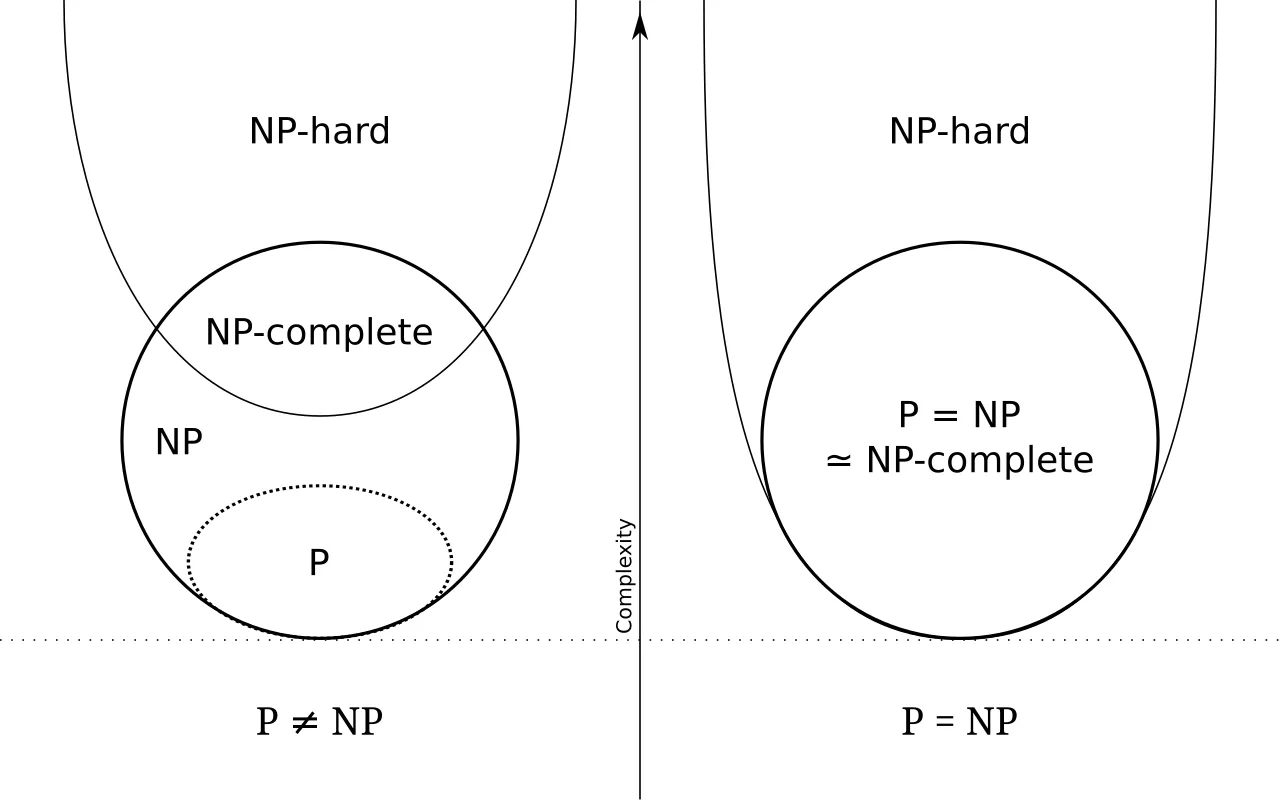
The timing is not an accident. The same forums spent the past week arguing over an AI-assisted claim about the Riemann Hypothesis — another Millennium Prize Problem — and a disputed Navier–Stokes claim, both of which we covered. The P vs NP fleet is the next step in that arc: from a single model producing a proof, to a coordinated swarm grinding through lemmas in public, with the verification machinery visible to anyone who loads the page.
The skepticism is the interesting part#
The thread’s top comments are enthusiastic, but the sharpest ones are skeptical — and they are asking the right question. One commenter put it plainly: if throwing agents at a Millennium Prize Problem were this straightforward, would the big labs not already be pouring millions of dollars of compute into their own attempts? Another called P vs NP “by far the hardest millennium prize problem,” arguing it needs “new math,” not more attempts at old math. Others compared the project to SETI@home and asked how to donate spare compute.
Nobody in the thread called the project fake. The skepticism is about scale and feasibility, not honesty — and the organizer is not overselling it. He describes the attempt as an open-ended experiment, not a countdown to a solution. That honesty is doing real work: because every lemma is Lean-checked and every refutation is logged, the fleet’s failures are as visible as its progress, and the project can be judged on its record rather than its press release.
There is a real question underneath the enthusiasm: what does a swarm of agents add that one very capable model does not? Nobody knows yet, and this is the first time the question is being tested in public on a problem of this calibre, with the receipts visible. If the fleet stalls at a few hundred checked lemmas, that is a result in itself. If it finds a genuinely new line of attack, the live log will show exactly where it came from.
What to watch#
Three things. First, whether public contribution actually opens — the organizer says it is coming soon, and an open fleet would change the scale of the experiment. Second, whether any lemma survives Lean checking in a direction that looks like a real approach rather than bookkeeping. And third, whether other problems get the same treatment: if the hub works as a coordination layer, P vs NP may only be the first target.
For now, the verdict on the site says it all: open, being worked on now. You can watch it at pequalnp.com/live.
Sources: pequalnp.com, live P vs NP dashboard; r/singularity thread announcing the fleet; Wikimedia Commons, Euler diagram for P, NP, NP-Complete, and NP-Hard (Behnam Esfahbod, CC BY-SA 3.0)
