Inworld open-sources a voice isolator that pulls clean speech out of noisy recordings — live, in 20 milliseconds
Inworld’s Voice Isolator v1 is a small, Apache-2.0 open-weight model that strips crowd noise, music and room echo from speech — and a realtime twin does it live with 20 milliseconds of look-ahead. A 39-second demo on r/LocalLLaMA shows the before-and-after.
- The post: r/LocalLLaMA, Wednesday November 18, 4:01 p.m. EST; a 39-second Reddit-hosted video, credited to Victor Mustar on X; 377 upvotes and 53 comments at reading.
- The models: voice-isolator-v1 (64M, offline, 8-second chunks) and voice-isolator-v1-realtime (58M, 20 ms look-ahead, 63 ms algorithmic latency); both 48 kHz, Apache-2.0.
- The training: roughly 10,000 hours of speech mixed with environmental noise, music, crowds and competing talkers; the speaker’s laughs, breaths and sighs are kept.
- The caveats: the demo noise is synthetic; the poster has not tested the realtime variant; Inworld’s VIBE benchmark scores are vendor-run, on an internal set that is not distributed.
- The limits: denoising only — no restoration, which is planned for version 2; not a speaker selector; when two voices overlap, the louder one is kept.
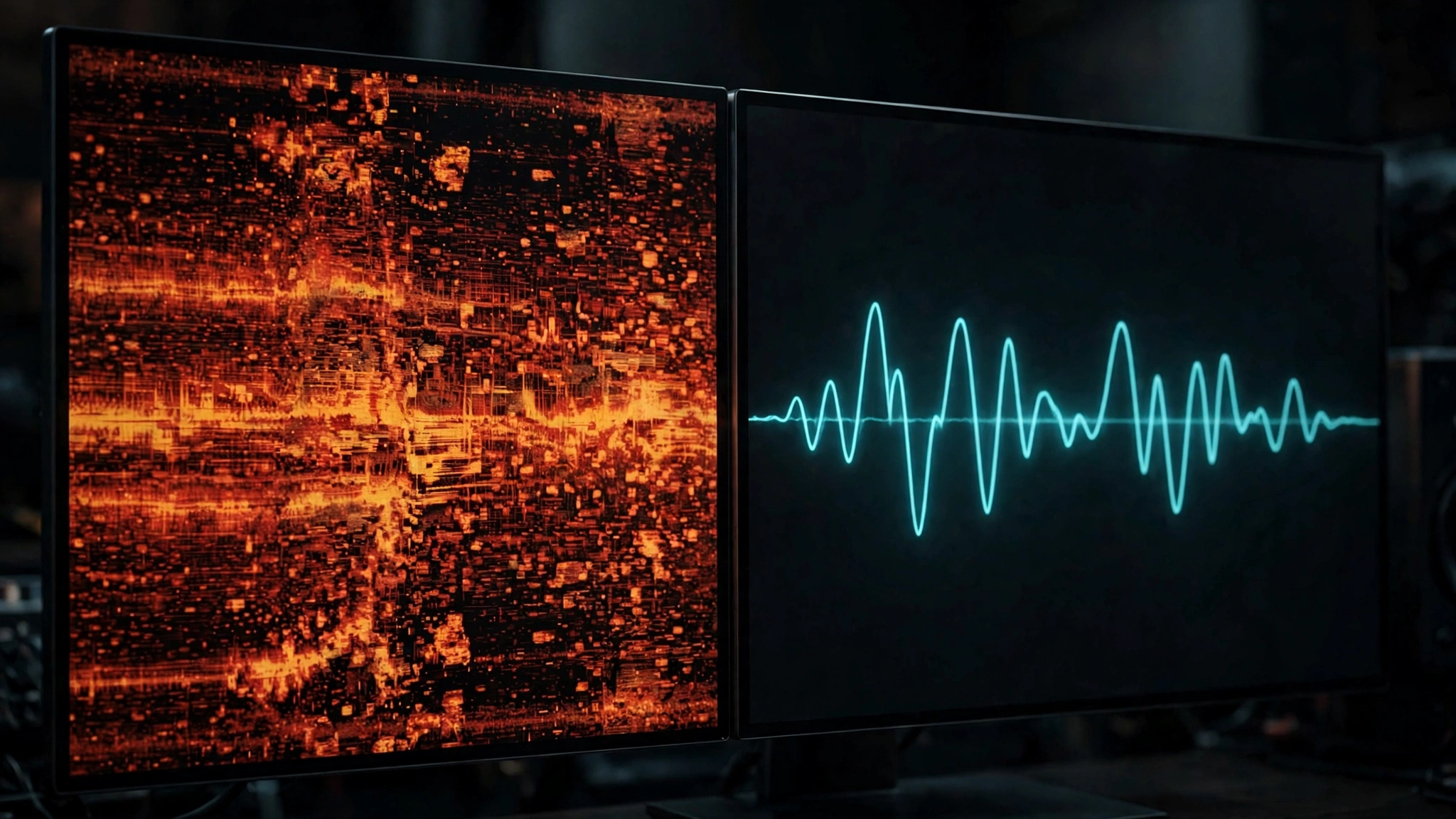

The clip is 39 seconds long and mostly spectrogram, but it landed. On Wednesday afternoon, a post on r/LocalLLaMA shared a side-by-side demo of Inworld's new Voice Isolator: a noisy recording on one side, the same voice with the noise stripped away on the other. By the time the thread was read it had gathered 377 upvotes and 53 comments.
Inworld is best known for its commercial text-to-speech voices. This release is different: two small models, code and weights under Apache-2.0, built to do one job — pull a single speaker's voice out of a noisy recording and hand the rest back as a separate track. The post that surfaced it presents the release as the company's first step into open-weight models.
What the demo shows#
The video, credited to Victor Mustar on X, is a straight before-and-after: a “noisy input” spectrogram next to the isolated voice — no narration, no sales pitch. The Reddit post, by u/mrfakename0, links to the model page on Hugging Face and to a demo space the poster built, where anyone can try both models in the browser.
The thread's top reaction was practical: the highest-scored comment imagines stripping the canned laughter out of 1980s sitcoms; the replies point out what would be left is long, awkward pauses. Others asked the sharper questions — how it compares with Nvidia's recently released RE-USE model, and whether it beats Demucs. Those comparisons have not happened yet.
Two models, one architecture#
Voice Isolator v1 ships as two checkpoints sharing one architecture: a band-split dual-path network over the short-time Fourier transform, seven blocks alternating attention and Mamba layers. Both run at 48 kHz and keep the speaker's own non-verbal sounds — laughter, breaths, sighs — while removing everything that is not the speaker.
| Model | Size | Built for | How it runs |
|---|---|---|---|
| voice-isolator-v1 (offline) | 64M parameters | Recorded audio, best quality | Every frame sees its whole 8-second chunk |
| voice-isolator-v1-realtime | 58M parameters | Live calls and streams | Causal stream, 20 ms look-ahead, 63 ms algorithmic latency |
Training used roughly 10,000 hours of speech in many languages — read, conversational, whispered and sung — mixed with traffic, rain, music, crowds and competing talkers. When two people speak at once, the louder voice is kept and one a few decibels quieter is removed; voices at similar levels are usually both kept.
Using it is deliberately low-friction: pip install inworld-voice-isolation and a voice-isolate command, or a small Python API, with CUDA, Apple Metal or CPU. The offline command writes the clean voice and the removed background as two 48 kHz WAV files, which together reconstruct the input.
What it is not — and where the thread pushed back#
The model card is unusually blunt about the limits, and the thread tested them. Three things are worth carrying into any verdict:
- It is not a restoration model. Version 1 does denoising only: it removes what surrounds the voice and restores nothing the recording lost, such as missing bandwidth — restoration is planned for version 2. Nor is it a speaker selector: it isolates the foreground voice, not a chosen person.
- The demo's noise is synthetic. Commenter EngelbertStuss noted the example video layers synthetic noise on top of the speech, “a different scenario than naturally messy audio with background noise.” On muffled private recordings, they found the 1 GB Sidon model worked far better than Nvidia's RE-USE — and posted a comparison video to show it. The headline demo proves the model works on its own test material; it does not prove it works on yours.
- The comparisons have not been run. Asked whether it beats Demucs, the poster answered “yes” in a single word, with no test behind it. Asked how it stacks up against Nvidia's 9.6M-parameter RE-USE model, the poster said they would try it — and admitted they had not yet tested the realtime variant either. Inworld's own VIBE benchmark ranks the model against rivals, but on an internal evaluation set that is not distributed: vendor-run numbers until independent tests appear.
Why it matters#
Good open voice-isolation tooling has been thin: one commenter noted the free options six months ago “were not great”. The use cases people reached for show the gap — cleaning up podcast and interview recordings, curating speech datasets where the speaker's identity has to survive, and live calls and streams. Subtracting the isolated voice also yields the background as its own track, a way to pull a backing track out of a vocal recording.
The licence is the other half of the story. Apache-2.0 on code and weights means anyone can use it commercially, ship it in a product, or build on it — a contrast with the closed voice tooling that dominates, from ElevenLabs' Eleven v4 to the speech models behind the major assistants. At 64M parameters it is small enough for ordinary hardware, in the same practical lane as this week's other open audio tools: Blue TTS v3's CPU speech synthesis and Salesforce's SOV-Transcribe-1.
What to watch#
The next evidence is independent testing on genuinely messy, real-world audio — the muffled recordings and crowded rooms the demo does not show — and a head-to-head against RE-USE, Demucs and UVR on the same material. The realtime model's quality against the offline one is the other open question. If the community adopts it, expect comparisons within days: open-weight releases with a working demo get benchmarked fast, and this one arrived with its caveats already written on the box.
Sources: r/LocalLLaMA (November 18, 2026); Hugging Face model page; GitHub repository; comparison video by EngelbertStuss.