Google makes Workspace MCP servers and CLI generally available — and agents must ditch REST APIs by February 1, 2027
On November 24, Google made its managed route for AI agents into Workspace generally available: Google-hosted MCP servers covering Gmail, Drive, Docs, Sheets, Slides, Calendar, Chat and Tasks, plus an official Workspace CLI for agents that live in a terminal. The release comes with a deadline — from February 1, 2027, Google will technically enforce that AI agents reach Workspace data through MCP, not by calling the REST APIs directly. For the thousands of agent products built on Workspace, the next ten weeks are a migration window.
- What happened: Google made Workspace MCP servers and the official Workspace CLI generally available on November 24, 2026, alongside a new Workspace AI Tools Addendum and two standardized usage tiers.
- What agents get: Google-hosted MCP servers for Gmail, Drive, Docs, Sheets, Slides, Calendar, Chat and Tasks (Keep coming soon), plus a CLI for terminal-based agents with JSON output and scoped sign-in.
- The deadline: AI agents must use MCP instead of REST APIs to reach Workspace data; technical enforcement begins February 1, 2027. Traditional apps keep using REST.
- The price: the Standard tier is free with published quotas; Scaled tier billing starts April 1, 2027, charged only above daily free allowances. Google says over 99% of active developers are within Standard.
- The guardrails: dedicated OAuth client IDs for agents, human confirmation for sensitive actions, DLP rules and audit logs; Workspace data can’t be used for model training or scraping.

The scale explains the urgency. Workspace APIs now handle more than 2.8 trillion calls a month, public Drive API traffic is more than two-and-a-half times its 2022 volume, and more than 18 billion reads from Drive each day come from API callers. The REST APIs those callers use were built for human-paced applications, where a valid OAuth token was a reasonable proxy for user intent. An agent that reads email, edits documents and changes sharing permissions at machine speed breaks that assumption — and Google's answer is to put policy checks, data boundaries and human confirmation into the request path itself.
What actually shipped#
Developers get two Google-managed ways to connect agents to Workspace, with no custom integration code per app. The Workspace MCP servers are Google-hosted, built on the open Model Context Protocol standard, and cover Gmail, Google Drive, Docs, Sheets, Slides, Calendar, Chat and Tasks, with Keep coming later. They hand agents pre-built tools that inherit each user's permissions and data-governance controls, reject OAuth clients that aren't designated for AI agents, and work with Model Armor, Google Cloud's prompt-injection screening service.
The Workspace CLI is the same idea for agents that live in a terminal: it brings Workspace tools to developer terminals, virtual machines and containerized sandboxes, with structured JSON output, scoped OAuth sign-in, packaged agent skills and dynamic command discovery. Both interfaces return synthesized summaries inside Workspace's boundary instead of downloading raw data line by line through REST calls, which Google says lowers token costs and latency.
On the Google Cloud side, the same announcement makes Google Cloud Agent Gateway generally available: a protocol-native gateway for LLM, MCP and Agent2Agent traffic that verifies Agent Identities against an Agent Registry, enforces IAM policies and default-deny outbound rules, and screens requests with Model Armor. The message across both products is the same — agents get modern, open interfaces, and organizations get the controls in the same place.
The February 1 deadline is the real story#
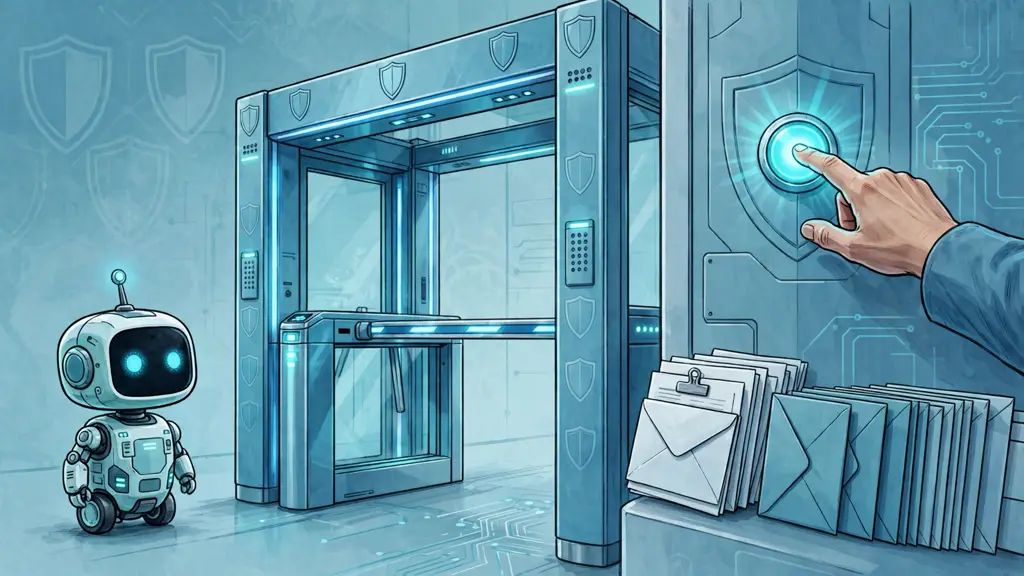
General availability is the easy part. The binding part is the new Workspace AI Tools Addendum, which says AI agents — and similar access tools — must use the Workspace MCP servers or the CLI to reach Workspace data rather than calling the REST APIs directly. Technical enforcement begins on February 1, 2027, giving builders roughly ten weeks to migrate.
The mechanics matter as much as the date. Agents connecting to Workspace must use dedicated OAuth client IDs marked for AI-powered agents, paired with least-privilege scopes and usage quotas; traditional, non-agent features should use a separate client. The requirement applies to agents, not to ordinary applications — traditional apps keep using the REST APIs as before. The servers, CLI, admin controls, usage dashboard and Scaled tier selection are rolling out to Rapid Release and Scheduled Release domains over two weeks from the announcement.
What admins and users actually get#
For administrators, the point of forcing agents through the managed path is that agents become manageable like any other app. External agents must identify themselves in OAuth and connect through the MCP servers, so admins can view, audit and revoke them in the admin console. Human-in-the-loop confirmation rules let admins require a person to sign off on sensitive actions in third-party tools — reading external files, sharing data, sending email, changing Drive sharing permissions, making bulk edits — while routine work like creating drafts or summarizing documents runs autonomously. Existing user-level data-loss-prevention rules apply automatically when someone uses an agent, and audit logs record agent actions and user confirmations.
The Addendum also draws hard lines around the data itself. Workspace user data and related technical information may be processed only to fulfil active, user-authorized tasks — not for model training, fine-tuning, evaluation datasets, distillation, or building a competing Workspace-like service. Scraping and systematic probing beyond what an authorized task requires are prohibited, derived data can't be retained indefinitely, and data must be removed when a tool is disconnected or access is revoked.
Some of the user-facing controls are still on the way: letting users view agent activity and revoke access to their emails and files themselves, blocking agents from specific Gmail messages and Drive files or folders, and time-limited approvals. Those gaps are worth watching, because the enforcement date arrives before all of them do.

The price of scale#
Alongside the interfaces, Google standardized how Workspace API access is metered. There are two tiers, starting with Gmail, Drive and Calendar: a Standard tier at no cost with published usage quotas, and a Scaled tier for projects that need higher quotas. Billing on the Scaled tier starts April 1, 2027, and only for usage above daily free allowances. Google says over 99% of active developers currently operate within the Standard tier and will keep accessing the APIs at no additional cost.
Projects used only inside one Workspace organization can be marked internal by an administrator, keeping higher limits included with the subscription. Projects that already have higher usage limits need to take one of those steps to keep them — if nothing is done before April 1, their limits drop to Standard tier rates, at no additional cost. Google Cloud Support customers get one more cushion: Workspace APIs are excluded from the support variable fee calculation until at least December 2027, with at least 90 days' notice of any change.
Why it matters, and what to watch#
This is the template other platforms will be measured against. The largest productivity suite on the planet just told the agent industry: use the governed door, or don't come in — and it paired the mandate with tooling that makes the governed door genuinely easier to use than the raw APIs. It also lands in the same week Anthropic expanded MCP itself, adding skills, background Tasks and elicitation to the protocol. The standard is consolidating as the agent interface, and Google is now enforcing it on its own turf.
What to watch: how hard the February 1 enforcement actually bites — what happens to agents that miss the deadline — whether the user-facing controls (self-service revocation, per-file blocking, time-limited approvals) ship before enforcement begins, and whether Microsoft follows with a managed agent path of its own for Microsoft 365. The April 1 billing date is the other one to circle: the Scaled tier's price will decide whether heavy agent workloads stay on Workspace or look for cheaper ground.
Sources: Google's Workspace Updates announcement (November 24, 2026) and Google Cloud blog post; independent coverage from Unite.AI and AI.info. The February 1, 2027 enforcement date and April 1, 2027 billing date are as stated by Google.
Sources: Google Workspace Updates, “Simplifying agent access while keeping organizations in control: MCP servers, CLI, standardized usage tiers, and admin policies” (November 24, 2026); Google Cloud Blog, “Deploying agents safely in your enterprise” (November 25, 2026); Unite.AI, “Google Requires Workspace AI Agents to Use Managed Interfaces” (November 24, 2026); AI.info, “Google Workspace rolls out MCP servers and agent admin controls” (November 24, 2026)